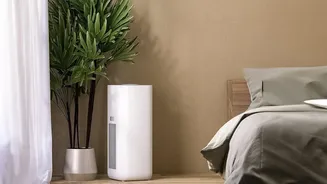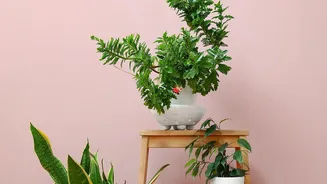







The idea that a few houseplants can purify your home's air is appealing. It's a green, natural solution that also beautifies your space. But while many plants are marketed this way, the science tells a more complicated story.
The Legend of the NASA Study
The belief that houseplants
are tiny air-purifying machines can be traced back to a landmark 1989 NASA study. Researchers, looking for ways to clean the air in sealed space stations, placed various common houseplants in small, airtight chambers. They then pumped in volatile organic compounds (VOCs) like formaldehyde and benzene—chemicals often found in synthetic materials and cleaning products. The results were impressive: some plants were able to remove a significant percentage of these pollutants from the sealed chambers. Plants like the Peace Lily, Snake Plant, English Ivy, and Bamboo Palm became overnight heroes, and the 'air-purifying plant' was born.
A Box is Not a Living Room
The problem is that the conditions of the NASA study don't reflect a typical home or office. The plants were in small, sealed plexiglass boxes, not sprawling living rooms with drafts, open windows, and constant air movement. Subsequent reviews of the research have pointed out this critical flaw. A 2019 review by researchers at Drexel University concluded that you'd need a massive number of plants to make a meaningful impact on your home's air quality. Their calculations suggested it would take from 100 to 1,000 plants per square metre of floor space to compete with a building's natural air exchange from just opening a few windows. In short, the rate at which fresh air normally circulates in and out of a room does far more to remove pollutants than a few potted plants can.
The Powerhouse Plants in Question
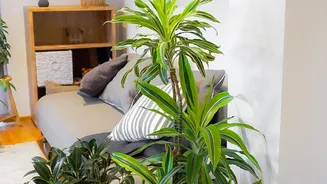
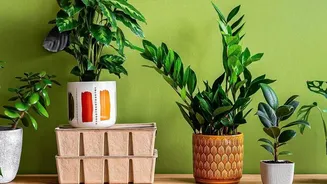
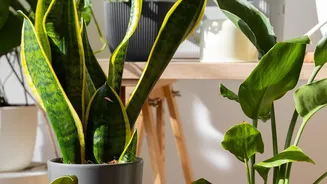
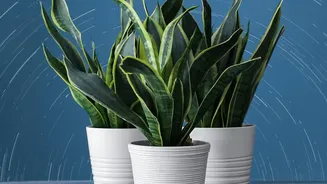
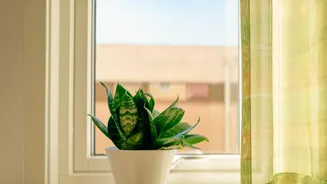
Despite the debate, a specific group of plants is consistently highlighted for their supposed cleaning power. The list often includes the durable Snake Plant (Sansevieria trifasciata), the prolific Spider Plant (Chlorophytum comosum), the elegant Peace Lily (Spathiphyllum), and various types of Dracaena. These plants were indeed effective in NASA's sealed chambers. For example, the Peace Lily was shown to remove all five tested pollutants, while the Spider Plant was particularly good at filtering formaldehyde in the lab setting. However, the real-world impact is what's now considered minimal. While these plants do absorb tiny amounts of pollutants, the volume of air in a room and the constant introduction of new particles mean their effect is heavily diluted.
The Real, Proven Benefits of Indoor Plants
This doesn't mean your leafy friends are useless—far from it. Their most significant benefits are psychological. The concept of 'biophilia', our innate tendency to connect with nature, suggests that having plants around can calm our nervous system. Numerous studies have shown that interacting with indoor plants can reduce stress, lower cortisol levels, and improve mood. The simple act of caring for a plant—watering it, watching it grow—can foster a sense of purpose and mindfulness. They improve our well being by creating a more pleasant and calming environment, which can also boost focus and productivity. One study even found that employees in offices with plants were 15% more productive.