





The Science of a Satisfying Meal
Satiety, the feeling of fullness after eating, isn't just about the volume of food you consume. It's a complex process influenced by macronutrients. Protein is known to be the most satiating macronutrient, taking longer to digest and stimulating hormones
that signal fullness to the brain. Fibre, a type of carbohydrate the body can't digest, adds bulk to meals and slows down digestion, which helps regulate hunger and keep you feeling full for longer. Finally, complex carbohydrates provide a steady release of energy, preventing the blood sugar spikes and crashes that can lead to cravings. When combined, this trio creates a meal that provides sustained energy and keeps hunger at bay.
Power Up with Plant-Based Protein
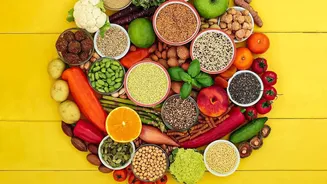
Protein is essential for repairing tissues, building muscle, and supporting your immune system. A common myth is that it's difficult to get enough protein on a vegetarian diet, but India's cuisine is rich with excellent plant-based sources. Lentils (dal), a staple in most households, are a fantastic source, with a cooked cup providing a significant amount of your daily needs. Other powerful options include chickpeas (chana), kidney beans (rajma), tofu, and paneer. Nuts and seeds like almonds and chia seeds are also great for adding a protein boost to any meal. Including a source of protein in every meal helps ensure you feel satisfied and nourished throughout the day.
Fill Up on Fibre
Fibre is a vegetarian's best friend for achieving fullness. It exists in two forms: soluble, which forms a gel-like substance in the gut to slow digestion, and insoluble, which adds bulk and promotes regularity. Many high-protein foods, such as lentils, chickpeas, and beans, are also packed with fibre. Vegetables are another cornerstone of a high-fibre diet. Leafy greens like spinach, as well as vegetables like okra (bhindi), broccoli, and sweet potatoes, are excellent sources. Whole grains such as oats, brown rice, and millets like jowar and bajra are rich in fibre and form a foundational part of a balanced diet. Fruits like guava and apples also contribute significantly to daily fibre intake.
Choose Your Carbohydrates Wisely
Carbohydrates are the body's primary source of fuel, but not all carbs are created equal. Simple carbohydrates, like those in sugary snacks and white flour, are digested quickly, leading to a rapid spike and fall in blood sugar. Complex carbohydrates, on the other hand, are digested slowly, providing a steady, sustained release of energy. These are found in whole foods like whole grains (oats, quinoa, brown rice), legumes (beans, lentils), and starchy vegetables (sweet potatoes, peas). By choosing these complex carbs, you not only get a stable energy source but also the added benefits of the fibre, vitamins, and minerals they contain.
Putting It All Together: Balanced Meal Ideas
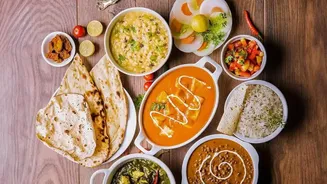
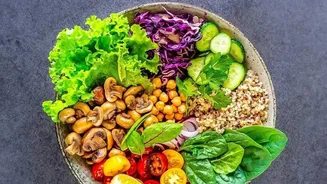
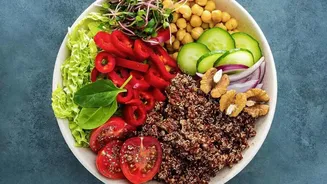
Building a balanced plate is simple once you know the components. Aim to include a source of protein, fibre-rich vegetables, and a complex carbohydrate in each meal. For lunch, consider a hearty bowl of rajma or chana masala with a side of brown rice and a kachumber salad. A quinoa bowl topped with roasted vegetables, paneer or tofu, and a sprinkle of pumpkin seeds is another excellent option. For dinner, a traditional meal of dal with whole wheat roti and a seasonal vegetable sabzi, like bhindi or palak, provides a perfect balance. Even breakfast can be balanced: think oats made with milk, topped with nuts and fruit. These combinations ensure you are getting a delicious meal that will keep you energised and satisfied for hours.