
The New Frontier: The Western Ghats Challenge
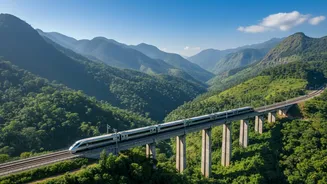
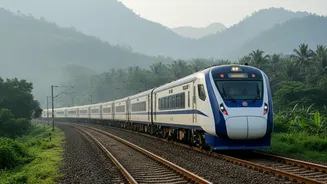
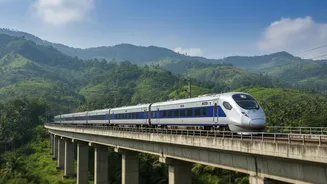
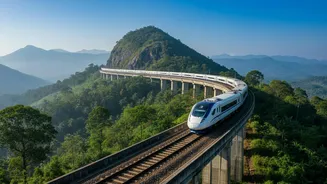
The focus of these intensive trials is the formidable Sakleshpur-Subrahmanya Road ghat section in Karnataka, a vital link for the proposed Bengaluru-Mangaluru route. This 55-kilometre stretch through the Western Ghats is one of the most technically demanding
railway corridors in the country. Between August 11 and August 20, 2026, a specially modified 20-coach Vande Bharat rake is being put through its paces to assess its performance, stability, and safety on this uniquely challenging terrain. Personnel from the Research Designs and Standards Organisation (RDSO) are on board, meticulously evaluating every aspect of the train's behaviour, from acceleration and braking to its stability on sharp curves.
An Engineering Gauntlet
So, what makes this particular section so difficult? The route features an astonishing 57 tunnels, 226 bridges, and 108 sharp curves packed into just 55 kilometres. Compounding this is a steep gradient of 1 in 50, which essentially means the track rises one metre for every 50 metres travelled. This kind of incline poses a significant challenge for any train, demanding immense power to ascend and, more critically, precise braking control to descend safely. The area is also highly prone to landslides, especially during the monsoon, adding another layer of operational risk. Due to these factors, the Commissioner of Railway Safety has capped the maximum speed on this section at a cautious 30 kmph.
A Custom Solution for a Unique Problem
A standard Vande Bharat train is not equipped to handle such a demanding ghat section on its own. Conventional trains operating here often use 'banker' locomotives—extra engines attached at the rear to provide additional pushing power and braking force. However, attaching and detaching these bankers from the aerodynamically designed Vande Bharat would be time-consuming and impractical. To overcome this, Indian Railways has deployed a Vande Bharat rake specially built by the Integral Coach Factory (ICF) in Chennai. This modified train is fitted with an integrated Automatic Emergency Braking (AEB) system. This crucial safety feature constantly monitors the train's speed and can automatically apply the brakes if it exceeds the set limit, providing an essential safeguard against accidents on steep gradients.
Unlocking All-Weather Connectivity
The successful completion of these trials is more than just a technical achievement; it represents a major step towards enhancing rail connectivity to India's coastal and hilly regions. The Bengaluru-Mangaluru line, which was fully electrified in December 2025, is a crucial link between the state capital and the coastal hub. Proving that the Vande Bharat can safely operate here would pave the way for a faster, more comfortable journey for thousands of passengers. It would cut down travel time and provide a premium travel experience through one of India's most scenic landscapes, known for its lush forests and waterfalls. This achievement would also create a blueprint for introducing Vande Bharat services on other challenging ghat routes across the country, truly integrating these regions into the high-speed rail network.