







NASA’s plan to return to the Moon has a new, intricate first step. Artemis III, once slated for a lunar landing, is now a complex 14-day orbital mission to test the very hardware needed for future moonwalks. Here’s how it works.
From Lunar Landing to Dress Rehearsal
The goalposts for Artemis
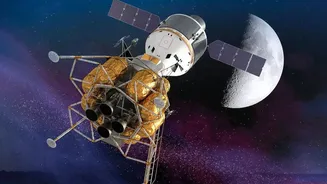
III have shifted. Originally intended to be the mission that lands the first woman and first person of colour on the Moon, it has been redesigned as a crucial technological demonstration in low-Earth orbit. Now slated for 2027, the mission will test the rendezvous and docking capabilities of two competing commercial lunar landers, one from SpaceX and one from Blue Origin. This change allows NASA to test the complex procedures of linking up with a lander in the relative safety of Earth orbit before attempting a landing on the Moon, which is now planned for the Artemis IV mission in 2028. The approach mirrors the historic Apollo program, where the Lunar Module was first tested in Earth orbit on Apollo 9 before it flew to the Moon.
The Three-Rocket Ballet
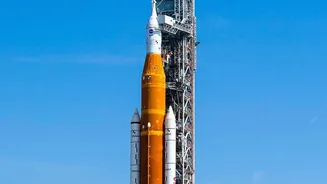
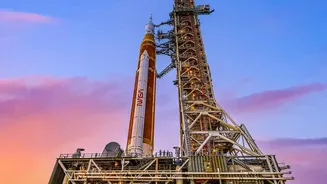
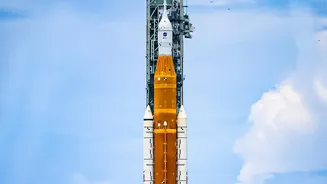
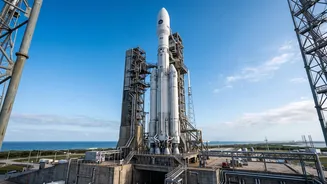
Unlike the Apollo missions that launched everything on a single Saturn V rocket, Artemis III requires an unprecedented, tightly choreographed sequence of three separate launches on three different heavy-lift rockets. The first rocket to launch will be Blue Origin’s New Glenn, carrying a test version of its Blue Moon lander into orbit. Shortly after, NASA will launch its own Space Launch System (SLS) rocket, carrying the four-person crew inside the Orion spacecraft. The third launch will be a SpaceX Starship, carrying a test article of its own lander design. According to NASA's Artemis program manager, Jeremy Parsons, this is something the agency has never attempted before, launching three distinct spacecraft and testing how they operate together.
A 14-Day Orbital Itinerary
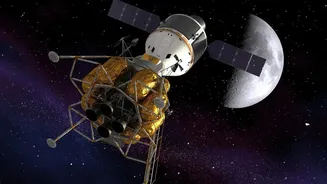
The 14-day mission is packed with critical objectives. After launching, the crewed Orion spacecraft will first rendezvous and dock with Blue Origin's Blue Moon lander. The crew will then enter the lander for approximately two days to conduct a thorough evaluation of its cabin environment, life-support systems, and controls. After undocking from the Blue Moon vehicle, the Orion crew will wait for the launch of the SpaceX Starship test lander. They will then perform a second rendezvous and docking, this time with Starship. This second test will be shorter, and the crew will not enter the vehicle; instead, they will focus on validating how the two spacecraft interact while connected. This dual-test approach allows NASA to evaluate two very different lander designs from its commercial partners in a single mission.
Why So Complicated?
This intricate, multi-launch plan reflects a fundamental shift in space exploration strategy. By partnering with commercial companies like SpaceX and Blue Origin, NASA is fostering a competitive, service-based ecosystem for accessing the Moon. The complexity is a direct result of using new, larger landers that are too heavy to launch to the Moon with a crew in a single go. Testing both landers in Earth orbit is a crucial risk reduction step. It allows engineers and astronauts to gather realworld data on how these systems perform before committing to a fullfledged lunar landing. Every procedure validated and every piece of hardware tested during Artemis III is designed to increase the safety and success of the eventual return to the lunar surface.