








The Rocket and Its Revolutionary Engine
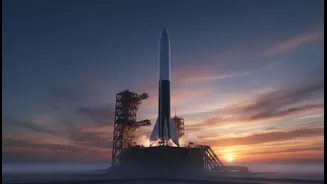
At the heart of the excitement is Agnibaan SOrTeD (Suborbital Technological Demonstrator). While it is a test vehicle, its design is anything but ordinary. The rocket is powered by Agnilet, the world's first single-piece, fully 3D-printed rocket engine.
This is not just a novelty; 3D printing, or additive manufacturing, allows Agnikul to produce an entire engine in a matter of days, a process that traditionally takes months. The engine is also semi-cryogenic, using a combination of liquid oxygen and a readily available aviation turbine fuel, which is simpler and more cost-effective than the fully cryogenic engines used in many larger rockets. This combination of rapid manufacturing and innovative fuel technology is what makes Agnibaan a potential game-changer for the small satellite launch market.
A History of High Hopes and Hurdles
The path to the launchpad has been fraught with challenges, justifying the headline's 'return attempt' framing. The mission has faced multiple postponements due to technical glitches discovered during pre-launch checks. One attempt was called off with just 92 seconds left on the countdown clock, highlighting the razor-thin margins and immense complexities of spaceflight. These delays, while frustrating, are a standard part of the rigorous testing process in the space industry. Each scrub provided valuable data, allowing engineers to refine systems and build confidence. This history of caution and perseverance adds to the tension and anticipation surrounding the upcoming launch, which represents the culmination of years of work and overcoming setbacks.
More Than Just a Single Launch
A successful flight for Agnibaan would be a monumental achievement with ripples across the entire Indian space ecosystem. For Agnikul Cosmos, an IIT-Madras incubated startup founded in 2017, it would be the ultimate validation of its technology and business model. More broadly, it would be the first Indian flight powered by a semi-cryogenic engine and the first launch from a private launchpad, named 'Dhanush', built by the company itself within ISRO's spaceport. This would send a powerful signal to investors that private Indian firms have the capability to execute complex space missions, potentially unlocking significant new funding for the sector. It serves as a crucial proof point following the success of Skyroot Aerospace, the first Indian private company to launch a rocket, demonstrating that the ecosystem has multiple serious players.
The Competitive Landscape and National Ambition
Agnikul does not operate in a vacuum. The Indian private space sector is buzzing with activity, with over 300 startups working on everything from launch vehicles to satellites. Hyderabad-based Skyroot Aerospace recently achieved a historic milestone with the successful orbital launch of its Vikram-1 rocket. While Skyroot's success has energized the industry, a successful flight by Agnikul would confirm that India has multiple, credible private launch providers. This internal competition is healthy, pushing companies to innovate faster and more efficiently. For India, a strong private launch sector is critical to its 'Atmanirbhar' (self-reliant) ambitions in space, reducing dependence on foreign launchers and capturing a larger share of the global commercial space market, which is increasingly focused on small satellite deployments.
The Stakes for India's NewSpace Future
Ultimately, the Agnibaan launch is a high-stakes test of not just a rocket, but an idea: that India's private sector can stand alongside its venerable government agency, ISRO, as a key driver of the nation's space ambitions. A successful mission will bolster confidence, attract talent and capital, and accelerate the development of a robust commercial space ecosystem. It proves that groundbreaking innovation, like single-piece 3D-printed engines, can be born and executed in India. While failure would be a setback, the knowledge gained would be invaluable. However, a victory would echo far beyond the launchpad, telling the world that India's private space industry is not just taking off—it's ready to fly.