


Understanding the Colour Change
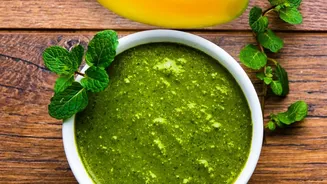
The culprit behind your chutney’s disappointing colour change is a natural process called oxidation. When the delicate leaves of coriander and mint are chopped and exposed to air, enzymes within the plant cells react with oxygen. This enzymatic browning
is the same reaction that turns a sliced apple brown. Heat and air are the primary accelerators of this process. The friction from a blender’s blades can generate a surprising amount of heat, which, combined with the air being incorporated, creates the perfect storm for a colour fade. Understanding this science is the first step to outsmarting it and keeping your chutney as vibrant as the fresh herbs you started with.
Technique 1: Minimise Air Exposure
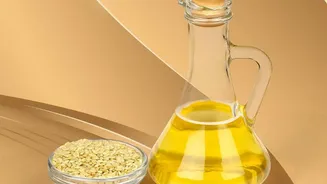
Since oxygen is a key ingredient in the browning process, limiting its contact with the chutney is crucial. One effective method is to ensure you’re using a good, powerful blender that can process the ingredients quickly without incorporating too much air. Don't over-blend; run the machine just until the ingredients are smooth. Storing the chutney properly also makes a massive difference. Transfer it to an airtight container immediately after making it. For extra protection, you can pour a thin layer of oil over the surface of the chutney before sealing the lid. This creates a physical barrier that blocks air from reaching the chutney below, significantly slowing down oxidation. When ready to serve, you can either stir the oil in or pour it off.
Technique 2: Keep Things Cool
Heat speeds up the enzymatic reactions that cause browning. The blades of a mixie or blender can get quite warm during operation, essentially ‘cooking’ the delicate herbs and dulling their colour. The simplest way to counteract this is to use cold ingredients. Instead of regular water, use ice-cold water or even throw a few ice cubes directly into the blender along with your herbs. This keeps the overall temperature of the mixture low, neutralising the heat from the blades and preserving the chlorophyll that gives the herbs their bright green hue. Another advanced technique is blanching. This involves briefly plunging the coriander and mint leaves into boiling water for about 15-30 seconds, then immediately shocking them in a bowl of ice water to stop the cooking process. This deactivates the browning enzymes entirely, though it can subtly mellow the herbs' flavour.
Technique 3: Use Acidity to Your Advantage
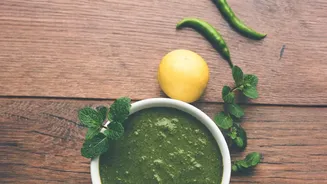
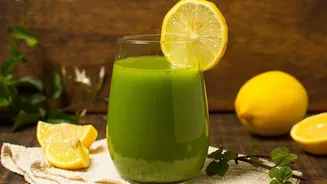
Acid is a powerful ally in the fight against oxidation. Ingredients like lemon juice, lime juice, vinegar, or even tamarind pulp lower the pH of the chutney. This acidic environment makes it difficult for the browning enzymes to function effectively. Adding a generous squeeze of lemon or lime juice not only brightens the chutney’s flavour with a pleasant tang but also acts as a natural preservative, helping to lock in that vibrant green colour. For the best results, add your acidic ingredient towards the end of the blending process or stir it in right after. Some cooks even find that adding a spoonful of plain curd or yoghurt can help maintain a lighter green colour, in addition to adding a creamy texture.
Putting It All Together for Perfect Chutney
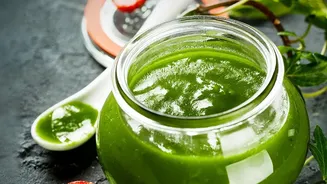
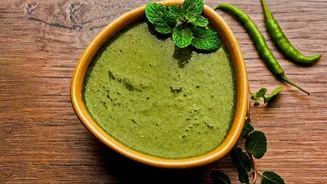
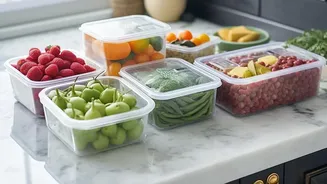
To achieve that perfect, restaurant-style green chutney that stays bright for days, combine these techniques. Start with the freshest herbs you can find. When blending, use ice cubes or chilled water. Don't be shy with the lemon juice. Blend quickly and avoid over-processing. Immediately transfer the finished chutney to a small, airtight glass jar, filling it as close to the top as possible to minimise trapped air. Store it in the coldest part of your refrigerator. For longer storage, you can freeze the chutney in an ice cube tray. Once frozen, transfer the cubes to a zip-lock bag, squeezing out all the air. This allows you to thaw small, fresh-tasting portions whenever you need them, whether it's for sandwiches, chaat, or as a dipping sauce for samosas and pakoras.