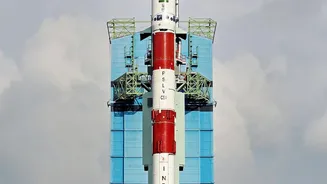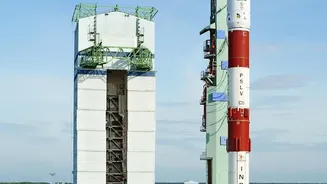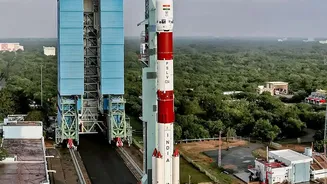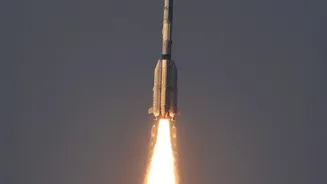







India's New Gateway to the Stars
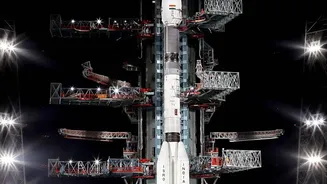
The project at the heart of this transformation is a new Small Satellite Launch Complex (SLC) at Kulasekarapattinam in Tamil Nadu. This facility, spread across more than 2,200 acres, will be India's second spaceport after the venerable Satish Dhawan Space
Centre in Sriharikota. Unlike Sriharikota, which handles large and complex missions like Chandrayaan and Gaganyaan, the Kulasekarapattinam spaceport is purpose-built for one thing: launching small satellites quickly and efficiently. The nearly thousand-crore investment underscores a major strategic pivot towards capturing a larger slice of the booming global market for small satellite launches.
The Need for a Dedicated Launchpad
For years, India’s primary spaceport at Sriharikota has been the workhorse of the Indian Space Research Organisation (ISRO). However, with only two active launchpads handling all of India's missions—from heavy communication satellites to interplanetary probes—a bottleneck was forming. Commercial customers wanting to launch small satellites often had to piggyback on larger, pre-scheduled missions, leading to long waits. The global small satellite market, however, is projected to be worth over $13 billion by 2030, and it demands speed and flexibility. The Kulasekarapattinam facility is designed to meet this demand, freeing up Sriharikota for high-priority national missions while turning the new spaceport into a high-cadence launch hub for commercial clients.
A Boost for the SSLV Rocket
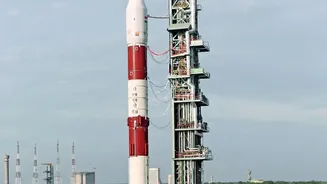
The new spaceport is tailor-made for ISRO’s Small Satellite Launch Vehicle (SSLV). The SSLV is a compact rocket designed for 'launch-on-demand' services, capable of being assembled and launched in a matter of days rather than weeks. The Kulasekarapattinam location provides a crucial geographical advantage. For launches into polar orbits—a common requirement for Earth observation and remote sensing satellites—rockets from Sriharikota have to perform a costly 'dog-leg manoeuvre' to fly around Sri Lanka. This burns extra fuel and reduces the rocket's carrying capacity. From Kulasekarapattinam, rockets can fly directly south over the Indian Ocean, a straight shot that saves fuel and maximizes payload. For the SSLV, this means it can carry a useful payload from the new site, a feat it couldn't efficiently manage from Sriharikota for polar missions.
A New Commercial Strategy
Signifying a major shift in strategy, the Indian National Space Promotion and Authorisation Centre (IN-SPACe) has invited private companies to manage and operate the entire ₹986 crore launch complex. This is a first for India and follows a model similar to how NASA operates its launch facilities, which are used by private companies like SpaceX. The selected private operator will be responsible for everything from launch campaign operations to facility maintenance and customer coordination. ISRO will provide initial training and technical support to ensure a smooth transition. This move is designed to leverage private sector efficiency and turn the spaceport into a competitive commercial enterprise, capable of handling 20-25 launches per year.
The Bigger Economic Picture
The Kulasekarapattinam spaceport is more than just a launchpad; it's the anchor for a new space-focused industrial ecosystem. The Tamil Nadu government is planning a 'Space Industrial and Propellants Park' in the surrounding area to attract manufacturing and research firms. The site's proximity to the ISRO Propulsion Research Complex at Mahendragiri also simplifies logistics, making it easier and cheaper to transport rocket components. By creating a dedicated, privately-operated hub for small satellite launches, India is not just building infrastructure but is also sending a clear signal to the global space community. The goal is to become a go-to destination for reliable and cost-effective access to space, challenging established players and fostering a vibrant domestic space industry.