





A Global Stage for a National Treasure
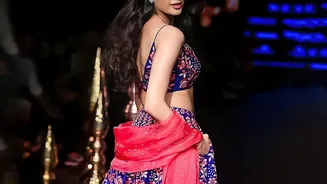
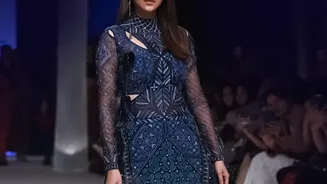
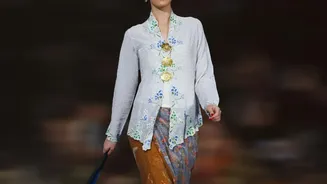
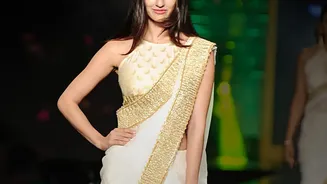
This August, Auckland's waterfront will host New Zealand Fashion Week (NZFW), and a special delegation is set to steal the show. Through a partnership with the Fashion Design Council of India (FDCI), a showcase titled 'Khadi Beyond Borders' will feature
the work of top Indian designers. Led by the renowned Rajesh Pratap Singh, a collective including Samant Chauhan, Shruti Sancheti, and Pawan Sachdeva will present contemporary collections centred around Khadi. This isn't just about exporting textiles; it's about exporting a story. The event, born from a trade agreement signed by the prime ministers of both nations, aims to position Khadi not as a relic of history, but as the fabric of the future.
The Fabric of Freedom
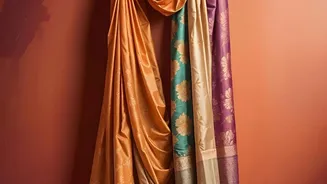
To understand the weight of this moment, one must understand Khadi. It is not merely hand-spun and hand-woven cloth; it is the thread of India's identity. Popularised by Mahatma Gandhi, Khadi became the uniform of the Swadeshi movement, a powerful symbol of self-reliance (swadeshi) and resistance against British colonial rule. Choosing to spin yarn on a charkha and wear Khadi was a quiet but profound act of defiance, a rejection of dependence on foreign-milled textiles and an assertion of economic independence. Each yard of the coarse, breathable fabric carried the spirit of a nation fighting for its soul.
The Sustainability Weave
What makes Khadi exceptionally timely in 2026 is its inherent sustainability. In a world grappling with the fast fashion crisis, Khadi offers a compelling alternative. Its production process has a minimal carbon footprint, requiring no electricity for spinning or weaving and using significantly less water than machine-milled fabrics. It is biodegradable, natural, and supports rural economies by providing livelihoods to millions of artisans, many of them women in village communities. As global consumers and designers increasingly reject throwaway culture in favour of 'slow fashion'—a movement prioritising craftsmanship, quality, and ethical production—Khadi emerges as a perfect embodiment of these values.
A Meeting of Minds in Aotearoa
New Zealand Fashion Week provides a particularly resonant platform. The event has increasingly focused on sustainability, circularity, and championing indigenous craftsmanship. Just as NZFW elevates the work of Māori weavers and designers who embed their cultural heritage (whakapapa) into their creations, it offers an understanding space for a fabric like Khadi, which is similarly rich in cultural narrative. This is not a random placement but a thoughtful dialogue between cultures that value authenticity and tradition. The showcase in Auckland represents a meeting of two worlds that understand that true style has deep roots.
From Protest to Haute Couture
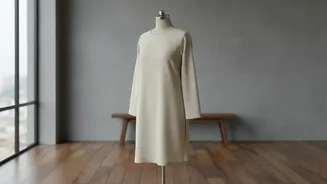
The journey of Khadi from a symbol of political protest to a material for international high fashion is a remarkable evolution. For years, Indian designers like Sabyasachi Mukherjee and Ritu Kumar have worked to contemporise the fabric, moving it beyond the stereotypical perception of being coarse or only suitable for traditional attire. They have experimented with its texture, drape, and versatility, creating everything from elegant dresses and sharp jackets to even Khadi denim. The 'Khadi Beyond Borders' showcase is the culmination of these efforts, presenting the fabric as sophisticated, luxurious, and globally relevant. It's a declaration that Khadi's time has come, not just as a piece of Indian heritage but as a contribution to a more conscious global wardrobe.