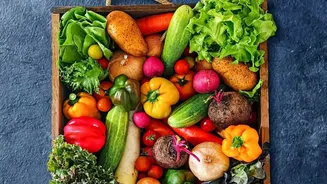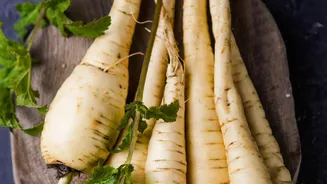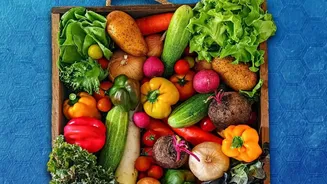







Beetroot: The Crimson Dynamo
Known for its stunning deep red colour, beetroot is a fantastic source of essential nutrients. This vibrant hue comes from powerful antioxidants called betalains, which help fight cell damage and inflammation. Beetroots are packed with folate (vitamin
B9), manganese, and potassium, which are important for everything from cell growth to heart health. They are also a good source of dietary fibre, which aids digestion and helps you feel full. Enjoy them boiled in salads, blended into a vibrant juice, or cooked into a flavourful sabzi. While the root is most common, the leaves, known as beet greens, are also edible and nutritious.
Sweet Potato: Nature's Healthy Treat
Often called shakarkandi in India, the sweet potato is a versatile root that is naturally sweet and incredibly nutritious. Its bright orange flesh is a clear indicator of its high beta-carotene content, which the body converts into vitamin A. This vitamin is vital for healthy vision, skin, and a strong immune system. A single medium sweet potato can provide over four times your daily vitamin A needs and is a great source of vitamin C and manganese. With nearly 4 grams of fibre in a medium-sized tuber, it supports digestive health and may help in managing blood sugar levels. Try it roasted until tender, boiled and mashed, or as the star ingredient in a savoury chaat.
Carrot: The Classic Crunch
Carrots are perhaps the most famous root vegetable, celebrated for their crisp texture and health benefits. They are an excellent source of beta-carotene, an antioxidant that supports eye health and can help reduce the risk of age-related vision issues. Carrots also provide a healthy dose of dietary fibre, vitamin K1, and potassium, all of which contribute to heart health by helping manage cholesterol and blood pressure. Their versatility is unmatched; they can be eaten raw as a snack, juiced for a refreshing drink, shredded into salads and raita, or cooked into a variety of dishes, from simple stir-fries to the beloved dessert, gajar ka halwa.
Radish: The Peppery Pick-Me-Up
With its characteristic peppery flavour, the radish (or mooli) adds a refreshing crunch to any meal. Radishes are low in calories but high in nutrients like vitamin C, a powerful antioxidant that helps protect your cells from damage and supports a healthy immune system. They are also a good source of fibre, which aids digestion and can help prevent constipation. Some studies suggest that compounds in radishes may help regulate blood sugar levels. Radishes are wonderful when eaten raw in salads, pickled as a zesty condiment, or grated and mixed into the dough for flavourful mooli parathas. Even the leaves are edible and contain more fibre than the root itself.
Turnip: The Underrated Wonder
Often overlooked, the turnip (shalgam) is a nutrient-dense root vegetable that deserves a place on your plate. As a member of the cruciferous family, like broccoli and kale, it packs a healthy punch. Turnips are an excellent source of vitamin C and provide important minerals like potassium and calcium. They are high in fibre and low in calories, making them a great choice for digestive health and weight management. Turnips also contain compounds called glucosinolates, which have antioxidant properties. Their mildly sweet and earthy flavour works well in stews, curries, or simply roasted with other vegetables until tender and caramelized.