




The New Busiest Hub for Global Travelers
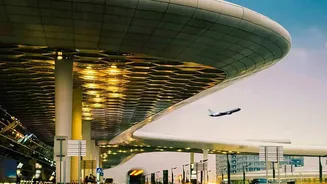
In a significant shift for the global aviation industry, Seoul’s Incheon International Airport (ICN) has officially become the world's busiest hub for international passengers. According to preliminary data for the first half of 2026 from Airports Council
International (ACI), Incheon handled a record 38.39 million international travelers. This figure narrowly pushes it ahead of London Heathrow, which saw 37.79 million, and Singapore’s Changi Airport, with 34.53 million passengers. While airports like Atlanta’s Hartsfield-Jackson still lead in overall traffic due to enormous domestic volume, the international passenger metric is the true benchmark for a global crossroads. For the first time since its opening in 2001, Incheon has climbed from a perennial top contender to the undisputed leader in connecting the world.
A Story of Strategy and Opportunity
Incheon's ascent to the top wasn't just a matter of steady growth; it was the result of strategic readiness meeting a unique global moment. Geopolitical instability in the Middle East caused a significant rerouting of typical air traffic, with many travelers and airlines seeking alternatives to the region's traditional hubs. Incheon was perfectly positioned to absorb this demand. The airport saw its number of transfer passengers surge by over 18 percent compared to the previous year. The increase was particularly dramatic for passengers connecting to and from Europe, with that specific traffic soaring by more than 63 percent. This, combined with a strong rebound in tourism from nearby China and Japan, created a perfect storm that propelled Incheon into the number one position.
Decades of Investment Pay Off
You don't become the world's busiest international airport by accident. Incheon's success is built on a foundation of long-term, ambitious infrastructure investment. The most critical piece of this puzzle was the completion of its massive fourth-phase expansion project in late 2024. This upgrade boosted the airport's annual capacity to an astounding 106 million passengers, giving it the third-largest capacity of any airport in the world. Beyond sheer size, its network is formidable. Incheon is served by over 100 airlines flying to 183 cities across 53 countries. This extensive reach gives it a distinct advantage over regional competitors in Hong Kong, Shanghai, and Tokyo, providing more options and connectivity for international travelers.
Where Service and Culture Greet You
Long before it claimed the top spot for passenger volume, Incheon had already built a world-class reputation for passenger experience. For years, it has consistently ranked among the world’s best airports in the prestigious Skytrax World Airport Awards, praised for its efficiency, cleanliness, and passenger-friendly amenities. In the 2026 rankings, it secured the number two spot globally, recognized as one of the most family-friendly airports in the world. This isn't your average terminal. Incheon transformed the concept of a layover into a cultural experience, offering everything from live traditional music performances and cultural craft centers to lush indoor gardens, a spa, and even a full-fledged golf course. It’s this deep-seated commitment to service that made the airport a passenger favorite long before it became the world’s busiest gateway.