


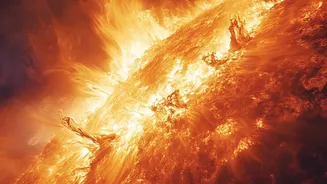
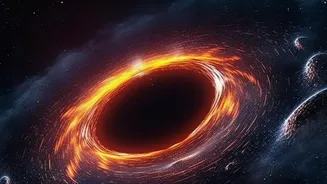
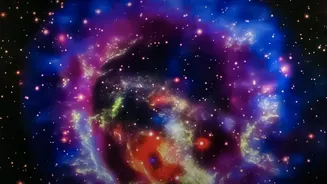
Cosmic Fireworks on a Grand Scale
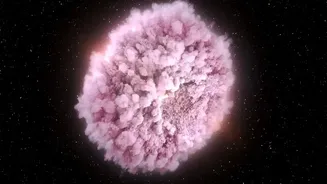
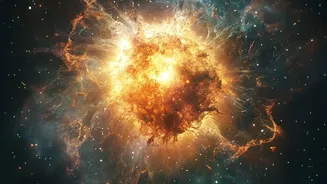
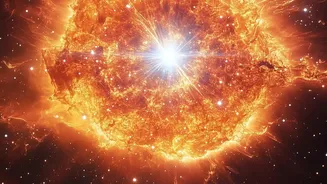
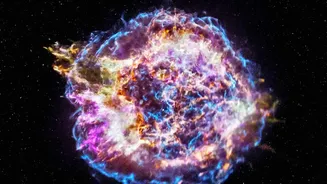
A supernova is the explosive death of a star. Specifically, the new research concerns core-collapse supernovae, which happen to stars at least eight to ten times more massive than our sun. At the end of its life, the star runs out of nuclear fuel. Without
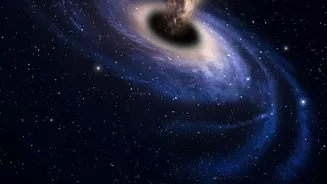
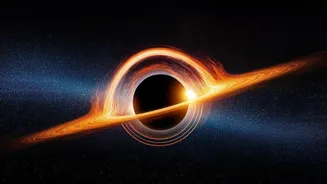
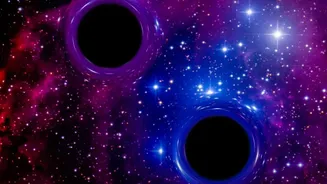
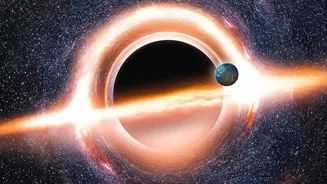
the outward pressure from fusion, gravity wins. The star's core collapses in on itself in a fraction of a second, creating a super-dense object—either a neutron star or, if the star is massive enough, a black hole. This collapse unleashes a cataclysmic shockwave. For decades, however, astrophysicists have faced a persistent problem: in their computer models, this shockwave often stalls, and the star fails to explode. Instead of a brilliant supernova, the simulation just fizzles out.
Enter the Ghost Particle
The key to solving this cosmic puzzle appears to be the neutrino. These fundamental particles are often called 'ghost particles' because they have almost no mass and barely interact with other matter. Trillions of them pass through your body every second without a trace. But what they lack in individual impact, they make up for in sheer numbers. During a star's core collapse, an almost unimaginable flood of neutrinos is created, carrying away about 99% of the explosion's colossal energy. For a long time, the thinking was that a tiny fraction of these neutrinos get reabsorbed by the stalled shockwave, giving it the 'kick' it needs to reignite and blow the star apart. This is known as the neutrino-driven mechanism.
A Breakthrough in Stellar Simulation
The new work, published in the prestigious journal Physical Review D, adds a crucial layer of complexity to this process. Researchers, including a team from the University of Copenhagen's Niels Bohr Institute, ran a massive suite of new simulations focusing on a subtle property of neutrinos: their ability to change 'flavour'. Neutrinos come in three types, or flavours, and they can oscillate or switch between them as they travel. While physicists have known about flavour-switching for years, many supernova models assumed it didn't have a major effect on the outcome. The latest research challenges that assumption directly, showing that this tiny quantum behaviour has massive consequences.
A Particle's Whim Decides a Star's Fate
The simulations demonstrated that including neutrino flavour conversion can dramatically alter a star's final moments. For a significant number of simulated stars, particularly those between 16 and 30 times the mass of our sun, changing how the flavour conversion was modelled flipped the entire outcome. Stars that were predicted to explode as supernovae instead collapsed directly into black holes. Stars that were on track to become black holes were instead pushed into a successful, violent explosion. According to the researchers, this is because different neutrino flavours interact with matter slightly differently. How and where they change flavour determines how effectively they deposit their energy into the stalled shockwave, deciding whether it revives or dies.
Why This Cosmic Drama Matters
Understanding what makes a star go 'boom' is about more than just solving a long-standing academic puzzle. It's fundamental to understanding our own existence. Supernovae are the universe's primary forges for heavy elements. The iron in your blood, the calcium in your bones, and the oxygen you breathe were all created inside massive stars and scattered across the galaxy by supernova explosions. These events are a critical step in the cosmic recycling program that allows new stars, planets, and eventually life, to form. By not accounting for the subtle physics of neutrinos, previous models were missing a key ingredient that governs how these life-giving elements are distributed throughout the cosmos.