

A Star's Grand Finale
At the heart of this celestial spectacle is a star much like our own Sun nearing the end of its life. Unlike colossal stars that end in violent supernova explosions, Sun-like stars have a more graceful, albeit dramatic, exit. Over thousands of years,
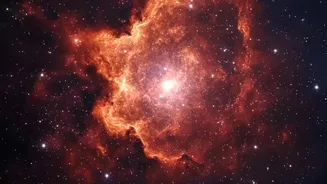
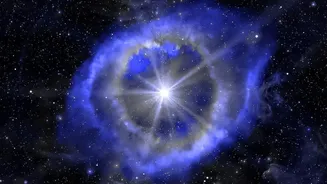
this star has been puffing its outer layers of gas and dust into space. What remains at the core is an incredibly hot and dense stellar remnant known as a white dwarf. In the new Webb image, this white dwarf appears as a bright point of light at the very centre of the nebula, like the button nose on a lion's face. Though small, its intense energy and radiation are the engine driving this entire cosmic construction project.
The Making of a Planetary Nebula
The resulting structure of expanding gas and dust is known as a planetary nebula. The name is a historical misnomer from the 19th century when early astronomers thought these fuzzy, disc-like objects resembled planets through their telescopes. In reality, they have nothing to do with planets. They are the intricate, glowing shrouds of dying stars. The cast-off material is ionized by the fierce ultraviolet radiation blasting from the central white dwarf, causing it to glow in brilliant detail. The Lion Nebula, officially designated NGC 2392, is a classic example of this process, providing astronomers with a laboratory to study the final evolutionary stages of most stars in the universe, including the eventual fate of our Sun billions of years from now.
An Artist of Gas and Dust
The headline’s use of the word “sculpting” is perfectly apt. The central white dwarf is not a passive observer but an active artist. Its powerful stellar winds and radiation are shaping the nebula’s form. An inner bubble of ionized gas, which forms the recognisable 'face' of the lion, is expanding outwards. As it grows, it acts like a snowplow, clearing out and destroying finer dust particles in its path. The spectacular 'mane' is a more distant shell of dust being illuminated by the star. Dotted throughout this mane are dense, comet-shaped clumps of dust that have so far survived the star's onslaught. These resilient filaments protect the material behind them, creating long, shadowy tails and adding to the nebula's complex, layered appearance.
Why Webb's View Is a Game-Changer
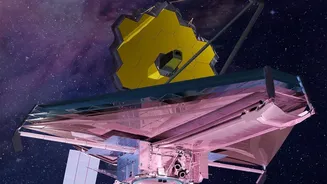
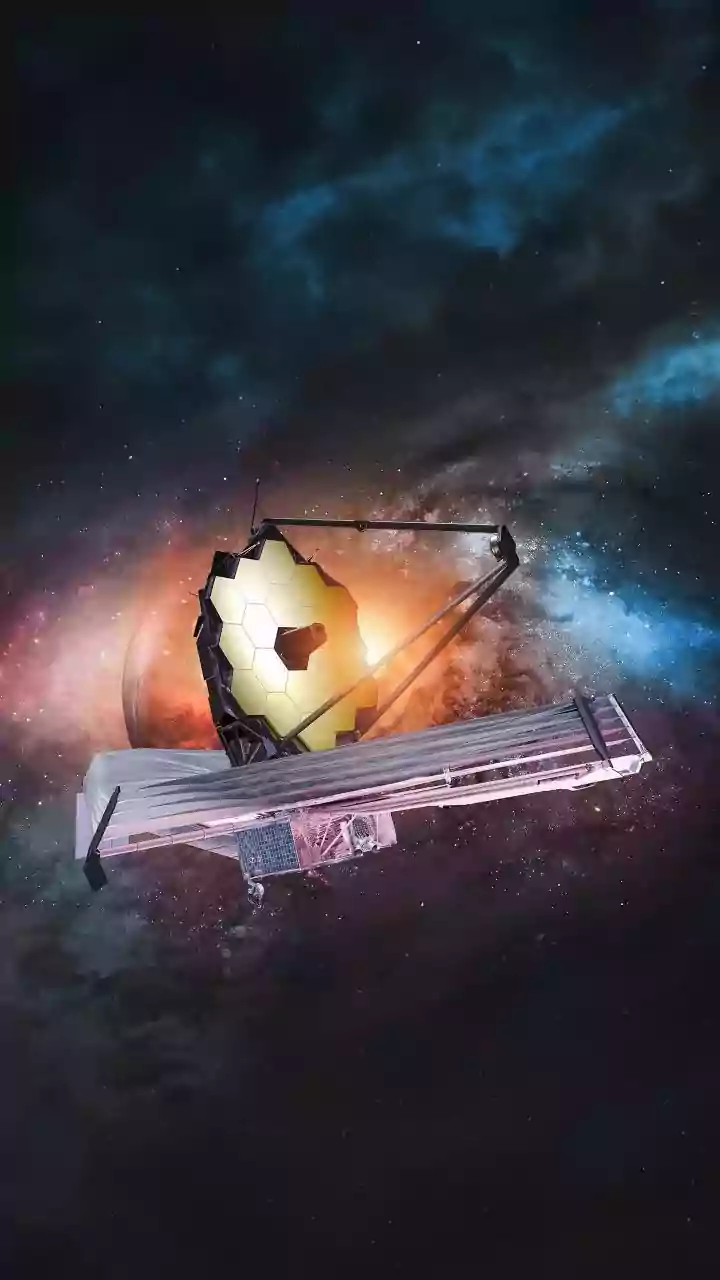
While the Hubble Space Telescope gave us a beautiful visible-light image of the Lion Nebula back in 2000, the James Webb Space Telescope’s technology offers a profoundly deeper look. Webb is an infrared observatory, meaning it sees light that is invisible to the human eye. This capability allows it to peer through obscuring gas and highlight the structure of the dust itself. Using its powerful NIRCam (Near-Infrared Camera) and MIRI (Mid-Infrared Instrument), Webb has provided a much clearer, more detailed map of the nebula's features. It reveals the hazy regions of ionized gas and the wispy filaments of surviving dust with unprecedented clarity. This isn't just a prettier picture; it's a treasure trove of new data that helps scientists better understand how these beautiful, fleeting structures form and dissipate over time.