


The Problem with 'Doing' a Country
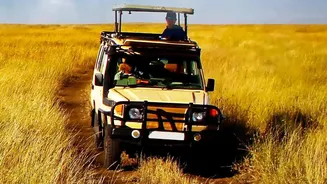
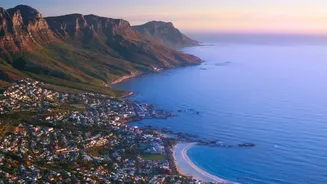
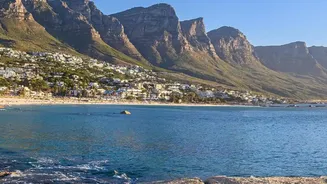
Travel has, for many, become a checklist. See Table Mountain, snap a photo with a penguin, spot the Big Five, and fly home. South Africa can certainly be 'done' this way, but you will have only skimmed its magnificent surface. The country’s real magic
isn’t just in the sights, but in the spaces between them. It’s in the feeling of immense silence in the Karoo desert, the scent of fynbos on a mountain trail, and the rhythm of the waves on an empty Wild Coast beach. These are experiences that cannot be rushed. A growing movement toward 'slow travel' suggests that spending more time in fewer places leads to a more profound and restorative holiday. South Africa, with its incredible diversity, is a perfect candidate for this approach, rewarding those who choose to linger.
The Dragon's Back and Ancient Stories
Consider the Drakensberg Mountains, a UNESCO World Heritage site whose name translates to 'Dragon Mountains'. Stretching over 1,000 kilometres, this is South Africa's highest and longest mountain range, a formidable barrier of basalt cliffs and dramatic peaks. You could see its famous Amphitheatre from a viewpoint and move on, but you would miss its essence. The real 'Berg' is revealed over days. It's found on multi-day hikes like the Grand Traverse, staying in mountain huts and waking up above the clouds. It’s in the quiet discovery of ancient San rock art, with tens of thousands of paintings hidden in caves and overhangs, some several thousand years old. This is a landscape that demands you slow down to walking pace to appreciate its scale and its deep history.
Embracing the Expanse of the Karoo
Often dismissed as the long, flat drive between Johannesburg and Cape Town, the Great Karoo is one of South Africa’s most misunderstood and rewarding regions. Spanning almost 400,000 square kilometres, this semi-desert landscape is a place of immense space, wide horizons, and a sky so clear it feels transformative. A quick trip reveals only its emptiness, but a slower journey uncovers its soul. Spend a few nights in a town like Prince Albert or Graaff-Reinet, with their distinctive Cape Dutch architecture and water furrows. Explore the fossil fields in the Karoo National Park, go stargazing in Sutherland where the night sky is among the darkest on Earth, or simply sit on a farmhouse stoep and watch the light change across the plains. The Karoo teaches you the luxury of doing less and appreciating stillness.
The Untamed Beauty of the Wild Coast
For a different kind of raw beauty, the Wild Coast in the Eastern Cape is unparalleled. This is not the manicured coastline of the Garden Route. It is a rugged, dramatic landscape of rolling green hills that drop into the Indian Ocean, punctuated by cliffs, remote beaches, and iconic landmarks like the 'Hole in the Wall'. To truly experience it, you have to get out of your car. Community-run hiking trails take you from village to village, staying in local homesteads and experiencing Xhosa culture firsthand. This is immersive travel at its best, where the journey is not just about the landscape but about connecting with the people who call it home. It offers a glimpse into a part of South Africa that remains beautifully untamed and deeply traditional.
Canyons, Rock Art, and Winding Roads
Even well-known scenic drives hold more than what can be seen from a car window. The Panorama Route in Mpumalanga traces the edge of the Blyde River Canyon, the world's third-largest canyon. Many visitors stop for a photo at God's Window or the Three Rondavels and continue to Kruger. But staying longer allows you to hike into the canyon, explore its waterfalls, and feel its immense scale. Similarly, the Cederberg Wilderness Area, a few hours from Cape Town, is more than just unique rock formations. It’s a hiker's paradise and an open-air gallery of ancient San and Khoi rock art, best explored on foot over several days. These are not just landscapes to be seen; they are environments to be experienced.