
Why This Combination Works Wonders
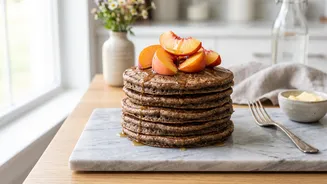
The pairing of peach and buckwheat is a match made in breakfast heaven. Buckwheat, despite its name, is not a type of wheat but a seed related to rhubarb. Its flour offers a rich, nutty, and slightly earthy flavour that provides a beautiful contrast to the
bright, honeyed sweetness of ripe peaches. Nutritionally, buckwheat is a powerhouse. It is naturally gluten-free and packed with more protein and fibre than regular all-purpose flour. It's also rich in minerals like magnesium and manganese. This means these pancakes are not only tasty but also more satisfying, helping you feel full longer. The robust flavour of buckwheat stands up well to the fruit, ensuring neither ingredient gets lost.
Gathering Your Ingredients
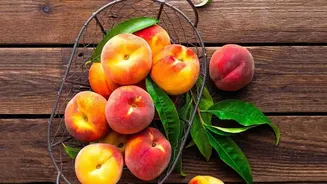
A great pancake starts with quality ingredients. For this recipe, you will need a few key items. The star, of course, is buckwheat flour. You can often find it in the baking aisle alongside other flours. For the fluffiest results, some recipes recommend blending buckwheat with a bit of all-purpose flour, but using 100% buckwheat is perfect for a gluten-free option with a heartier texture. To make the batter light and airy, you'll need a leavening agent like baking powder. Buttermilk or a homemade substitute (milk with a splash of lemon juice) adds a pleasant tang and helps create a tender crumb. An egg provides structure, while a touch of sugar and vanilla extract enhances the overall flavour. And finally, the peaches – you can use fresh, frozen, or even canned.
A Simple Recipe for Success
Making the batter is straightforward. In a large bowl, start by whisking together your dry ingredients: about 1 cup of buckwheat flour, 1 teaspoon of baking powder, and a pinch of salt. In a separate bowl, combine the wet ingredients: 1 cup of milk or buttermilk, one beaten egg, and a tablespoon of melted butter or oil. Pour the wet mixture into the dry ingredients and stir gently until just combined. A few lumps in the batter are perfectly fine; overmixing can result in tough pancakes. Let the batter rest for a few minutes while your griddle or pan heats up. This allows the baking powder to activate and the flour to hydrate, leading to a better texture.
Two Ways to Add Peaches
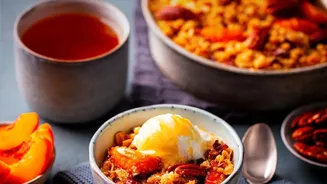
You have two excellent options for incorporating the peaches. The first is to chop fresh or thawed peaches and fold them directly into the batter. This method disperses the fruit throughout each pancake, creating pockets of warm, juicy sweetness. The second, more decadent option is to create a simple peach compote to spoon over the finished stack. To make a compote, simply dice 2-3 peaches and simmer them in a small pot with a tablespoon or two of sugar and a squeeze of lemon juice. For a warmer flavour, you can add a dash of cinnamon or vanilla. Let it bubble for about 10-12 minutes until the peaches are soft and the liquid has thickened into a beautiful syrup. This compote can be made with fresh or frozen peaches and stored in the refrigerator.
Cooking to Golden Perfection
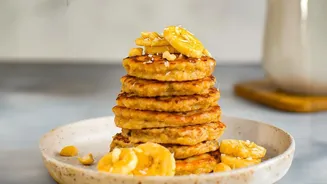
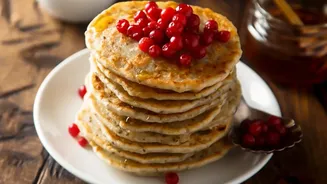
Heat a lightly oiled griddle or non-stick pan over medium heat. A good test is to sprinkle a few drops of water on the surface; if they dance, it's ready. Pour about a quarter-cup of batter onto the hot griddle for each pancake. Cook for 2 to 3 minutes, or until you see bubbles forming on the surface and the edges look dry. Flip carefully and cook the other side for another minute or two until golden brown. Serve the pancakes immediately while they are warm, stacked high and topped with your peach compote, a drizzle of maple syrup, or a dollop of yogurt.