





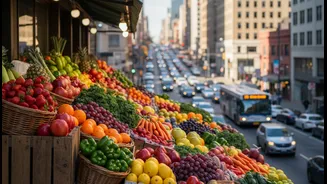
Beyond 'Food Deserts' to 'Food Swamps'
For years, the conversation around food access has been dominated by the idea of 'food deserts'—areas, common in both sprawling cities and remote villages, with limited access to fresh, healthy food. The typical solution proposed is simple: open a grocery
store. But this overlooks a more nuanced and widespread problem in India: the 'food swamp'. A food swamp is an area where food is plentiful, but healthy options are drowned out by a flood of cheap, processed, and unhealthy alternatives. A local kirana store might be packed with instant noodles, sugary biscuits, and fried snacks, while fresh vegetables or affordable proteins like dal are scarce or expensive. This environment doesn't just limit choice; it actively promotes poor nutrition, contributing to the dual burden of undernutrition and rising rates of obesity and diet-related diseases like diabetes. Simply adding another store doesn't solve the problem if it can't compete with the convenience and low cost of unhealthy options.
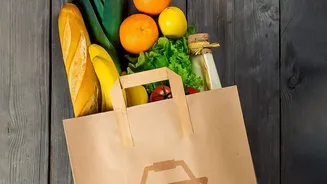
The Power of Knowing What's in the Shopping Bag
This is where household food data becomes a game-changer. This isn't just about broad surveys; it’s about understanding granular consumption patterns. Data from sources like the Household Consumption Expenditure Survey (HCES) and the National Family Health Survey (NFHS) provide a starting point, revealing what different populations consume. The HCES, for example, tracks spending on over 175 food items, showing shifts in dietary habits, such as the declining share of cereals and the rising spend on processed foods. Imagine supplementing this with anonymised, aggregated data from retail loyalty cards or digital payment apps. This could create a dynamic, real-time map of a neighbourhood's nutritional landscape. We could see not just that a community is underserved, but how it is underserved. Are they missing affordable sources of protein? Is there a gap in the availability of millets or leafy greens? This level of detail moves us from guesswork to data-driven diagnosis.
A Smarter Map for Intervention
Armed with this precise data, interventions can become far more effective and targeted. Instead of a one-size-fits-all approach, strategies can be tailored to the specific nutritional gaps of a community. If data shows a neighbourhood has high consumption of unhealthy snacks and low intake of vegetables, the solution may not be a large supermarket. It could be a subsidised vegetable cart from a local farmer, a partnership with women's self-help groups to provide healthy cooked meals, or incentives for kirana stores to stock and promote healthier items. This data-first model allows for what is known as 'precision agriculture' and 'precision policy'—using analytics to eliminate waste and maximise impact. For India's vast Public Distribution System (PDS), which is already undergoing a technology-driven transformation, such data could be revolutionary. Instead of just distributing staple grains, the PDS could be dynamically adjusted to include millets, pulses, or fortified oils based on local nutritional needs identified through data.
Privacy in a Data-Driven World
Of course, the use of household-level data raises legitimate questions about privacy. The goal, however, is not to monitor individual families but to understand community-level trends. The key is robust anonymisation and aggregation. Public health already relies on sensitive data to track disease outbreaks and guide interventions; the same principles can be applied to nutritional security. When data is used as a public health tool, it can identify systemic problems without compromising individual privacy. By focusing on anonymised patterns, policymakers can see the bigger picture—where nutritional deficiencies are concentrated, how price volatility impacts the urban poor, and which interventions are most likely to succeed. This approach transforms data from a commercial asset into a vital resource for creating a more equitable and effective food system.