


Cosmic Fingerprints in Stone
Imagine trying to piece together a story from 4.5 billion years ago. The evidence is scarce, and the witnesses are long gone. This is the challenge facing planetary scientists. However, they have a powerful tool: the chemical composition of the planets
themselves. A recent study from the University of Copenhagen has shed new light on this ancient mystery by looking at 'volatile elements' in the rocks of Earth and Mars. These elements, such as zinc, sodium, and potassium, have low boiling points and evaporate easily when heated. Their presence, or absence, acts as a chemical fingerprint, telling a story of the heat and violence a planet endured during its creation. By studying these elements, scientists can work backwards, like cosmic detectives, to reconstruct how each planet was built.
Earth's Slower, Gentler Start
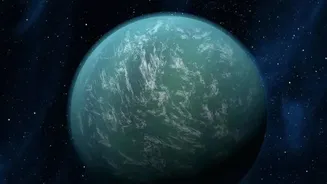
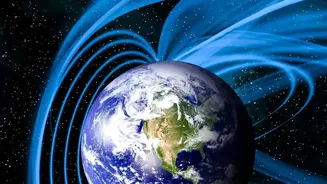
The long-standing debate in planetary science revolves around two main formation theories: the slow, steady accumulation of tiny, centimetre-sized 'pebbles' (pebble accretion), or the more violent process of large, kilometre-wide 'planetesimals' crashing into each other. The new research suggests a hybrid model, and for Earth, the story seems to be one of gradual growth. According to the models, our home planet likely formed from two large protoplanets that grew primarily by sweeping up countless tiny pebbles. This slower, less chaotic process allowed Earth to retain more of its volatile elements. It suggests that at least 75% of Earth's mass came from protoplanets that grew in this steady way, giving it the crucial ingredients, like water, that made it habitable.
Mars: A Story of Violent Collisions
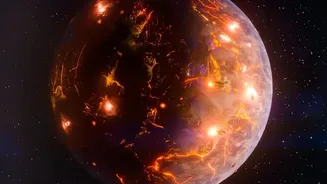
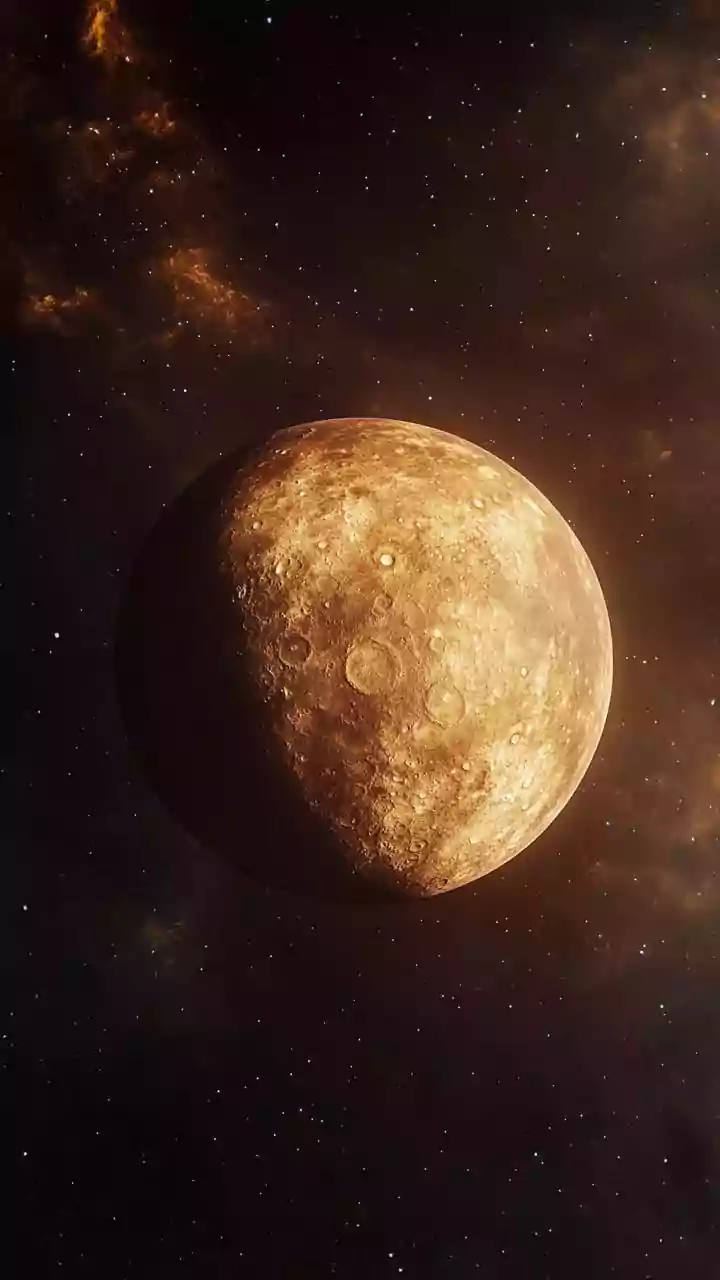
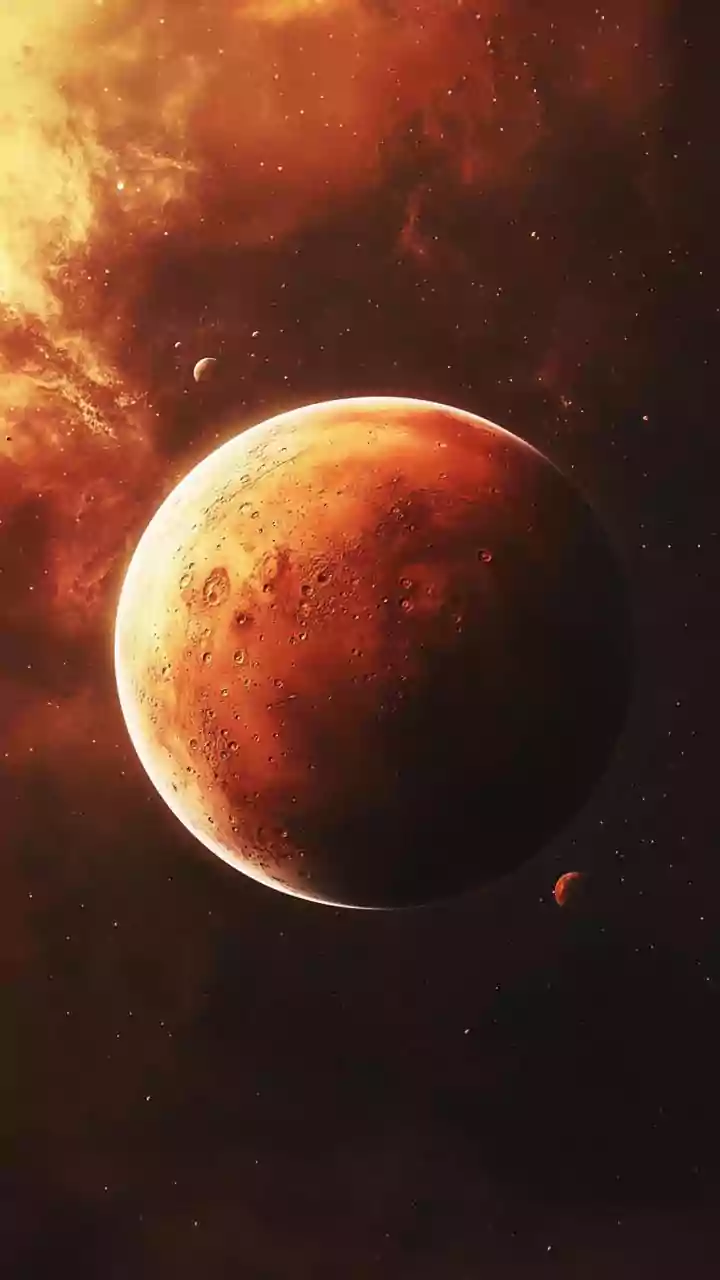
Mars, in stark contrast, appears to have had a much more tumultuous beginning. The chemical analysis suggests the Red Planet's formation was dominated by violent collisions between large planetesimals. This high-energy process would have generated immense heat, boiling away a significant portion of its volatile elements. The models indicate that roughly three-quarters of Mars's mass came from these volatile-depleted planetesimals. This fundamental difference in formation could explain why Mars is so much smaller and why it struggled to hold onto its water and atmosphere over the long term. Its fate, as one scientist put it, may have been decided from the very beginning.
Decoding the Meteorite Clues
This groundbreaking understanding is made possible by studying Martian meteorites that have crash-landed on Earth. These precious samples provide a direct window into the chemical makeup of Mars's mantle and crust. By comparing the isotopic compositions of elements like potassium in Martian meteorites to the composition of Earth's rocks, scientists can gauge how many volatile elements each planet lost during its formation. The data shows Mars is more depleted in these elements than Earth, but less so than even smaller bodies like the Moon or the asteroid Vesta, confirming a strong link between a planet's size and its ability to retain the ingredients for life.
Why This Ancient History Matters Today
Understanding the divergent paths of Earth and Mars is more than just an academic exercise. The presence of volatile elements is directly linked to a planet's ability to form and maintain an atmosphere, oceans, and ultimately, conditions suitable for life. This new framework helps explain why Earth became a haven for life while its neighbour became a barren desert. Furthermore, this knowledge provides a crucial new lens for astronomers searching for life beyond our solar system. By analysing the chemical composition of distant exoplanets, they may now be able to infer how those worlds formed and, consequently, whether they might have the potential to be habitable. The story of our own solar system's formation is becoming a guidebook for finding a second Earth.