







The Atmosphere Hits Pause
The end of the monsoon marks a crucial weather shift in northern India. During the rainy season, strong winds and frequent downpours act as a natural cleansing system, washing away and scattering pollutants. However, as the monsoon withdraws, these conditions
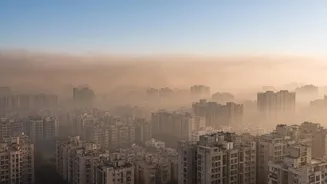
reverse. Wind speeds drop significantly, sometimes to less than 10 kmph, and the air becomes stagnant. This lack of movement is the primary reason pollutants, once dispersed, now begin to linger and accumulate. The air simply doesn't have the momentum to clear itself out, creating a stagnant bubble over the entire region.
The Science of a Pollution 'Lid'
A key factor worsening the situation is a phenomenon called temperature inversion. Typically, the air closer to the ground is warmer and rises, carrying pollutants with it to higher altitudes where they can disperse. But as post-monsoon nights get cooler, the ground loses heat rapidly, making the surface air colder than the air layer above it. This 'inversion' creates a warm lid over the cold air, trapping it—and everything in it—near the ground. This effect, sometimes called 'vertical trapping', drastically reduces the mixing height of the atmosphere, compressing the space in which pollutants can move and concentrating them at breathing level.
Return of the Pollution Sources
While meteorological conditions create the trap, the pollution itself comes from a familiar mix of sources that become more potent in these conditions. Vehicular emissions, construction dust, and industrial output are constants, but their impact is magnified when the air is still. Adding to this is the seasonal start of stubble burning in neighbouring states like Punjab and Haryana. Smoke from these farm fires, carried by the prevailing northwesterly winds, drifts towards Delhi-NCR and gets caught in the same atmospheric trap, significantly spiking PM2.5 levels.
What the Numbers Say
The effect is already visible in the daily Air Quality Index (AQI) readings. After enjoying 'good' or 'satisfactory' air for much of the monsoon, Delhi's AQI has consistently been in the 'moderate' category and has even touched 'poor'. The first week of October 2026 was the most polluted in three years, with an average AQI of 171. This is a stark contrast to the clean air experienced just weeks ago and serves as an early warning for the 'very poor' and 'severe' days that typically define the peak winter season.
What Happens Next? The GRAP Is Here
In response to the deteriorating air, authorities rely on the Graded Response Action Plan (GRAP), a set of emergency measures that escalate with pollution levels. For 2026, the Commission for Air Quality Management (CAQM) has revised the plan to be more proactive, implementing some restrictions even at Stage I of GRAP, when the AQI is in the 'poor' category (201-300). These measures now include earlier restrictions on older diesel buses from neighbouring states and curbs on the use of diesel generator sets. The plan also includes stricter enforcement of Pollution Under Control (PUCC) norms and rules for construction activities to manage dust.