




The Moment of the Catch
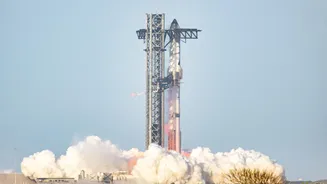
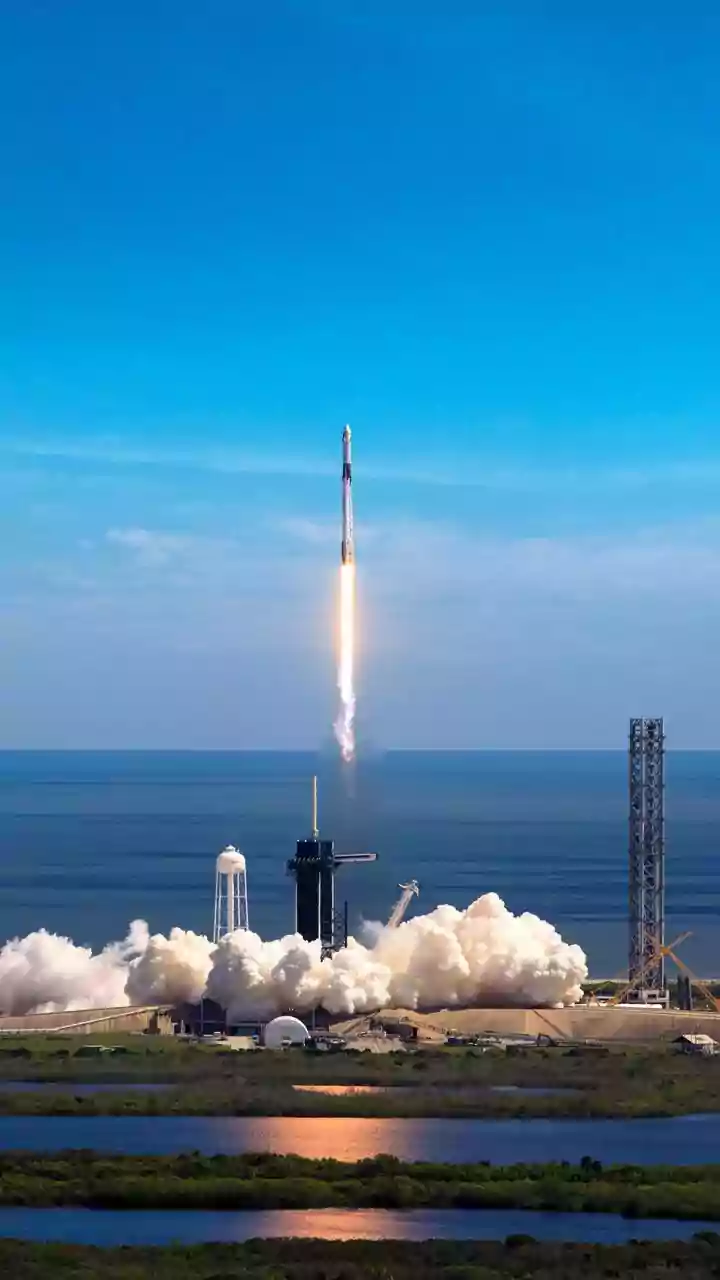
After lifting off from Starbase, Texas, on November 13, the Starship upper stage, known as Ship 42, completed its primary mission: deploying 26 Starlink satellites into low Earth orbit. It then spent over 22 hours circling the planet 14 times before beginning
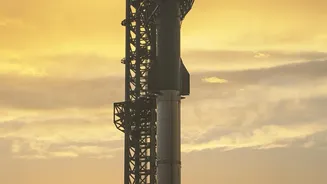
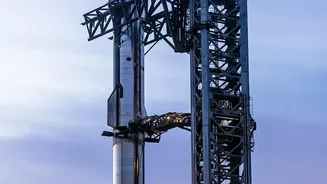
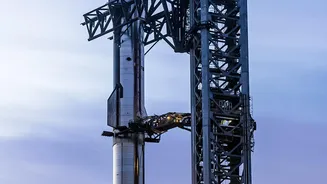
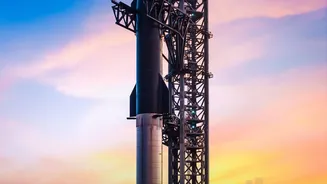
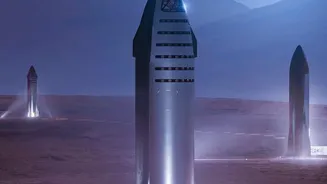
its fiery journey home. On Saturday, November 14, after surviving the intense heat of atmospheric reentry, the massive vehicle performed a complex 'belly flop' maneuver to slow down before relighting its Raptor engines. It then flipped into a vertical orientation and descended precisely between the giant 'chopstick' arms of the launch tower, nicknamed 'Mechazilla'. As employees watched and the song 'Baby Come Back' played on the company webcast, the arms closed around the ship, securing it in a historic catch. “We caught a Starship, and now everything changes,” an emotional SpaceX communications manager Dan Huot announced on the livestream.
Engineering an Impossible Feat
Catching a 17-story orbital spacecraft is an engineering challenge of immense proportions. Unlike the Super Heavy booster, which SpaceX had successfully caught three times before, the upper stage returns from a much higher altitude and at far greater speeds. The entire process relies on a breathtaking sequence of events. First, the ship must use its 18,000 hexagonal heat shield tiles to survive reentry temperatures of around 1,400°C. Next, it uses four large flaps to steer itself aerodynamically, like a skydiver, toward the launch site. In the final moments, the Raptor engines must relight to perform the landing flip and slow the vehicle to a near-hover, allowing the tower arms to grab it at specific reinforced points. The tower itself is a marvel, designed not just to launch the rocket but to serve as its landing pad, eliminating the need for heavy landing legs on the vehicle and enabling a much faster turnaround time.
A Mixed But Monumental Success
While the upper stage catch was a resounding success, the mission did not achieve all its objectives. The plan for Flight 15 was to perform a 'double catch,' recovering both the Starship upper stage and the Super Heavy booster. However, the booster experienced an anomaly during its return, with a low-fuel alarm causing an early engine shutdown. Its automated guidance system then safely diverted the booster for destruction over the Gulf of Mexico. Analysts described the mission's results as uneven, but stressed that the upper stage recovery was by far the more difficult and significant achievement. The loss of the booster, a more mature part of the system, showed that reliability across the entire rocket is still a work in progress, but the successful ship catch proved that the hardest technical barrier to full reusability can be overcome.
The Economics of Reusability
The primary driver behind this ambitious effort is cost. Historically, rockets were discarded after a single use, making spaceflight incredibly expensive. SpaceX's partially reusable Falcon 9 rockets dramatically lowered launch costs by recovering and reusing the first stage. Starship aims to take this a giant leap further by making the entire launch system—both booster and upper stage—rapidly and fully reusable. By catching the vehicle directly at the launch tower, SpaceX can inspect, refuel, and prepare it for another flight in a fraction of the time it would take to recover it from the ocean. Achieving this 'airplane-like' turnaround is the key to unlocking an era of frequent and affordable access to space, which is essential for SpaceX's business model, including the massive expansion of its Starlink internet constellation and its long-term plans for missions to the Moon and Mars.
What Comes Next?
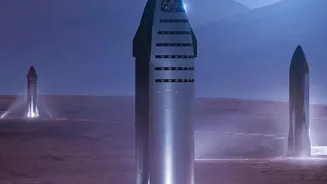
With the 'holy grail' of the ship catch now achieved, SpaceX's next steps will be to refine the process and demonstrate its reliability. The company will need to successfully and consistently catch both the booster and the ship on the same mission. Engineers will thoroughly inspect Ship 42 to assess the condition of its heat shield and other systems after its orbital journey to prove that it can genuinely be reflown quickly. This progress is being watched closely by NASA, which has contracted a modified version of Starship to land its Artemis astronauts on the Moon, a mission now targeted for 2028. That goal hinges not only on safe landings but also on another yet-to-be-demonstrated capability: refueling Starship in orbit, which will require multiple successful launches in quick succession. This successful catch is a critical enabler for that future, proving the core principle of a fully reusable system is not just science fiction.