







What is Changing on October 15?
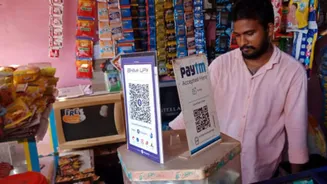
Starting from October 15, 2026, a new nationwide framework for the Unified Payments Interface (UPI) will come into effect. This introduces a Merchant Discount Rate, or MDR, for certain transactions. For most regular merchants, a 0.4% MDR will apply to any
UPI payment they receive that is over ₹2,000. However, essential services, including Indian Railways ticket bookings, have been placed in a special category. For train tickets booked via IRCTC, any UPI transaction exceeding ₹2,000 will attract a flat ₹5 MDR, instead of the percentage-based fee. Transactions up to ₹2,000 remain completely free of this new charge.
The Key Question: Who Pays This Fee?
This is the most critical point for millions of rail passengers. The ₹5 charge is a Merchant Discount Rate, which, by definition, is a fee levied on the merchant—in this case, IRCTC. It is not a consumer fee. Both railway officials and the Union Finance Ministry have explicitly stated that this charge must not be passed on to customers. So, if your train ticket costs ₹3,000 and you pay via UPI, you should only be charged ₹3,000. The final amount on your screen should not increase to ₹3,005. The Finance Ministry has advised banks to ensure merchants comply with this directive.
Why This Special Rate for Railways?
The decision to apply a flat ₹5 fee for railways, fuel, telecom, and insurance payments—rather than the 0.4% rate for other businesses—acknowledges the high volume and essential nature of these transactions. A flat fee is significantly more favourable for higher-value tickets. For instance, on a ₹10,000 ticket, a 0.4% MDR would amount to ₹40. Under the new rules, the MDR for IRCTC will remain just ₹5. This move helps keep costs manageable for the payment ecosystem while preventing a significant new expense from being passed on to consumers for essential services. UPI has become a dominant payment method, accounting for over half of all online ticket bookings on IRCTC, and this special rate helps sustain that momentum.
Demystifying the Merchant Discount Rate (MDR)
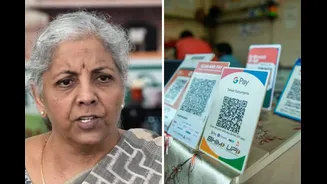
The introduction of MDR on UPI has caused some confusion, but it is not a new concept in digital payments. It has long been applicable to credit and debit card transactions. MDR is essentially a processing fee that merchants pay to banks and payment service providers for offering digital payment facilities. According to Union Finance Minister Nirmala Sitharaman, the revenue from MDR does not go to the government; it is distributed among the players in the payment ecosystem to maintain and upgrade the infrastructure that handles billions of transactions. The government's zero-MDR policy for UPI since its inception helped drive its massive adoption, and this new, carefully structured fee aims to make the system self-sustaining without burdening users.
The Bigger Picture for Digital India
The government's stance reassures consumers that UPI remains a public good. While there was speculation that merchants might find ways to pass on the cost, such as by raising convenience fees, the official directive is firm. This decision reinforces the goal of the Digital India initiative: to encourage cashless transactions by making them simple and affordable. By ensuring passengers don't pay extra, the government prevents any friction that might discourage the use of UPI for one of the most common online transactions in the country. It signals a balanced approach—creating a sustainable model for payment providers while protecting consumer interests.