






The Power of Accessibility
The primary reason wall push-ups are so effective is their accessibility. Unlike traditional floor push-ups, which require you to lift a significant portion of your body weight, the wall variation reduces the load substantially. This makes them an ideal
starting point for fitness beginners, older adults, or individuals recovering from injury. By standing upright, you put far less stress on your wrists, elbows, and shoulders, allowing you to focus on mastering the movement pattern without joint pain. It’s a low-impact exercise that delivers high results, building the confidence and foundational strength needed to tackle more challenging movements down the line.
Building More Than Just Arm Strength
While wall push-ups are known as an upper-body exercise, their benefits are surprisingly holistic. The primary muscles worked are the chest (pectorals), shoulders (deltoids), and the back of your arms (triceps). However, to perform the movement correctly, you must also engage your core. Thinking of the exercise as a ‘moving plank’ is helpful; you must keep your body in a straight line from head to heels. This engages your abdominal muscles, lower back, and even your glutes, improving core stability, balance, and overall posture. This functional strength translates directly into daily life, making activities like pushing open a heavy door or getting up from a chair feel easier.
How to Perform the Perfect Wall Push-Up
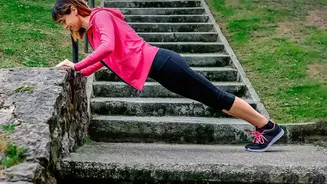
Proper form is crucial to maximizing benefits and preventing injury. Start by standing about an arm's length away from a sturdy wall. Place your hands on the wall slightly wider than shoulder-width apart, at roughly shoulder or chest height. Your fingers should point toward the ceiling. Before you begin, ensure your feet are planted firmly, and your body forms a straight line. Engage your core and glutes to prevent your hips from sagging. Slowly bend your elbows to lower your chest towards the wall, aiming to keep your elbows tucked at about a 45-degree angle rather than flaring them out to the sides. Go as far as you comfortably can, ideally until your nose almost touches the wall, then purposefully push through your palms to return to the starting position.
Common Mistakes to Avoid
A few common errors can undermine the exercise's effectiveness. The most frequent is flaring the elbows out too wide, which puts unnecessary stress on the shoulder joints. Another is letting the hips sag or arching the back, which indicates a lack of core engagement. Remember to keep your core tight throughout the movement. People also tend to let their head drop forward, breaking the straight line of the body. Keep your neck in a neutral position, with your gaze slightly ahead. Finally, avoid incomplete repetitions; a full range of motion is key to building strength effectively.
Your Path to Progression
The beauty of the wall push-up is that it’s a stepping stone. Once you can comfortably perform several sets with good form, you are ready to increase the challenge. The simplest way to progress is to step your feet further back from the wall. This increases the angle and forces you to support more of your body weight. From there, you can move to incline push-ups, placing your hands on a lower surface like a countertop, a sturdy chair, or a bench. The lower the surface, the more difficult the exercise becomes. This gradual progression allows you to safely and effectively build the strength required to eventually perform a push-up on the floor.