





The Decision That Redefined the Solar System
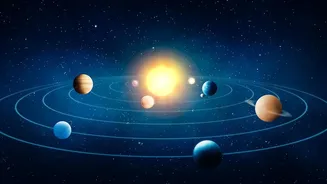
In August 2006, members of the International Astronomical Union (IAU) gathered to vote on the very definition of a planet. The decision was prompted by new discoveries of objects in the outer solar system, like Eris, which is even more massive than Pluto.
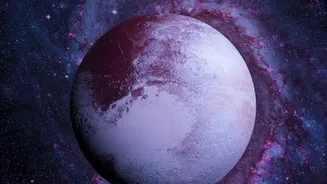
Astronomers faced a choice: either add a growing number of new planets to the roster or create a more exclusive definition. They chose the latter, establishing three criteria for a celestial body to be considered a planet: it must orbit the Sun, be massive enough for its own gravity to make it nearly round, and have “cleared the neighbourhood” around its orbit. Pluto met the first two conditions but failed on the third, leading to its reclassification as a “dwarf planet.”
The Controversy of a 'Cleared Neighbourhood'
The third criterion, “clearing the neighbourhood,” remains the most significant point of contention. This rule requires a planet to be gravitationally dominant in its orbital zone, having swept up or flung away other large objects. Pluto fails this test because its orbit is situated within the Kuiper Belt, a vast ring of icy bodies, and it shares its space with many of them. However, critics of the IAU definition, including Alan Stern, the principal investigator of NASA's New Horizons mission, argue that this rule is vague and inconsistent. They point out that even Earth co-exists with thousands of near-Earth asteroids, and Jupiter shares its orbit with a large population of Trojan asteroids. By a very strict interpretation, they argue, not even Neptune would be a planet, because Pluto's orbit crosses its path.
The Case for a 'Geophysical' Planet
In response to the IAU's ruling, many planetary scientists have championed an alternative known as the geophysical planet definition. This approach prioritises a celestial body's intrinsic physical properties over its external orbital characteristics. According to this view, a planet is essentially any celestial body massive enough to be rounded by its own gravity that has not undergone nuclear fusion (which would make it a star). This simpler definition would not only restore Pluto's planethood but would also classify dozens of other objects in our solar system as planets, including large moons like Titan and Europa, and other dwarf planets like Eris and Ceres. Proponents argue this definition is more scientifically useful and less dependent on an object's location.
More Than Just a Sentimental Fight
The passion behind the Pluto debate isn't just nostalgia for the nine-planet solar system many grew up with. The controversy highlights a deeper philosophical question about science: is its purpose to create neat, tidy categories, or to reflect the true complexity of the universe? The IAU definition is specific to our solar system and doesn't apply to the thousands of exoplanets discovered orbiting other stars. The geophysical definition, on the other hand, is universally applicable. The New Horizons mission revealed Pluto to be a surprisingly complex and dynamic world with mountains, glaciers of nitrogen ice, and a thin atmosphere, further fueling arguments that it is geologically a planet. The debate forces us to consider whether our classifications should be based on what an object is or where it happens to be.