




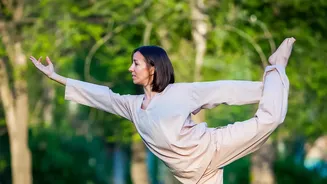

Two Paths to a Common Goal
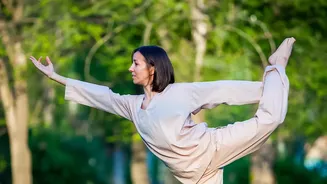
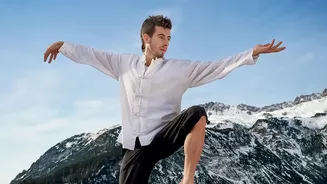
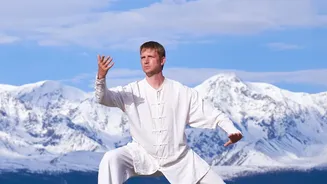
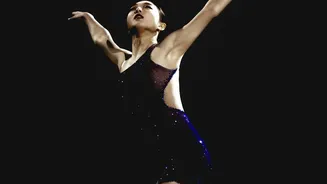
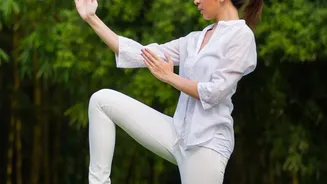
Skating, whether on ice, quads, or inline skates, is a dynamic activity defined by momentum and fluidity across a surface. Tai Chi, an ancient Chinese martial art, is often described as 'meditation in motion', characterized by its slow, flowing, and precise
forms. While one rushes and the other ambles, both are fundamentally exercises in controlling the body's center of gravity. They force the practitioner to become acutely aware of their posture, weight distribution, and alignment, serving as two distinct pathways to the universal human pursuit of physical stability and control.
The Science of Body Awareness
Both activities are exceptional at developing proprioception—the body's ability to sense its own position in space without relying on vision. This 'sixth sense' is managed by sensory nerves in our muscles and joints that communicate with the brain. Tai Chi cultivates this sense through slow, mindful movements. By intentionally shifting weight and holding postures, practitioners build a detailed mental map of their body. Skating, in contrast, develops proprioception reactively. The low-friction surface means balance is constantly being challenged and corrected at speed, forcing the brain and muscles into a state of continuous, high-speed communication to prevent a fall.
The Mechanics of Movement
In Tai Chi, balance is trained through stability and rootedness. Practitioners learn to 'root' themselves to the ground, with all movements originating from their central core, or 'dantien'. The slow, deliberate weight shifts strengthen the leg muscles, improve joint flexibility, and perfect postural control. Skating builds balance through dynamic stabilization. It requires constant engagement of core muscles to maintain an upright posture while the legs and arms are in motion. The muscles around the ankles, knees, and hips work tirelessly to make micro-adjustments, building strength through continuous action and reaction.
The Mental Game
The focus required for both disciplines provides significant mental benefits. Tai Chi is renowned for its meditative qualities, calming the nervous system, reducing stress, and improving mental focus through its emphasis on breath and mindful movement. It fosters a deep mind-body connection. Skating, while more physically exhilarating, demands an equal level of concentration. A skater must remain present and aware of their body and surroundings to control speed, execute turns, and navigate obstacles. This intense focus provides a different, but equally effective, form of mental engagement that sharpens coordination and reflexes.
Which Practice is Right for You?
Choosing between skating and Tai Chi depends on your personal fitness goals and temperament. If you seek a low-impact, meditative practice that builds strength and stability gently over time, Tai Chi is an excellent choice. Its benefits for fall prevention, particularly in older adults, are well-documented. If you crave a more vigorous cardiovascular workout that combines speed, rhythm, and a dynamic challenge, skating might be the better fit. It's a full-body workout that tones muscle, improves endurance, and offers a powerful sense of freedom and motion. Interestingly, some find that the practices complement each other, with the balance learned in Tai Chi translating directly to more confident skating.