


First off, what is SMOPS-2026?
SMOPS, or the International Conference on Spacecraft Mission Operations, is a major event where the world's leading space agencies, companies, academics, and startups gather to chart the future of managing space missions. This year's conference in Bengaluru,
jointly organised by ISRO and other international bodies, focuses on making space missions smarter and more sustainable. The city, a hub for India's space and tech sectors, is the perfect backdrop for these discussions, being home to ISRO's headquarters and numerous aerospace startups. The key theme is preparing for next-generation challenges, including managing large satellite constellations, human spaceflight like the Gaganyaan mission, and interplanetary exploration.
So, what does 'Automated Mission Control' actually mean?
Think of it as giving spacecraft a brain of their own. For decades, missions have been painstakingly managed by large teams on the ground, sending commands and analysing data. Automated mission control uses Artificial Intelligence (AI) and Machine Learning (ML) to let the spacecraft handle many tasks itself. This includes navigating, detecting and avoiding hazards like space debris, diagnosing its own health, and making decisions in real-time without waiting for instructions from Earth. This is crucial for deep-space missions where communication delays can be several minutes long, making manual control impossible during critical events like landing on another planet.
Why is this a big deal for ISRO and India?
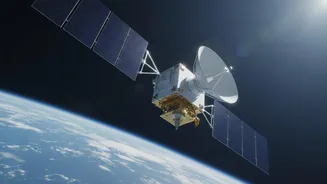
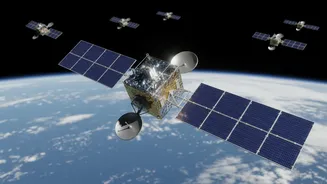
Automation is key to unlocking India's next level of space ambitions. For complex undertakings like the Gaganyaan human spaceflight program, AI-powered systems can monitor life support and vehicle performance, acting faster than a human could in an emergency. For interplanetary missions to Mars or Venus, autonomous navigation is essential. It also dramatically reduces the operational cost of managing India's growing fleet of satellites, which are vital for communication, weather forecasting, and national security. As ISRO plans to launch dozens of new satellites, AI will help manage these complex constellations, a task too demanding for human operators alone.
What are the biggest challenges and risks involved?
Handing control over to an AI millions of kilometres away comes with significant risks. The most obvious is the software itself; a bug or a flawed algorithm could doom a multi-crore mission. Then there's cybersecurity. As spacecraft become more connected and autonomous, they become more attractive targets for cyberattacks, which could lead to a loss of control. There are also ethical considerations about the extent of autonomy and ensuring robust fail-safes are in place. Experts at SMOPS are discussing how to build resilient, secure, and trustworthy AI systems that can handle the high-stakes environment of space.
How will this technology shape the future?
Automated systems will enable missions we can barely imagine today. Think of swarms of small, collaborating satellites that can map a planet's surface in detail or robotic missions to repair other satellites in orbit. For India, this technology is fundamental to becoming a global leader in the new space economy, which is projected to be worth over a trillion dollars by 2040. By developing expertise in AI-driven mission control, ISRO and Indian startups can offer more competitive launch services and build more sophisticated satellites. It paves the way for more ambitious scientific discoveries and ensures India has a strategic edge in the final frontier.