



The Old Way: Use It and Lose It
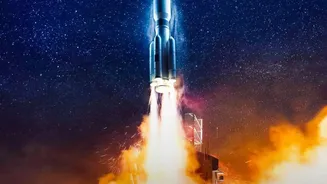
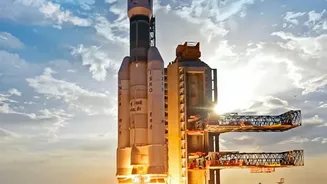
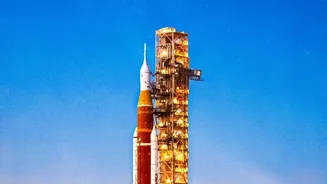
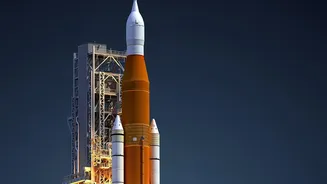
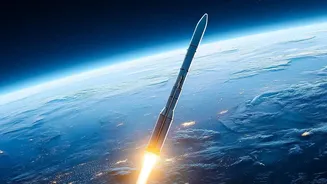
Imagine buying a brand-new car for a single road trip, only to drive it into the ocean when you arrive. That was the reality of the space industry for over 60 years. Rockets, marvels of precision engineering, were designed as single-use vehicles. The
most expensive and complex parts—the powerful first-stage boosters that provide the initial thrust—would separate and be discarded, either burning up in the atmosphere or crashing into the sea. This expendable model meant that the astronomical cost of manufacturing, which accounted for 70-80% of the mission's expense, had to be paid for every single launch. This made space access prohibitively expensive, a multi-million dollar affair reserved for national agencies and a handful of large corporations.
A Paradigm Shift: The Reusability Revolution
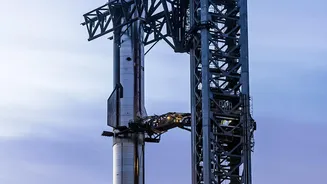
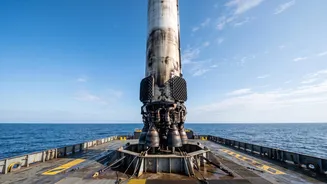
The breakthrough came when companies like SpaceX, led by Elon Musk, challenged this fundamental assumption. Instead of treating rockets like disposable products, they started treating them like commercial aircraft: valuable assets that could be flown again and again. The concept is now proven: after a rocket's first stage separates, it uses sophisticated guidance systems, grid fins for steering, and a final engine burn to perform a controlled landing back on Earth, either on a ground pad or a floating droneship. What was once science fiction became a routine event, with some Falcon 9 boosters successfully flying more than 20 missions. This achievement wasn't just a technical spectacle; it fundamentally rewrote the business model of the entire space industry.
Unlocking Radical Economics
The primary impact of reusability is a dramatic reduction in cost. While a new Falcon 9 rocket launch is advertised at around $67 million, reusing a booster can drop the price significantly, with some estimates suggesting a cost closer to $30 million per mission. This is because the most expensive part of the hardware, the first-stage booster, is no longer a one-time expense. Its manufacturing cost, estimated to be in the tens of millions, is amortized over multiple flights. This has slashed the cost per kilogram to orbit from a historical $10,000 down to below $2,000, with projections suggesting it could fall even further. This price drop has opened the door for startups, universities, and smaller nations to access space in a way that was previously unimaginable.
More Launches, More Often
Lower costs directly enable another crucial advantage: a higher launch frequency. When rockets are expendable, the production line is the bottleneck. By recovering and quickly refurbishing boosters—a process that can be done in a matter of weeks—companies can launch far more often. In 2025, SpaceX completed a record 165 orbital missions, accounting for the vast majority of US launches. This rapid cadence is the key enabler for ambitious projects like satellite 'mega-constellations'. Deploying thousands of satellites for global internet services, like SpaceX's Starlink or Amazon's Project Kuiper, would be economically and logistically impossible without the ability to reuse rockets and launch them in quick succession.
A Greener Approach to the Final Frontier
Beyond the economic benefits, rocket recovery also offers a more sustainable path forward. The traditional model was inherently wasteful, discarding millions of dollars of high-tech hardware into the environment with every launch. Reusability significantly reduces this industrial waste and minimizes the amount of debris left in our oceans. Furthermore, manufacturing fewer new rockets reduces the overall environmental footprint associated with raw material extraction, processing, and assembly. While rocket launches themselves still have an environmental impact through emissions, reuse is a significant step toward a more circular and responsible space economy, ensuring that as our activity in space grows, our impact on Earth is minimized.