






The Allure of Bold Botanicals
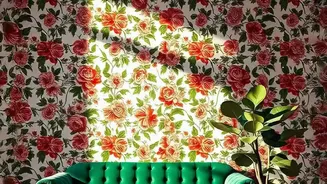
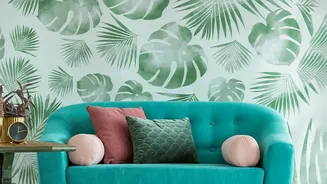
When you think of bold vintage patterns, the lush, nature-inspired designs of the Arts and Crafts movement often come to mind. William Morris, a central figure of this era, created intricate patterns of swirling leaves, fruits, and birds that are as popular
today as they were in the late 19th century. These designs, like the famous 'Strawberry Thief' or 'Willow Bough', bring a sense of the English countryside indoors. They are perfect for creating a focal point. A single wall of a Morris-style wallpaper can transform a dining room or bedroom into a work of art. If an entire wall feels too daring, start small. A set of floral cushions, a tablecloth, or even a single, beautifully framed print can add a touch of this organic luxury to a modern room without overwhelming it.
The Rhythm of Geometric Repeats
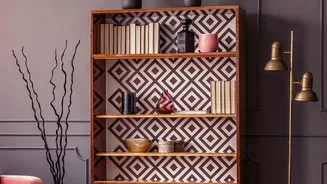
For a more structured but equally bold look, turn to the geometric patterns of the Art Deco and Mid-Century Modern periods. Art Deco, born in the glamorous 1920s, is all about luxury and sophistication. It features strong, symmetrical patterns like sunbursts, chevrons, and repeating sharp angles, often in high-contrast colours with metallic accents like gold or chrome. This style is perfect for adding a touch of drama. Think a geometric rug, mirrored furniture, or a statement chandelier. Mid-Century Modern design, from the 1940s to the '60s, also uses geometric shapes but with a more organic, functional feel. Its patterns are often simpler, with clean lines and earthy colour palettes like mustard, olive, and terracotta. These patterns work beautifully on everything from curtains to ceramics, adding a retro vibe that still feels clean and contemporary.
The Charm of Toile de Jouy
On the subtler side of vintage decor lies Toile de Jouy, often simply called 'toile'. Originating in 18th-century France, the name translates to 'cloth from Jouy-en-Josas', the town where it was first produced. Traditionally, toile features a complex, repeated pastoral scene printed in a single colour—like blue, red, or black—on a white or off-white background. The scenes often depict romantic, rural life, with motifs of flowers, picnicking couples, and countryside landscapes. This pattern has an enduring, romantic charm that works beautifully in bedrooms and living areas. While a full room of toile wallpaper creates a classic, immersive effect, it can also be used subtly. Toile bedding, curtains, or even a set of patterned china can introduce this soft, narrative-driven pattern into your home in a gentle, elegant way.
The Enduring Appeal of Paisley
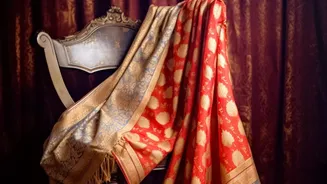
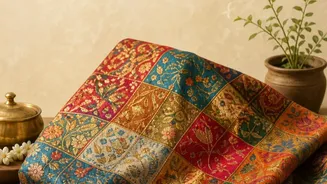
The paisley pattern, with its iconic teardrop or 'boteh' shape, has a rich history that spans continents. Though it takes its English name from a town in Scotland that mass-produced the design in the 19th century, its origins trace back to Persia and India. Originally a symbol of life and rebirth, the motif was prominently featured on luxurious Kashmir shawls that were imported to Europe. Paisley can be both bold and subtle depending on its scale and colour. A large-scale, brightly coloured paisley wallpaper can feel wonderfully bohemian and adventurous, especially when paired with rich textures. For a more understated look, incorporate paisley through smaller items like throw pillows, a lampshade, or a decorative box. Its swirling, intricate design adds a touch of the exotic and a sense of history to any space.
How to Start Your Pattern Journey
The key to successfully using vintage patterns is balance. You don’t need to transform your home into a time capsule. Instead, think of patterns as a powerful tool for adding personality. A great way to start is the 60-30-10 rule: let a dominant solid colour take up 60% of your room, a secondary colour 30%, and let your chosen pattern be the 10% accent. This could be in the form of art, cushions, or a rug. Another approach is to mix and match, but with a connecting thread. You could pair a floral print with a geometric one if they share a common colour. Don't be afraid to mix eras, such as an Art Deco mirror above a Mid-Century console. Most importantly, embrace the imperfections that can come with vintage-inspired decor; they add character and tell a story.