


Decoding the Cosmic Rainbow
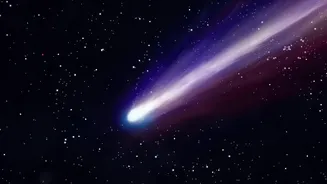
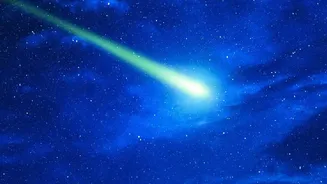
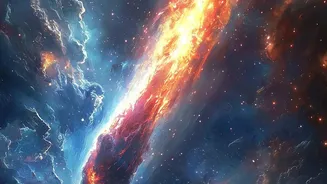
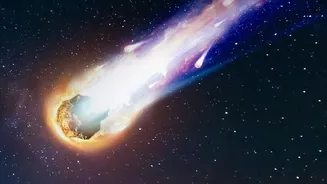
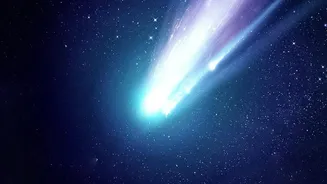
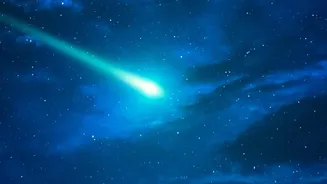
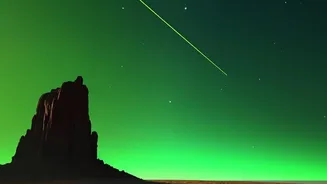
The image, featured as NASA's Astronomy Picture of the Day, captures a brilliant meteor as it vaporises in Earth's atmosphere. More than just a pretty streak, the photograph is a lesson in cosmic chemistry. As a meteoroid—a small rock or piece of debris
from space—hits our atmosphere at tremendous speed, the friction generates intense heat. This heat doesn't just make the particle glow; it vaporises it, and the elements within the rock and in the surrounding air determine the colours we see. Think of it as nature’s own fireworks display, where each colour tells a story about the meteor’s origin and composition.
A Fingerprint of Elements
The specific colours visible in a meteor’s trail act like a chemical fingerprint. The most common hues come from the minerals and metals that made up the original space rock. A bright orange-yellow flash, for instance, points to the presence of sodium, similar to the colour you might see in a simple flame test in a chemistry lab. A flash of yellow light often indicates iron vaporising. The presence of calcium can produce a more violet or purple hue, while magnesium is responsible for brilliant blue-green streaks. The vibrant green that is often seen during meteor showers like the Perseids is typically caused by vaporised nickel.
The Atmosphere Plays Its Part
It’s not just about what the meteor is made of; the air it travels through is also part of the show. The incredible speed of the meteoroid compresses and superheats the atmospheric gases in its path, primarily nitrogen and oxygen. This interaction can cause the air itself to glow, often producing a reddish light. The final colour we see is a combination of the light emitted by the vaporising meteoroid and the glowing air around it. This is why a single meteor can sometimes appear to change colours as it travels through different layers of the atmosphere at varying speeds.
Why Speed Matters
The velocity of a meteor plays a crucial role in its colour and brightness. Faster meteors, like the Leonids which can travel at extreme speeds, tend to be brighter and often display blue or green hues due to the intense energy ionising elements like magnesium. Slower-moving meteors might show more orange or red colours, as the light from the excited atmospheric gases has more time to dominate. This speed is determined by the meteoroid's original orbit and whether it's hitting Earth's atmosphere head-on or catching up from behind. The result is a dynamic interplay of speed, altitude, and composition that ensures no two shooting stars are exactly alike.
From a Single Streak to Solar System Science
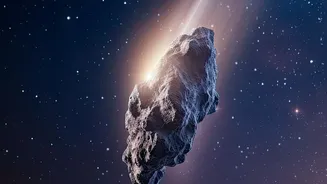
While a single, random meteor provides a fleeting moment of beauty, studying the colours of meteor showers gives scientists valuable information. Meteor showers occur when Earth passes through the debris trail left by a comet or asteroid. By analysing the colours of a shower like the Perseids or the Geminids, astronomers can learn about the chemical makeup of their parent bodies without ever leaving Earth. For example, the Geminids are known for their bright white and yellow colours, reflecting the rocky, iron-rich composition of their parent asteroid, 3200 Phaethon. These colourful clues help piece together the history of our solar system, one shooting star at a time.