

In the pantheon of Indian pantry staples, moong dal is a quiet champion. This humble lentil is the foundation for countless dishes, but none capture its versatility and appeal quite like the moong dal chilla, a beloved savoury pancake.
The Unassuming Hero of the Indian Kitchen
Walk into almost
any Indian kitchen, and you will find moong dal. Available as whole green beans, split with the skin on, or the popular split and husked yellow dal, this legume is prized for good reason. Its history in India dates back thousands of years. Unlike other heartier lentils, yellow moong dal is celebrated for being incredibly easy to digest and quick to cook, making it a go-to food for everyone from babies to those recovering from illness. Ayurvedic tradition holds it in high regard for its ability to balance the body's systems. It's the base for the comforting khichdi, hearty dals, and even sweets, showcasing a rare versatility.
What Exactly is a Moong Dal Chilla?
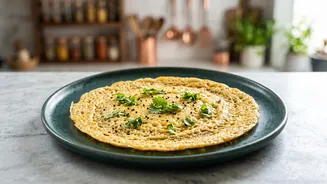
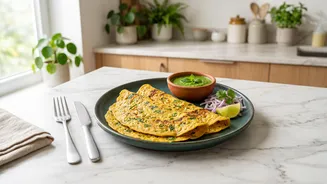
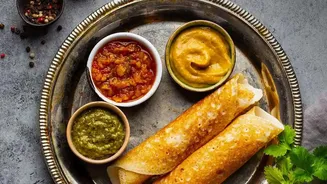
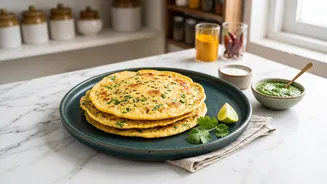
At its core, a moong dal chilla is a simple, savoury crepe or pancake. It's made from a batter of soaked and ground yellow moong dal, seasoned with spices like cumin, ginger, and green chillies. Unlike dosas from the South, the batter requires no fermentation, making it a quick and convenient meal. The result is a soft, pliable pancake that can be enjoyed plain or, more popularly, filled with a variety of ingredients. Often called 'pudla' in some regions, it stands as a testament to the ingenuity of Indian home cooking: turning a simple lentil into a delightful, protein-packed meal.
A Meal for Every Occasion
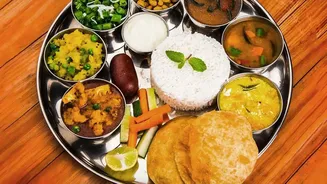
The true 'place' of the moong dal chilla is its incredible adaptability in daily life. It's a powerhouse breakfast that provides sustained energy without feeling heavy. It's a favourite for children's tiffin boxes, often rolled up with a simple filling. For adults, it serves as a light yet satisfying lunch or a guilt-free evening snack. Because the chilla itself is a neutral canvas, it can be adapted for any palate. This flexibility has cemented its status not merely as a recipe, but as a reliable solution for quick, healthy meals across millions of Indian homes.
A Nutritional Powerhouse
The chilla’s popularity is increasingly driven by its impressive health credentials. Moong dal is an excellent source of plant-based protein, essential for muscle repair and growth. It's also rich in dietary fibre, which aids digestion and promotes a feeling of fullness, making it a great option for weight management. Packed with essential minerals like potassium, magnesium, and iron, it supports everything from heart health to energy levels. With a low glycemic index, it helps regulate blood sugar, making it a suitable choice for diabetics. This nutritional profile makes the chilla a 'superfood' in its own right.
Crafting the Perfect Chilla
Making moong dal chilla is a straightforward process. The key lies in soaking the yellow moong dal for at least three to four hours, or even overnight. After soaking, the dal is drained and blended with a little water, fresh ginger, and green chillies to form a smooth, pourable batter. To this base, you can add turmeric for colour, asafoetida for aroma, and finely chopped coriander for freshness. The batter is then poured onto a hot, lightly oiled pan and spread into a thin circle, much like a pancake. Cooked for a minute or two on each side until golden brown, it’s ready to be served hot.
Endless Variations and Fillings
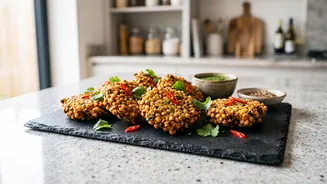
The simple chilla can be transformed with an endless variety of additions and fillings. Finely chopped onions, carrots, and capsicum can be mixed directly into the batter for a vegetable chilla. For a more substantial meal, a filling is often added before folding the chilla in half. A classic choice is a crumble of spiced paneer (Indian cottage cheese), which adds extra protein and flavour. Other popular fillings include sautéed spinach, mushrooms, grated cheese for kids, or a mix of roasted vegetables. These variations ensure that the humble chilla never gets boring.