




A Glimpse into an Ancient Ocean
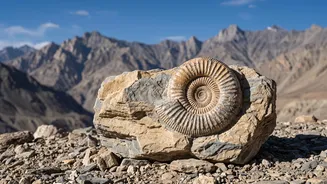
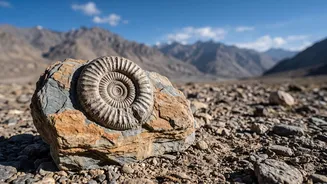
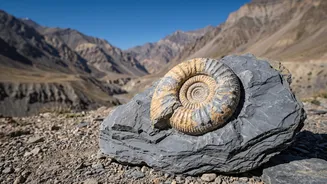
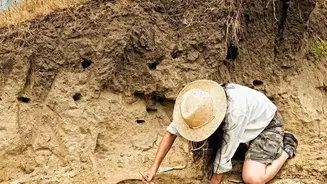
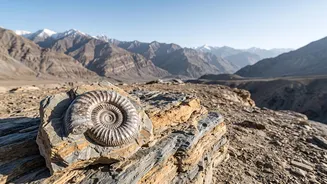
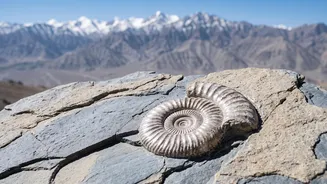
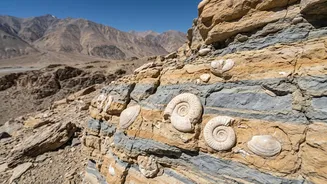
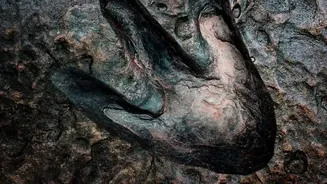
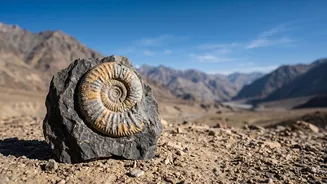
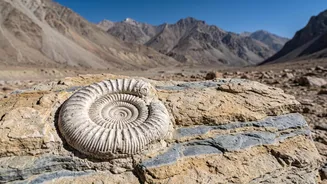
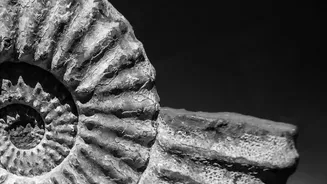
In the remote Changthang region of Nyoma, geologist Dr. Ritesh Arya has unearthed a significant collection of marine fossils. The find is dominated by spiral-shaped gastropods (similar to modern snails), along with bivalves and oyster-like forms. Preliminary
analysis dates these specimens to the Eocene epoch, approximately 34 to 38 million years ago. For Dr. Arya, founder of the Tethys Fossil Museum, the discovery was a moment of shocking recognition. He noted the fossils looked remarkably similar to those commonly found in the Subathu Formation in Himachal Pradesh, but finding them so far east in Ladakh was the real surprise. This recent expedition yielded a much larger collection than previous explorations, allowing for a more detailed examination of what Ladakh was like millions of years ago.
Welcome to the Eocene Epoch
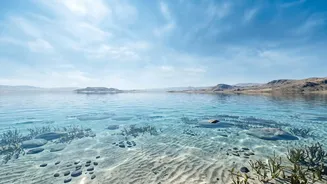
To understand the importance of these fossils, we have to travel back in time. The Eocene (roughly 56 to 34 million years ago) was a period when Earth was much warmer. The area we now know as Ladakh was not a cold, high-altitude desert. Instead, it was a warm, near-coastal environment. The combination of these newly found marine shells with other discoveries in the region, such as fossil palms and petrified wood, paints a vivid picture. It suggests a landscape with shallow, warm waters fringed by subtropical vegetation, bearing little resemblance to the Ladakh of today. This was a world shaped by the presence of a vast body of water that has long since vanished: the Tethys Sea.
The Tethys Sea and a Continental Collision
For millions of years, the ancient Tethys Sea separated the Indian subcontinent from the Eurasian landmass. This ocean was teeming with life. However, the Earth's tectonic plates were in constant, slow-motion motion. The Indian plate was relentlessly drifting northwards. Around 50 million years ago, this northward journey culminated in a monumental collision with the Eurasian plate. This geological event was one of the most significant in our planet's recent history. The impact buckled the Earth's crust, pushing up sediment and rock from the seabed. This process, known as orogeny, began to squeeze the Tethys Sea out of existence and gave birth to the mighty Himalayan mountain range.
From Seabed to Mountain Peak
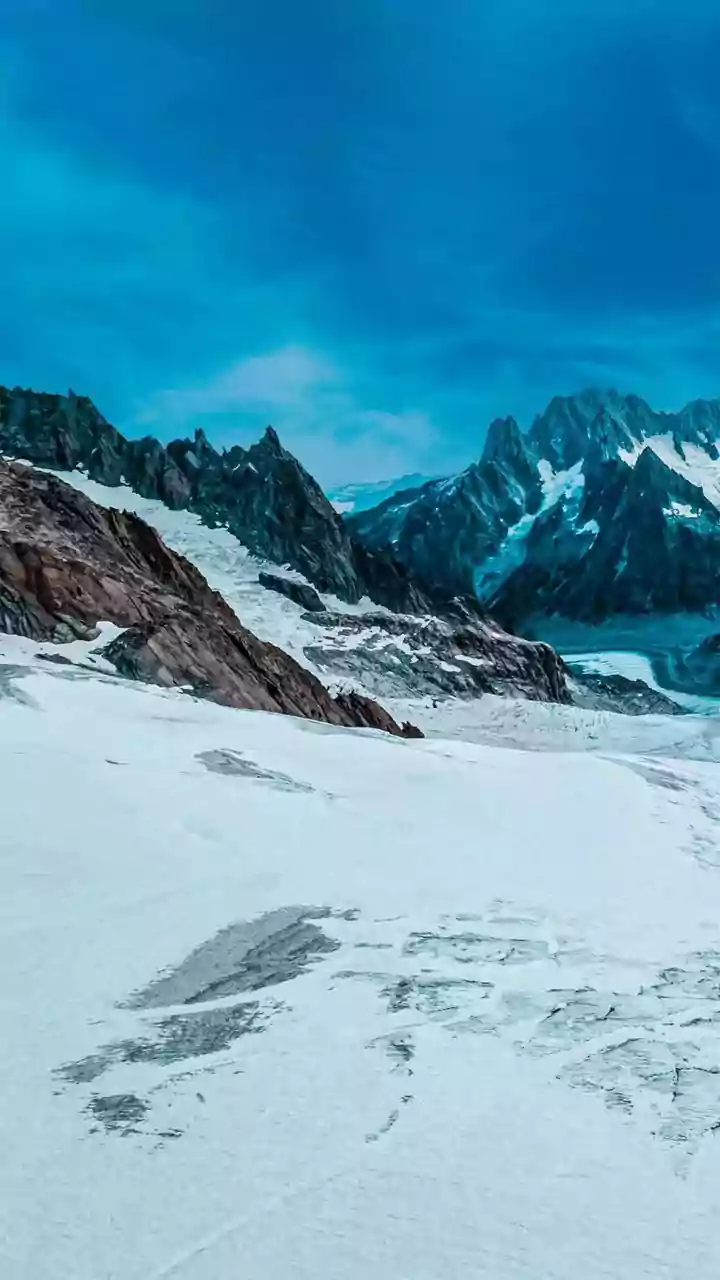
The discovery of marine fossils at altitudes of thousands of metres is powerful evidence of this mountain-building process. The creatures found in Nyoma once lived on a shallow seafloor. As the Indian and Eurasian plates collided, the land was uplifted at a colossal scale, carrying these ancient seabeds skyward. Over millions of years, what was once a coastal environment was transformed into the roof of the world. The fossils discovered by Dr. Arya are not just relics; they are markers of this incredible geological journey, preserving the memory of a very different world long before Ladakh acquired its current landscape. They are silent witnesses to the immense forces that folded and lifted the Earth's crust to form the Himalayas.
Why These Fossils Matter
While finding marine fossils in the Himalayas is not new, this specific discovery at Nyoma is scientifically crucial. It suggests that the Eocene-era marine environment, associated with the Subathu Formation, may have extended much farther east into Ladakh than previously recognized. This provides a vital new clue for reconstructing the exact geography and timeline of the Tethys Sea's final retreat and the subsequent continental collision. According to Dr. Arya, the fossils are telling a very different story of Ladakh. The specimens are now undergoing detailed study to confirm their precise age and species, which will help scientists refine their understanding of the Himalayan region's complex evolution. Esteemed palaeontologist Professor Ashok Sahni has praised the discovery as being on par with other remarkable fossil finds in the Himalayas.