


Start with the Right Potato
The first step to a great chip is choosing the right raw material. For the crispiest results, you'll want a potato with high starch content, often referred to as a floury or mealy potato. Varieties like the Russet are ideal. Their lower moisture and higher
starch content are perfect for frying, resulting in a light, crispy texture rather than a dense, waxy one. While other potatoes will work, a starchy variety gives you a significant head start in the quest for crunch.
The Secret is in the Slice
Uniformity is your best friend when making chips. Every slice should be the same thickness to ensure they all cook evenly. Slicing them too thick will result in a chip that's cooked on the outside but still soft and floppy in the middle. Slicing too thin can cause them to burn before they crisp. The best tool for the job is a mandoline slicer, which allows you to create paper-thin, consistent slices with ease. Aim for a thickness of about 1/16th of an inch. If you don't have a mandoline, use your sharpest knife and a steady hand, focusing on consistency.
The All-Important Cold Water Soak
This step is non-negotiable for achieving a truly crispy chip. When you slice a potato, you release a lot of starch. If left on the surface, this starch will cause the chips to stick together in the fryer and can lead to a gummy texture. To prevent this, place your potato slices in a bowl of cold water immediately after cutting. Rinse them several times until the water runs clear. For even better results, let them soak in fresh cold water for at least 30 minutes, or even longer in the fridge. This process removes excess starch and sugar, which helps the chips crisp up beautifully and prevents them from browning too quickly.
Dry, Dry, and Dry Again
Moisture is the ultimate enemy of crispiness. Water and hot oil do not mix well, and any excess moisture on your potato slices will create steam, effectively boiling the potato instead of frying it. This leads to sad, soggy chips. After soaking, drain the potatoes thoroughly. Then, lay them out in a single layer on a clean kitchen towel or paper towels. Place another towel on top and press gently to absorb as much water as possible. For truly exceptional results, let them air dry on a rack for a few minutes. The drier the slice, the crunchier the final chip will be.
Frying for the Perfect Crunch
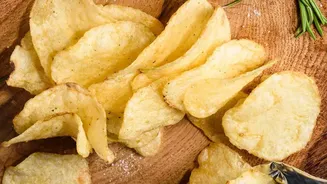
The classic method for a reason, deep frying delivers that quintessential chip texture. Use a neutral oil with a high smoke point, like canola or peanut oil, in a heavy-bottomed pot. Heat the oil to a steady temperature of around 177°C (350°F). Carefully add the potato slices in a single layer, being sure not to overcrowd the pan; this will lower the oil temperature and lead to greasy chips. Fry them for 3-4 minutes, turning occasionally, until they are golden brown and you no longer see bubbles forming around them. The lack of bubbles indicates the water has fully evaporated. Remove them with a slotted spoon and place them on a wire rack to cool.
Healthier Alternatives: Baking and Air Frying
If you want to avoid deep frying, you can still achieve a satisfying crunch in the oven or air fryer. For baked chips, preheat your oven to around 200-220°C (400-425°F). After soaking and drying the slices, toss them with a small amount of oil and your desired seasonings. Arrange them in a single layer on a baking sheet, ensuring they don't overlap. Bake for 10-20 minutes, flipping halfway through, until golden and crisp. For an air fryer, toss the dry slices with a light coating of oil and place them in the basket. Cook at around 190°C (375°F) for 15-20 minutes, shaking the basket every 5 minutes for even cooking.
Season Immediately
The final, crucial step is seasoning. The best time to season your chips is the moment they come out of the hot oil, oven, or air fryer. The residual heat and oil will help the salt and other spices adhere perfectly. A simple sprinkle of fine sea salt is classic, but feel free to get creative. Paprika, garlic powder, onion powder, or even a dusting of cheese powder are all excellent choices. Tossing them in a large bowl helps ensure an even coating.