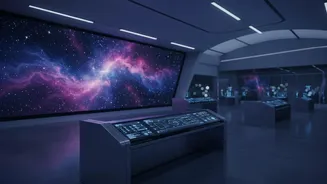




The Global Hub for Mission Control
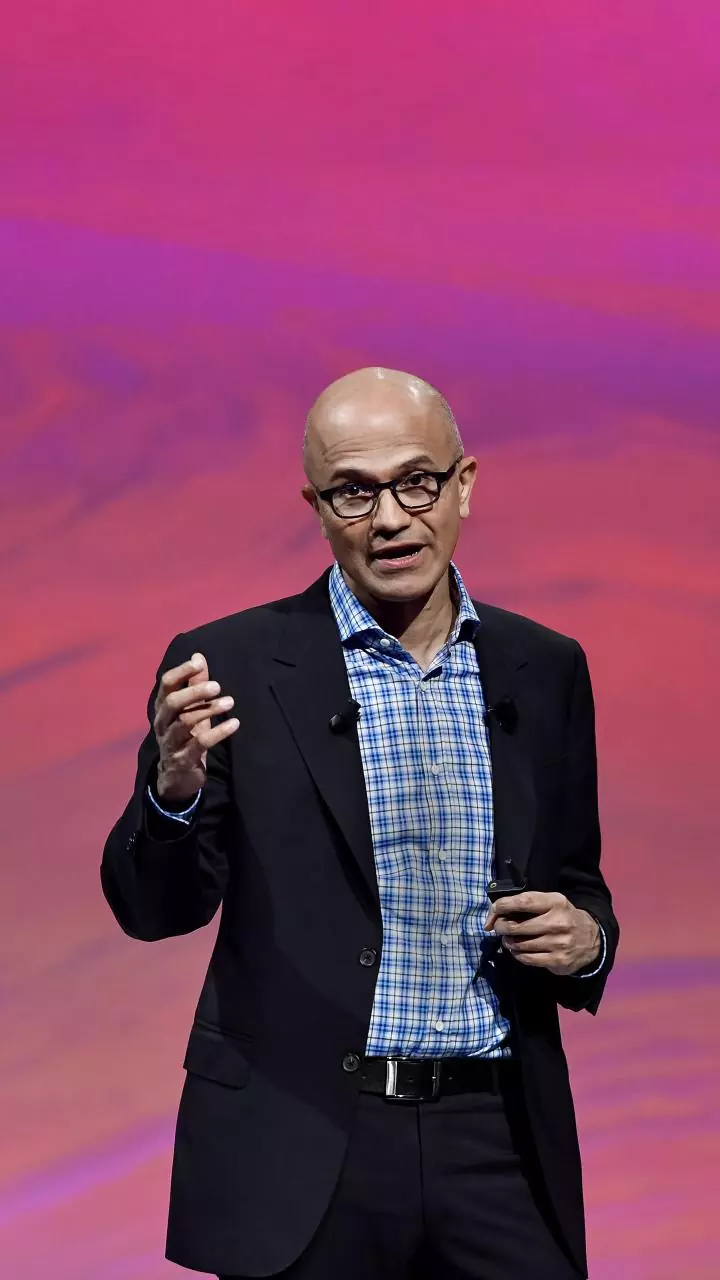
The International Conference on Spacecraft Mission Operations, or SMOPS, is a premier global gathering for the people who make space missions happen. Jointly organised by the Indian Space Research Organisation (ISRO) and other international bodies, the 2026
edition took place in Bengaluru, India, a hub of technological innovation. The event brings together experts from space agencies like NASA and ESA, alongside private industry, startups, and academia. Their goal is to share knowledge on existing technologies, tackle pressing challenges like space traffic and cybersecurity, and map out the future of managing complex missions. This year, one topic dominated the conversation: the rapid move toward smarter, more independent spacecraft.
Why Autonomy Is a Game-Changer
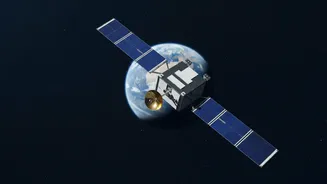
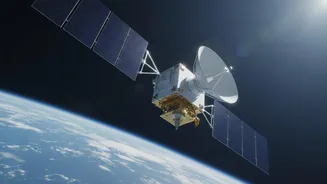
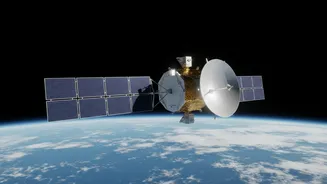
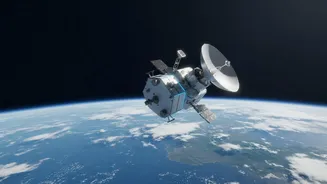
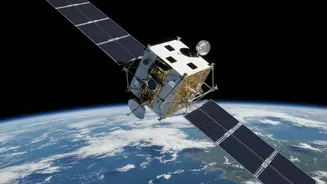
For decades, mission control has meant rooms of engineers on Earth monitoring data and sending commands to spacecraft. But this model is becoming impractical. For deep-space missions, such as those to Mars or the outer planets, communication delays can be minutes or even hours long, making real-time human control impossible. Furthermore, the sheer number of satellites in orbit, especially with the rise of large constellations, makes manual management incredibly complex and costly. Automation and autonomy solve these problems by giving spacecraft the ability to think for themselves. This reduces the need for constant ground supervision, frees up human operators to focus on higher-level strategy, and ultimately lowers operational costs.
Automated vs. Autonomous: A Key Distinction
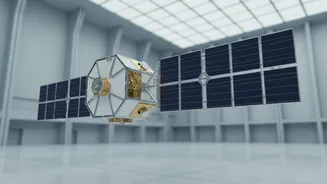
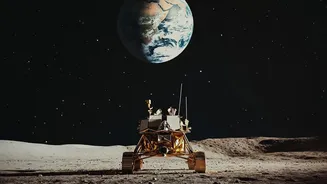
It's important to understand the difference between automation and autonomy, a key theme at SMOPS-2026. An automated system follows a pre-written script. It can perform complex sequences, like deploying a solar panel at a specific time, but it cannot deviate from its programming. An autonomous system, powered by artificial intelligence (AI), is a major leap forward. It can perceive its environment, analyze data, make independent decisions, and even create new plans to achieve a goal. For example, an autonomous rover on Mars could identify an interesting rock formation, decide to investigate it, and plan its own route without waiting for instructions from Earth. This capability is shifting the role of the human operator from being 'in-the-loop' to 'on-the-loop'—acting as a supervisor rather than a micromanager.
The AI Toolkit for Space
The technologies enabling this shift are centered on AI and machine learning. Key applications discussed at SMOPS-2026 include AI-driven systems for navigation, fault detection, and resource management. Spacecraft are being equipped with AI that can perform their own station-keeping maneuvers, diagnose and recover from system anomalies, and prioritize what scientific data is most valuable to send back to Earth. This not only improves mission efficiency but also enhances safety and resilience, as the spacecraft can react to unexpected events far faster than a human team on the ground could. These smart systems are essential for enabling more ambitious missions, from robotic explorations to the eventual establishment of sustainable habitats on the Moon and Mars.
The Road Ahead: Challenges and Collaboration
Despite the excitement, the path to fully autonomous space operations is filled with challenges. A primary concern is building trust in these complex systems. Ensuring the reliability and safety of AI that controls a billion-dollar asset is a monumental task that requires exhaustive testing and validation. There are also significant concerns around cybersecurity and the risk of an autonomous system being compromised. Experts at SMOPS-2026 stressed that human oversight, while evolving, will remain critical for troubleshooting and handling scenarios the AI was not trained for. The consensus is that international collaboration between space agencies and private companies is essential to develop the standards and technologies needed to navigate this new frontier securely and sustainably.