

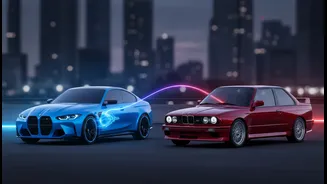


The End of an Era for 'i'
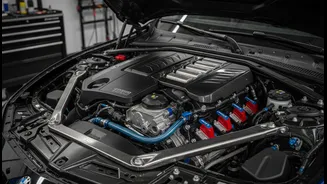
For over 50 years, the lowercase 'i' at the end of a BMW model name, like 330i or 540i, has been a familiar sight. It originally stood for einspritzung, the German word for fuel injection, a technology that was a significant innovation when it was introduced
in the 1970s. It was a mark of a modern, more powerful engine. However, as fuel injection became standard across all cars, the 'i' became more of a tradition than a technical descriptor. Now, that tradition is ending. BMW has confirmed it is dropping the 'i' suffix from its petrol-powered cars. The change will be rolled out gradually, starting with models like the next-generation X3, which will see variants like the M40i become the M50. This move is not just a tidy-up; it's a deliberate step to bring clarity to its brand as it navigates the biggest transition in automotive history.
Making 'i' Mean Electric
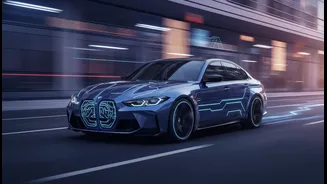
The primary reason for retiring the 'i' from petrol models is to give it a new, singular focus: electricity. As BMW has expanded its electric vehicle (EV) lineup with models like the i4, iX, and i7, the letter 'i' became confusing. It appeared as a prefix for EVs and a suffix for petrol cars. According to Bernd Körber, Senior Vice President for BMW Brand and Product Management, the company wants to keep 'i' as a clear signature to indicate you're driving an electric car. By making 'i' exclusively a prefix for its EV range, BMW is elevating the sub-brand and eliminating any ambiguity for customers. In a showroom of the near future, if a BMW has an 'i' in its name, it will be an EV—no questions asked.
What About 'M' and 'd'?
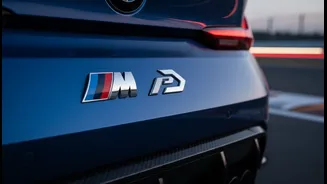
While the 'i' is being redefined, other letters in BMW's alphabet soup retain their powerful meaning. The 'M' badge, which stands for Motorsport, remains the pinnacle of BMW performance. It signifies vehicles with track-inspired engineering, including more powerful engines, performance-tuned suspensions, and sharper handling. This high-performance branding is a core part of BMW's identity and is not going anywhere. The 'd' suffix for diesel models, on the other hand, is expected to fade away naturally as demand for diesel engines declines and manufacturers shift focus towards electrification across Europe and other key markets. By simplifying the model names, BMW is placing greater emphasis on its two core pillars: the standard range and the high-performance 'M' cars, with the 'i' sub-brand leading the charge into the electric future.
Driving Character Above All
This new badge strategy is more than just a marketing exercise; it's a statement about BMW's philosophy. By removing the fuel-type differentiator from its combustion engine cars, BMW is making a bold claim: the 'Ultimate Driving Machine' experience is not defined by petrol or electricity. This aligns with the company's development of its next-generation platform, dubbed the 'Neue Klasse' (New Class). This new architecture is designed to be electric-first but is also engineered to deliver the handling and driver-focused feel that the brand is famous for. BMW is developing a central control unit for these cars, nicknamed the "Heart of Joy," which integrates all driving dynamics systems to ensure that future electric models still feel like a true BMW. The message is clear: whether it's a petrol 3 Series or an electric i4, the defining characteristic should be the driving pleasure, not the powertrain.