




The Supernova Impasse
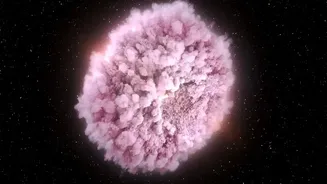
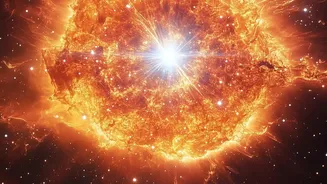
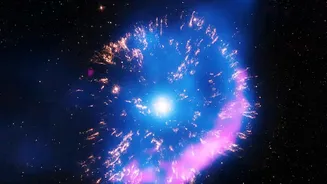
For decades, astrophysicists have faced a persistent puzzle. When a star many times the mass of our sun runs out of fuel, its core collapses under its own immense gravity. This implosion is thought to trigger a cataclysmic explosion known as a core-collapse
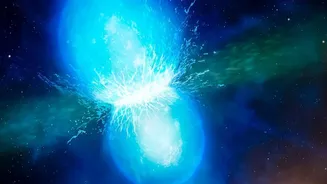
supernova, an event that forges heavy elements and gives birth to neutron stars. However, there is a problem: in many computer simulations, the explosion stalls. The shockwave from the collapsing core loses momentum and fizzles out. Scientists have long suspected that neutrinos, ghostly particles created in staggering numbers during the collapse, hold the key to reigniting the blast. But precisely how they transfer their energy to achieve this has remained a complex and unanswered question.
Enter the 'Ghost Particle'
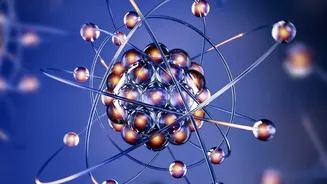
Neutrinos are fundamental particles that are almost massless and interact so weakly with other matter that trillions pass through you every second without a trace. But in the ultra-dense environment of a dying star's core, they are produced in such overwhelming quantities that their behaviour becomes critical. The discovery that won the 2015 Nobel Prize in Physics was that neutrinos can oscillate, or change, between three different types or 'flavours': electron, muon, and tau. For a long time, it was assumed this flavour-swapping was a minor detail in the chaos of a supernova. However, new research published in the prestigious journal Physical Review D challenges this view, showing these oscillations could be a game-changer.
A Quick-Change Act at a Crucial Moment
The new study, led by researchers at the University of Copenhagen, ran 195 simulations of collapsing stars, ranging from nine to 120 times the mass of the Sun. For the first time, they developed a model that could effectively incorporate the complex physics of neutrino oscillations, specifically a phenomenon called 'fast flavour conversion'. This happens when the density of neutrinos is so high that they start interacting with each other, causing them to switch flavours far more rapidly than previously thought. The flavour of a neutrino matters because each type interacts differently with the stellar material surrounding the core. By changing their identity at a critical moment, the swarm of neutrinos can alter how much energy they deposit into the stalled shockwave.
Flipping a Star's Fate
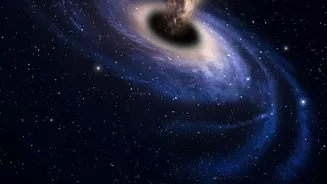
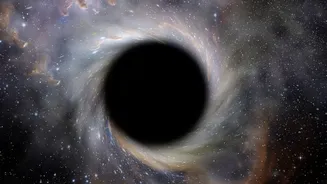
The results were dramatic. The researchers found that including these rapid oscillations completely changed the outcome for many stars, particularly those between 16 and 30 times the mass of the Sun. In many simulated cases, stars that were expected to explode successfully as supernovae instead failed and collapsed directly into black holes. According to lead author Mariam Gogilashvili, seeing a whole range of stars flip from exploding to failing was an exciting moment that proved flavour conversion cannot be ignored. This finding may help explain a nagging cosmic mystery: why astronomers observe fewer supernovae in the universe than theoretical models have predicted. It suggests many massive stars may be quietly collapsing into black holes instead of going out with a bang.
What This Means for Astronomy
This research represents a significant leap forward in understanding the final moments of massive stars. It shows that the physics of the incredibly small—the behaviour of a single type of particle—can dictate the fate of the largest objects in the cosmos. By integrating this crucial piece of the puzzle, scientists can build more accurate models of stellar evolution. This will not only refine our understanding of how neutron stars and black holes are born but also how supernovae distribute the chemical elements necessary for life across the galaxy. The next step for scientists is to refine these complex simulations and hope to one day capture the neutrino signal from a nearby supernova, which would allow them to test these new theories directly.