




Why You Get Hungry at Work
That afternoon hunger isn't a lack of willpower; it’s a biological reality. A few hours after lunch, your blood sugar levels naturally start to dip, causing your energy and concentration to drop with them. This is often when ghrelin, the 'hunger hormone',
makes an appearance, signaling to your brain that it's time for more fuel. Furthermore, a mentally demanding day can be just as exhausting as a physical workout, causing your brain to demand more energy from calories. Stress can also get mixed up with hunger cues, peaking on weekday afternoons and making you crave a pick-me-up. Finally, you might just be thirsty. Mild dehydration can often masquerade as hunger, making you feel sluggish and ready to snack. So, that urge to eat is a normal, physical signal, not a character flaw.
Ditch Guilt, Adopt a Strategy
Food guilt is a learned emotion, often fueled by diet culture that labels foods as 'good' or 'bad'. This all-or-nothing thinking is unhelpful. Eating a biscuit doesn't make you a bad person, just as eating a salad doesn't make you a saint. The key is to move from mindless munching to mindful snacking. Mindful eating is about paying attention to your body’s hunger cues and making a conscious choice. Instead of feeling ashamed, get curious. Ask yourself: Am I truly hungry, or am I bored, stressed, or tired? By understanding the 'why' behind your craving, you can choose a snack that truly nourishes your body and spirit. This practice helps you enjoy food more, feel satisfied, and give your body the steady energy it needs.
What Makes a Smart Snack?
A smart snack is one that provides sustained energy, not a quick sugar rush followed by a crash. The goal is to choose foods that combine protein, healthy fats, and complex carbohydrates with fiber. Protein and fats help you feel full and satisfied for longer. Complex carbs release energy slowly, preventing the dramatic blood sugar spikes and dips that come from simple sugars and refined grains. Nutrients like iron and B vitamins are also crucial for converting food into usable energy and fighting fatigue. A practical office snack should also be easy to store, pack, and eat at your desk without much fuss or mess. Planning ahead is crucial to avoid reaching for sugary treats from the vending machine or office pantry.
Easy, Guilt-Free Snack Ideas for the Office
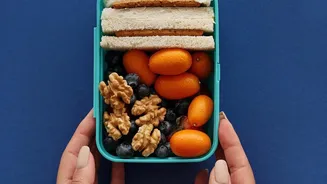
Keeping nutritious and easy-to-eat options on hand is the best way to conquer workday hunger. Here are some ideas perfect for an Indian office setting: Roasted Makhana (Fox Nuts): Light, crunchy, and filling, makhana is a low-calorie superfood. A small bowl can be very satisfying.. A Handful of Nuts: Almonds, walnuts, and pistachios provide a great mix of healthy fats, protein, and fiber.. Roasted Chana: This high-protein, high-fiber snack is crunchy and satisfying. A small bowl can keep you full until your next meal.. Sprout Chaat: A small container of sprouted moong mixed with finely chopped onion, tomato, and a squeeze of lemon is a powerhouse of nutrients.. Yogurt or Hung Curd: A small bowl of plain yogurt, perhaps with some fruit, is packed with protein and probiotics. Paneer cubes seasoned with a little salt and pepper are another excellent high-protein option.
Make Snacking a Mindful Moment
How you eat is just as important as what you eat. Instead of eating while typing, take a genuine break, even if it's just for ten minutes. Step away from your screen. Pay attention to the food. Notice its texture, smell, and taste. Chew slowly and put your food or utensils down between bites. This simple act of slowing down not only aids digestion but also gives your brain time to register that you are full, which can prevent overeating. Smiling between bites can even help reduce emotional eating by releasing mood-boosting neurotransmitters. Treating your snack break as a moment to pause and reset can help you return to your work feeling more relaxed, focused, and genuinely refreshed.