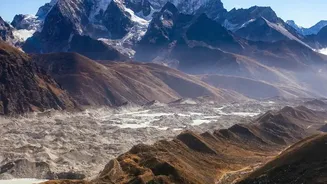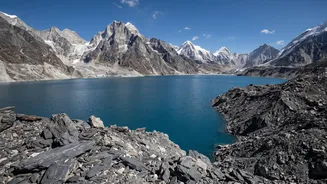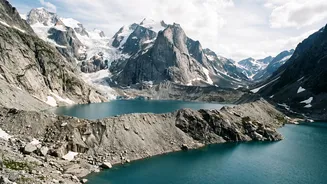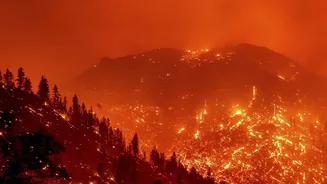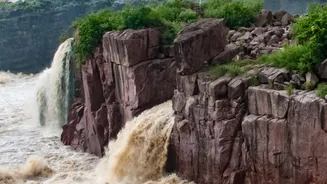









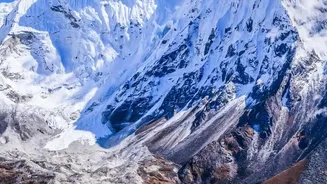
For years, the story of a Himalayan disaster seemed to start and end with a single, terrifying event. New research, however, reveals a more complex and dangerous reality: disasters are rarely one-off incidents, but a deadly chain reaction.
Beyond the Single Trigger
When we think
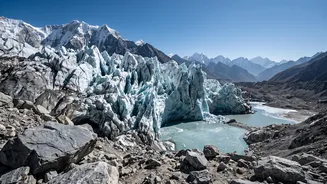
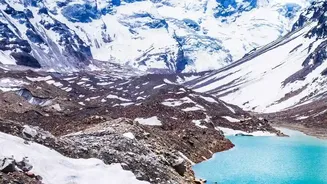
of a Himalayan flood, we often picture a single cause: a glacial lake bursting its banks (a GLOF), a sudden cloudburst, or a landslide. For decades, disaster management and risk assessment were largely built around preparing for one of these primary hazards. The thinking was linear: a trigger occurs, and a flood follows. This approach, while straightforward, is now considered dangerously incomplete by many scientists. Recent catastrophic events in the region, such as the 2021 Chamoli disaster and major floods in Nepal, have shown that the most destructive outcomes are not from a single mechanism but from a sequence of interconnected events. Researchers argue that focusing only on one potential trigger leaves communities and infrastructure critically vulnerable to the real, multifaceted nature of mountain hazards.
The Domino Effect: Understanding Cascading Risks
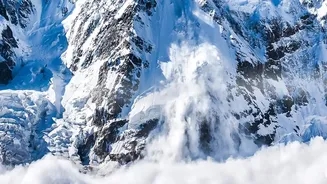
The term gaining urgency among scientists is 'cascading hazards'. Imagine a line of dominoes. The first domino doesn't just fall; it triggers the next, which triggers another, creating a chain reaction where the final impact is far greater than the initial push. In the Himalayas, a primary hazard can set off a series of secondary and tertiary events. For example, a rock and ice avalanche high in the mountains might not be the main threat itself. But as it thunders down, it can crash into a glacier, causing ice to melt and forming a debris flow. This slurry of rock, ice, and water can then temporarily block a river, creating an unstable natural dam. When that dam inevitably bursts, it releases a sudden, devastating flood wave downstream, far more powerful than any initial event. This chain reaction is the essence of cascading risk.
A Chain Reaction in Action
The Chamoli disaster in Uttarakhand and the 2023 Sikkim floods are stark examples of these cascades. In Chamoli, a massive rock and ice avalanche triggered the flash flood that destroyed two hydropower projects and resulted in over 200 deaths. The initial event was not rainfall or a typical GLOF, but a high-altitude slope failure that initiated the entire deadly sequence. Similarly, the 2021 Melamchi flood in Nepal was found to be a complex mix of heavy rain, snowmelt, and landslide damming that compounded the destructive power. These events show that the starting trigger can be miles away and at elevations far above the communities ultimately affected, making conventional warning systems that monitor local rainfall or river levels insufficient.
Why This Changes Everything for India
This new understanding has profound implications for India’s Himalayan states like Uttarakhand, Himachal Pradesh, and Sikkim. Decades of infrastructure development, including an expanding network of hydropower plants, roads, and settlements, have been planned around older, single-hazard models. Researchers warn that this infrastructure may not just be at risk but could actually amplify disasters. A dam designed to withstand a 100nd flood might be completely overwhelmed by a debris flow born from a cascading event it was never designed to account for. As climate change accelerates glacier melt and destabilises mountain slopes, the frequency and complexity of these cascading events are expected to increase, turning what were once considered rare outliers into the new norm.
A New Blueprint for Mountain Safety
Acknowledging cascading risks demands a fundamental shift in disaster management. Experts are calling for a 'cascade_aware' approach. This involves moving from single_hazard maps to comprehensive multi_hazard risk assessments that model how different dangers interact. Warning systems need to be integrated, using satellite imagery and high_altitude monitoring to detect initial triggers like landslides or avalanches, not just the resulting floods. Furthermore, infrastructure planning must be re_evaluated. Environmental impact assessments for projects like dams and highways must now mandatorily consider the potential for cascading events. As one group of experts put it, the era of preparing for a single, predictable hazard in the Himalayas is over.