







Meet SOLVE: Gaganyaan’s Safety Net
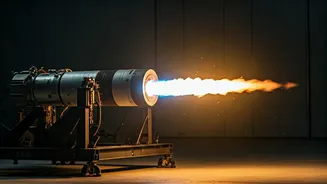
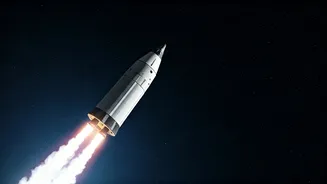
ISRO recently announced the successful static test of a solid rocket motor. While motor tests are a regular feature of the agency's work, this one was special. It was for SOLVE, which stands for Sub-Orbital Launch Vehicle for Experiments. This new vehicle
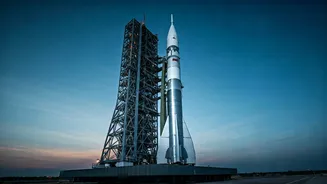
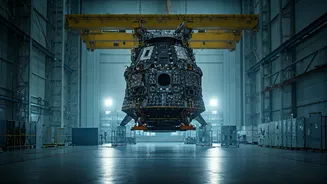
isn't designed to go into orbit; instead, it has a very specific and vital job: to help test the critical systems for India's first human spaceflight mission, Gaganyaan. SOLVE's primary purpose is to be a flexible and repeatable test platform. Its main role will be to carry a prototype of the Gaganyaan crew module to a specific altitude and then release it, allowing engineers to test the capsule's deceleration and recovery systems under real-world conditions. This is a crucial piece of the puzzle to ensure that Indian astronauts can return to Earth safely.
From Design to a Successful Burn
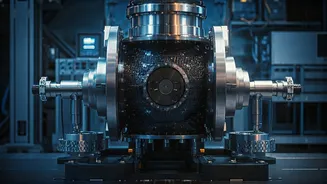
The recent test, conducted at the Satish Dhawan Space Centre in Sriharikota, represents the 'testing' phase mentioned in the headline. It successfully validated the solid motor that will power the SOLVE vehicle. ISRO has confirmed that the motor performed exactly as expected, meeting all performance goals. This isn't just a standard motor; it's a modified version of the trusty strap-on boosters used on the Polar Satellite Launch Vehicle (PSLV). For SOLVE, engineers have adapted it with a special slow-burning propellant and a new nozzle, among other changes. These modifications are essential to create the precise flight conditions needed to test the Gaganyaan crew module's parachute system. Moving from the design and engineering phase to a successful hardware test is a significant leap, proving the underlying concepts are sound.
Simulating a Fiery Return
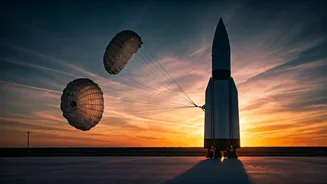
The entire point of SOLVE is to simulate the most critical part of a crewed mission: the return. For its test flights, SOLVE will carry the Gaganyaan crew module to an altitude of between 10 and 17 kilometres. Once it reaches the target height, the module will separate from the rocket. From there, a complex sequence of 10 parachutes will deploy to systematically slow the module's descent before it splashes down in the sea. Having a dedicated vehicle like SOLVE allows ISRO to conduct these tests repeatedly and under various simulated conditions, a key requirement for human-rating the entire system. It provides a flexible and cost-effective way to gather data and build confidence in the recovery systems without requiring a full-scale orbital launch for every test.
The Bigger Picture: Gaganyaan and Beyond
SOLVE is an essential building block for Gaganyaan, India's historic mission to send its own astronauts into low-Earth orbit and bring them back. This endeavour will make India only the fourth nation in the world to achieve independent human spaceflight capability. Before astronauts strap in for the ride, ISRO plans to conduct multiple uncrewed missions to validate every system. The successful development and testing of SOLVE's motor is a concrete step forward in this meticulous process. It demonstrates ISRO's methodical approach to safety and its commitment to ensuring every component is rigorously tested. The learnings from the SOLVE platform will directly feed into the final design and operational procedures for the crewed Gaganyaan flights, ensuring the safety of the 'Vyomanauts'.