







Meet Bengaluru's New Space Pioneer
Founded in 2022 by a team of engineers including Manu J Nair, Shubhayu Sardar, and Prashanth Sharma, EtherealX has quickly emerged as a serious contender in India's burgeoning private space industry. Headquartered in Bengaluru, the startup has a clear
and audacious mission: to dramatically lower the cost of space transportation by developing next-generation reusable launch vehicles. This vision has attracted significant investor interest, positioning EtherealX as one of the key players to watch in a sector historically dominated by the Indian Space Research Organisation (ISRO). The company is part of a wave of over 400 space technology startups that have registered in India, fueled by recent policy reforms designed to open the final frontier to private enterprise.
The Reusability Revolution
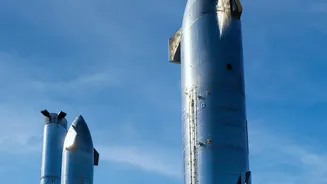
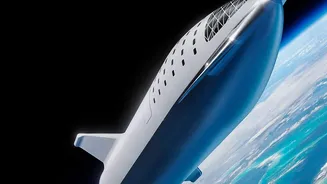
The holy grail for modern launch providers is reusability. Traditionally, rockets are used only once, making each launch an incredibly expensive undertaking. By designing rockets whose most expensive components can be recovered and flown again, companies can slash the cost of delivering payloads to orbit. EtherealX is tackling this challenge head-on with its flagship project, the Razor Crest Mk-1. This medium-lift launch vehicle is being designed to be fully reusable, meaning both its first and second stages could be recovered after a mission. The startup claims its goal is to reduce launch costs to a target range of $500 to $1,000 per kilogram, a massive reduction from the current industry average. This places them in direct conceptual competition with global giants like SpaceX, which have already proven the economic benefits of partially reusable rockets.
Funding Fuels a Fiery Ambition
Developing rockets is a capital-intensive business, and EtherealX has had early success in securing the necessary funding. In January 2026, the company announced a significant Series A funding round of $20.5 million, co-led by TDK Ventures and BIG Capital. This followed a seed funding round of $5 million in August 2024. According to company statements, this fresh capital is being channeled directly into the development of the Razor Crest Mk-1. The funding has allowed EtherealX to make tangible progress, including the manufacturing of its reusable upper-stage engine, named Pegasus. This financial backing is a strong vote of confidence from investors in the company's technical roadmap and its potential to capture a share of the global launch market.
Navigating a Crowded Indian Sky
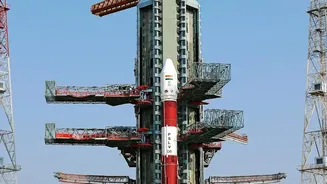
EtherealX is not alone in its ambition. India's private space sector is becoming increasingly vibrant and competitive. Hyderabad-based Skyroot Aerospace made history in July 2026 by becoming the first private Indian company to successfully launch a rocket, the Vikram-1, into orbit. Another key player, Agnikul Cosmos, has gained attention for its single-piece, 3D-printed rocket engines. This healthy competition, coupled with a supportive policy environment from the government and ISRO, is creating a dynamic ecosystem. ISRO has been actively encouraging private participation, transferring the manufacturing of its workhorse rockets like the PSLV to private consortia to focus its own efforts on research and deep-space missions. This strategic shift creates a massive opportunity for startups like EtherealX to not only build their own vehicles but also integrate into a larger national space strategy.
The Long Road to Orbit
Despite the progress and funding, the path ahead for EtherealX is challenging. Building a reliable and fully reusable rocket is one of the most difficult engineering feats imaginable. The Razor Crest Mk-1 is a medium-lift vehicle intended to carry heavy payloads, with a projected capacity of up to eight tonnes to low Earth orbit. While an initial launch was once projected for 2027, aerospace timelines are notoriously fluid and subject to the rigorous demands of testing and safety validation. The company has signed collaboration agreements with the national space regulator IN-SPACe and ISRO, which will be critical for accessing testing facilities and gaining regulatory approval for future launches. The next major milestones for the company will be the continued ground testing of its Pegasus engine and progressing toward integrated tests of the full launch vehicle.