




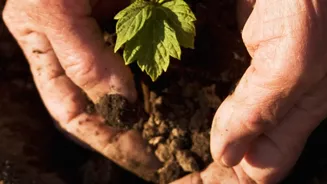
The Joy of More Plants, For Free
Plant propagation is the process of creating new plants from existing ones. Beyond the obvious benefit of saving money, it’s a sustainable practice that allows you to clone your most successful and beloved specimens—ensuring that their specific colours,
resilience, or sentimental value live on. Whether you want to preserve a cherished plant, share favourites with friends, or simply fill out your garden beds, learning a few basic techniques can transform your relationship with your garden. It’s a rewarding skill that connects you more deeply to the life cycle of your plants.
Method 1: The Magic of Cuttings
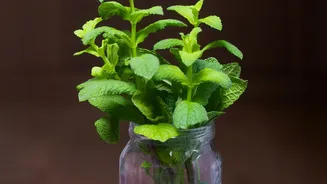
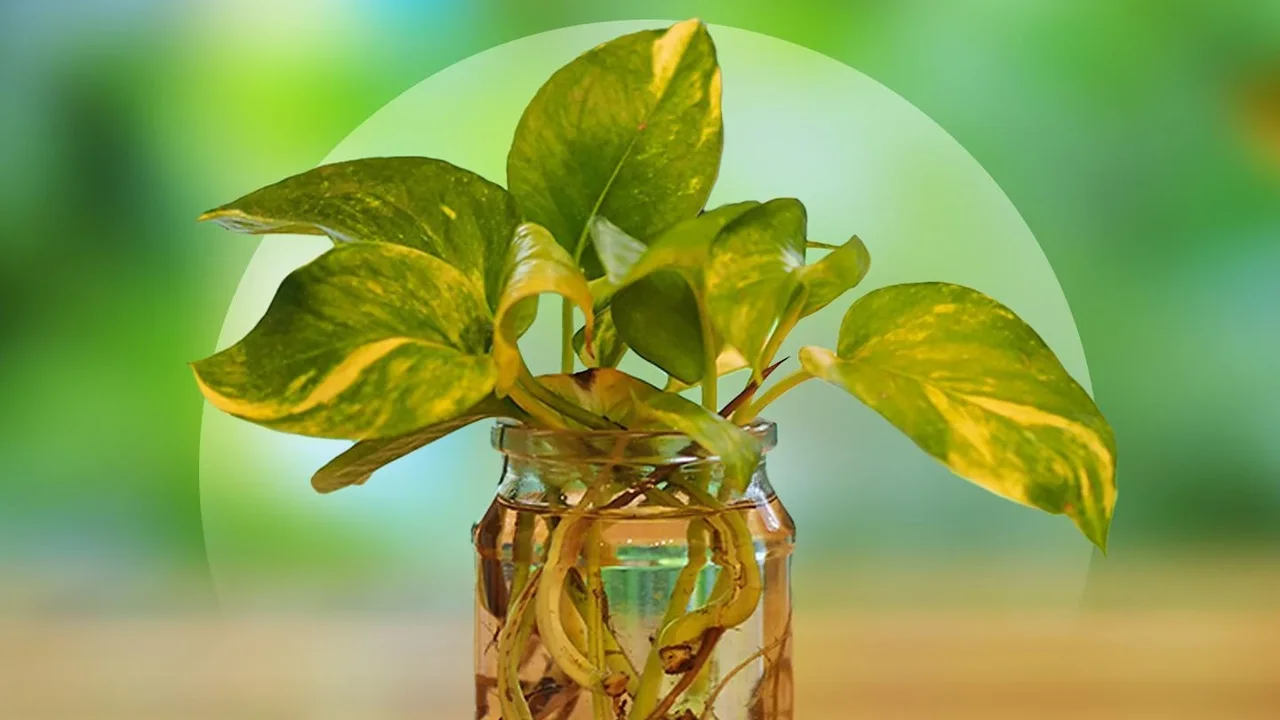
Taking cuttings is one of the most popular ways to propagate, especially for houseplants and many shrubs. This method involves snipping off a piece of the parent plant, typically a 4- to 6-inch section of stem, and encouraging it to grow its own roots. For best results, use clean, sharp pruners and make your cut just below a node (the point where a leaf attaches to the stem), as this is where rooting is most likely to occur. Remove the lower leaves from your cutting and, for a higher success rate, dip the cut end in a rooting hormone. Place the cutting in water or a pot filled with a well-draining potting mix. Keep it in a humid environment and wait for new roots to form. This works wonderfully for plants like pothos, begonias, rosemary, and lavender.
Method 2: Master the Art of Division
For perennial plants that grow in clumps—like hostas, daylilies, and many ornamental grasses—division is the simplest and most effective method. It not only gives you new plants but also rejuvenates the parent plant, which can become overcrowded and less vigorous over time, sometimes dying out in the centre. The best time to divide often depends on the plant's bloom cycle; a general rule is to divide summer and fall bloomers in the spring, and spring bloomers in the fall. To divide a plant, carefully dig up the entire root ball. Then, you can gently tease the roots apart by hand or use a sharp spade or knife to cut the clump into smaller sections. Ensure each new division has a healthy set of roots and several shoots, then replant them immediately at the same depth and keep them well-watered.
Method 3: Simple and Successful Layering
Layering is a nearly foolproof technique because the new plant remains attached to its parent, receiving nutrients and water while it develops its own roots. This method works best for plants with flexible, low-growing stems, such as climbing roses, forsythia, rhododendrons, and blackberries. To do it, simply select a healthy, pliable stem and bend it down to the ground. At the point where the stem touches the soil, you can make a small scrape or wound on the underside to encourage rooting. Pin the stem firmly to the ground with a landscape pin or a bent piece of wire and cover the section with soil, leaving the tip of the stem exposed. Keep the soil moist, and after a few months to a year, the layered section should have developed a robust root system. At that point, you can sever it from the parent plant and transplant your new, independent shrub.
Essential Tools for Success
While many propagation methods can be done with minimal equipment, having the right tools makes the process smoother and more successful. A clean pair of sharp pruning shears or a knife is non-negotiable to ensure clean cuts that heal quickly. Small pots or trays are needed for cuttings, along with a sterile, well-draining rooting medium like perlite, vermiculite, or a seed-starting mix. Rooting hormone can significantly speed up the process for cuttings. For layering, landscape pins or even a small rock can help keep the stem in contact with the soil. Finally, always have clean water and labels on hand to keep track of your new plant babies as they grow.