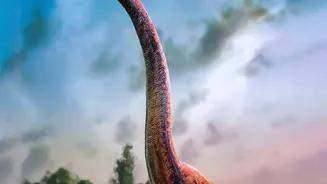








The Old Story: Giants vs. Scurriers
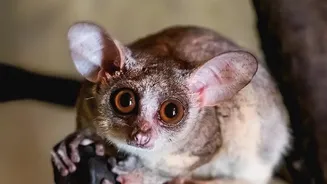
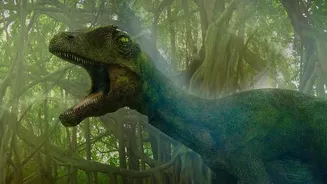
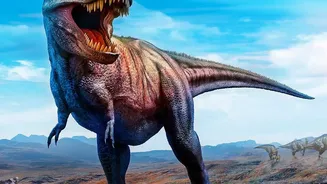
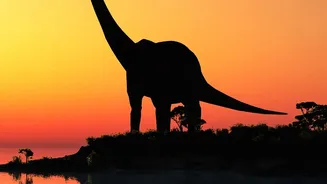
For generations, the popular understanding of the Mesozoic Era has been a simple one: giant dinosaurs ruled the Earth, while our tiny, shrew-like mammal ancestors scurried underfoot, hiding in the shadows and waiting for their moment. In this version
of events, mammals were kept small and insignificant, suppressed by the sheer dominance of their reptilian overlords. It was only after the cataclysmic asteroid impact 66 million years ago, which wiped out the non-avian dinosaurs, that mammals finally had the opportunity to diversify, grow larger, and eventually take over the world. This narrative is compelling, but new research suggests the relationship between dinosaurs and mammals was far more complex and competitive than we once thought. The key, it seems, wasn't just about the giants, but about the very, very small.
A Puzzle at the Small End of the Scale
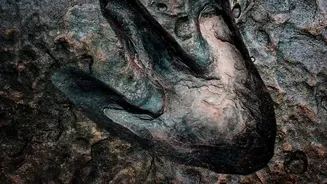
A recent study published in the journal 'Evolution' tackles a long-standing paleontological puzzle: why were there no truly tiny dinosaurs? While dinosaurs like Argentinosaurus reached weights of over 80 tonnes, the smallest non-avian dinosaur known weighed around 450 grams—roughly the size of a rabbit. This might seem small, but in modern ecosystems, the vast majority of species are much tinier. About 75% of living mammals and 90% of living birds are smaller than the smallest known non-avian dinosaur. Scientists have wondered if this absence of tiny dinosaur fossils was simply a gap in the record. However, new analysis suggests something else was at play. Using mathematical models, researchers determined that physiology alone can't explain why dinosaurs never evolved to be mouse-sized or sparrow-sized. The answer, they propose, has to do with ecology and competition.
A Two-Way Street of Competition
The new study proposes a fascinating role reversal in the classic dinosaur-mammal story. For decades, the consensus has been that large dinosaurs kept mammals from evolving into larger forms. But the new research suggests the reverse was also true: small, early mammals may have prevented dinosaurs from evolving into smaller forms. During the Mesozoic, our furry ancestors were already successfully occupying the ecological niches for small, insect- and seed-eating creatures. They were thriving in the world of the tiny. According to the study, these early mammals likely outcompeted any dinosaurs that tried to shrink down into those same roles. So, while dinosaurs dominated the large-animal niches, mammals had a firm grip on the small ones. It was a competitive standoff, a two-way street where each group effectively blocked the other from expanding into their territory.
Implications for the Rise of Mammals
This revised view has significant implications for how we understand the rise of mammals. It reframes them not as passive victims waiting for a lucky break, but as resilient and successful competitors that carved out and defended their own ecological space. Their small size was not a sign of failure, but a highly successful strategy in a world full of giants. This competitive pressure may have honed the traits that allowed mammals to survive the mass extinction event that dinosaurs did not. Furthermore, some research suggests that competition wasn't just from dinosaurs, but also from other, now-extinct groups of early mammals. The ancestors of modern mammals were constrained by these other groups, and it was the extinction of both the non-avian dinosaurs and these competitor mammals that truly opened the floodgates for the diversification we see today.
New Discoveries Continue to Reshape the Story
This evolving picture is constantly being coloured in by new fossil discoveries, including in India. Recent finds, such as a small sauropod dinosaur named Ceratocaudia antiqua from Gujarat's Kachchh Basin, are adding crucial details about the diversity of smaller dinosaurs that existed. While not a 'tiny' dinosaur in the way the new study discusses, at only 7 meters long it was a relative dwarf compared to its later, colossal cousins like Diplodocus. Each new fossil, whether of a small dinosaur or an early mammal, provides a new data point that helps scientists test these theories about competition and ecological niches. These finds demonstrate that the Mesozoic world was a rich and complex tapestry, and the final chapter on who was competing with whom is still being written.