







Clearing the Air on Privatisation
Recent statements from ISRO Chairman V. Narayanan and official channels have been unequivocal: ISRO is not for sale. In response to media speculation and concerns raised by employee associations, the space agency released a formal statement calling assertions
of its privatisation "completely baseless and incorrect". The chairman emphasised that ISRO remains a government organisation funded by public investment. The confusion stems from a fundamental misunderstanding of India's new space policy, which is designed not to replace ISRO, but to build a larger, more robust national space ecosystem around it. The policy aims for expansion and capability multiplication, not privatisation.
Not Privatisation, but Participation
The core of the new strategy, formalised in the Indian Space Policy 2023, is to encourage greater participation from Non-Governmental Entities (NGEs), or private companies. This reform, initiated in 2020, created new bodies to manage this transition. The most important of these is the Indian National Space Promotion and Authorisation Centre (IN-SPACe). IN-SPACe acts as a single-window agency to authorise and supervise the activities of private players, ensuring they have access to ISRO's world-class facilities and technologies. It's designed to create a level playing field, allowing private firms to build satellites, develop launch vehicles, and offer space-based services, thereby fostering innovation and competition.
ISRO’s New Frontier: Research and Exploration
With private companies stepping in to handle more routine tasks, ISRO is being freed up to focus on what it does best: pushing the boundaries of science and technology. Instead of manufacturing operational launch vehicles and satellites—mature processes that can be transferred to industry—ISRO will concentrate its formidable talent on advanced research and development. This means prioritising ambitious, high-risk, high-reward projects like the Gaganyaan human spaceflight mission, deep-space exploration to Mars and Venus, developing next-generation launch systems, and pioneering new technologies for the future. ISRO will remain the principal institution for national strategic missions and frontier space capabilities.
The Role of NewSpace India Limited (NSIL)
Another key piece of this new architecture is NewSpace India Limited (NSIL), ISRO's commercial arm. Established in 2019, NSIL's mandate is to commercialise the proven technologies and services developed by ISRO over decades. It acts as a bridge between ISRO's technological prowess and the market. NSIL is responsible for procuring launch services for customers, managing satellite-based services, and transferring ISRO-developed technologies to Indian industries. By handling these demand-driven commercial activities, NSIL allows ISRO to maintain its focus on research and exploration while ensuring that India's space assets are effectively monetised.
Building a $44 Billion Space Economy
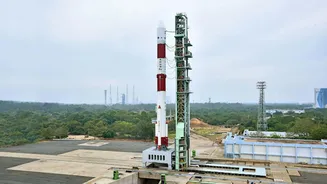
The overarching goal of these reforms is to significantly expand India's share of the global space economy, which is currently less than two percent. The government aims to grow this to $44 billion by 2033, an objective that cannot be met by ISRO alone. It requires the energy of private capital, industrial manufacturing capacity, and entrepreneurial innovation. By having private industry handle the scaling of mature systems like the PSLV rocket, ISRO can avoid the logistical burden of routine production and focus on innovation. This collaborative model, with ISRO as the guiding force and R&D hub, is designed to create a vibrant, competitive, and self-sustaining national space industry that can compete on the world stage.