



An Asteroid with a Wobble
Most planets and asteroids spin in a relatively predictable way, rotating on a single, stable axis like a well-thrown football. But Donaldjohanson is different. Data gathered by NASA’s Lucy spacecraft, which flew past the asteroid in April 2025, confirmed
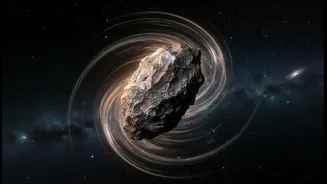
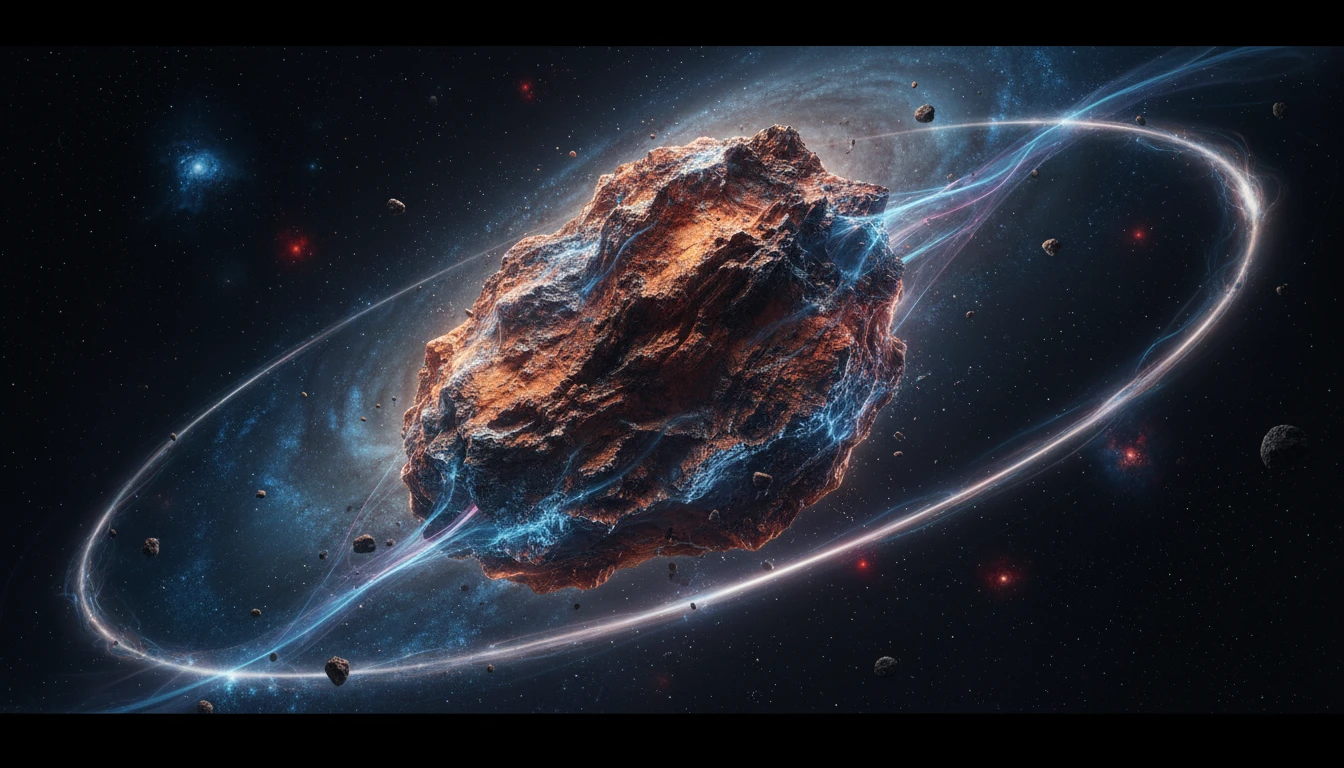
that it doesn’t just spin; it tumbles. Imagine a spinning top that is also wobbling erratically. Donaldjohanson rotates end-over-end once every 10.5 Earth days, while simultaneously rocking back and forth around its long axis in a slower 26.5-day cycle. This complex motion, known as non-principal axis rotation, is a significant clue for scientists. A stable object doesn't naturally tumble through space, so this behaviour points to a dramatic event in the asteroid's past that literally knocked it off-balance.
A Cosmic Crime Scene
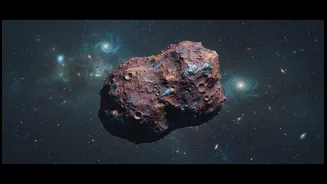
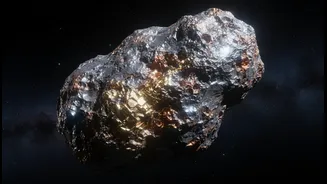
The first clue to its violent origin is its shape. Close-up images from the Lucy mission revealed that Donaldjohanson is a “contact binary,” meaning it’s composed of two distinct lobes joined by a narrow neck, giving it a distinct peanut-like appearance. This structure isn't a cosmic coincidence. It's the result of two separate asteroid fragments gently coming together under their own mutual gravity after a much larger, more violent event. Scientists believe that about 155 million years ago, a massive parent asteroid was shattered in a catastrophic collision. The debris from that impact formed a collection of objects known as the Erigone family, and Donaldjohanson is one of its children. The two pieces that now form Donaldjohanson were once separate fragments from this ancient smash-up.
Connecting the Spin to the Story
The tumbling rotation is the direct aftermath of this violent history. A major impact is precisely the kind of event that can send an object into a chaotic, tumbling spin. Over vast periods, the internal friction within a tumbling object typically causes it to shed this extra energy and settle into a simple, stable rotation. However, Donaldjohanson’s journey has been more complicated. After its initial formation, scientists estimate it was spinning much faster. Over tens of millions of years, a subtle but relentless force known as the YORP effect has been at play. This effect is caused by sunlight warming the asteroid's uneven surface and re-radiating away as heat, creating a tiny, twisting force that gradually slowed its spin. Its current slow, tumbling state is a snapshot of its evolution—a body still carrying the chaotic energy of a past collision, which hasn't yet had enough time or the right conditions to settle down.
Why This Asteroid Matters
Studying Donaldjohanson is about more than just understanding one peculiar space rock. It’s a form of cosmic archaeology. The Lucy mission also detected iron-rich clay minerals on its surface, which indicate that its original parent body once had liquid water, even if only for a brief time. By piecing together its history—from its violent birth in a collision to its gradual slowdown by sunlight—scientists gain invaluable insight into the dynamic and often destructive processes that shaped our entire solar system. Each asteroid is a relic, preserving clues about the conditions of the early solar system. By reading the stories written in their shapes, surfaces, and spins, we can better reconstruct the epic history of how our planetary neighborhood came to be.