





A Nation's Joy, A Leader's Grief
While Jawaharlal Nehru delivered his historic 'Tryst with Destiny' speech to a euphoric Constituent Assembly, Mahatma Gandhi was over a thousand kilometres away in Calcutta (now Kolkata). He was not celebrating. Saddened by the violent partition of the subcontinent,
he refused to participate in the official ceremonies. To him, the freedom gained was incomplete as long as it was accompanied by bloodshed and division. He famously stated, “To me, peace between Hindus and Muslims is more important than the declaration of independence.” His refusal to rejoice was a silent, powerful protest against the communal carnage that had torn his beloved country apart.
The Call of Calcutta
Gandhi's journey had taken him to the epicentre of the Partition's violence. Calcutta, and the wider Bengal region, had been ravaged by horrific communal riots since the 'Direct Action Day' in August 1946. The announcement of Partition had only intensified the hatred, leading to widespread murder and displacement. Gandhi, who had initially planned to travel to Noakhali (in modern-day Bangladesh), was implored by Muslim leaders, including the last premier of undivided Bengal, H.S. Suhrawardy, to stay in Calcutta and help quell the fires of hatred. The city was a tinderbox, and Gandhi believed his duty was not in the corridors of power but among the suffering people.
A Mission for Peace in Beliaghata
On August 13, 1947, Gandhi moved into a dilapidated, abandoned house called Hyderi Manzil in Beliaghata, a Muslim-majority area that had seen some of the worst violence. The decision was deliberate: to show solidarity and build trust. He was not met with cheers but with angry protests from some Hindus who felt he was only there to protect Muslims. Controversially, he insisted that H.S. Suhrawardy, a man many Hindus blamed for the previous year's 'Great Calcutta Killings', live with him under the same roof as a condition for his peace mission. It was a high-risk gamble, a live-in satyagraha aimed at forcing both sides to confront their shared humanity.
A Day of Prayer, Not Pomp
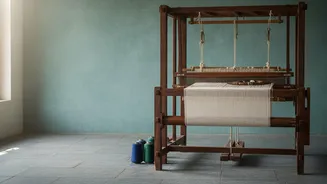
On August 15, 1947, while the tricolour was being hoisted in Delhi, Gandhi’s day was starkly different. He observed a 24-hour fast, spun khadi on his charkha, and held prayer meetings. It was a day for introspection and constructive work, not for celebration. His message was clear: political freedom was meaningless without freedom from hatred, fear, and violence. He saw the partition as a spiritual failure, a seed of future conflict between the two new nations. His presence, however, began to work a change that many found unbelievable.
The Miracle of Calcutta
The atmosphere in the city transformed. The joint appeal for peace by Gandhi and Suhrawardy had a profound effect. On Independence Day, instead of riots, Hindus and Muslims were seen celebrating together in the streets. The change was so dramatic that the last Viceroy, Lord Mountbatten, famously referred to Gandhi as his “one-man boundary force.” He noted that while 55,000 soldiers struggled to control the violence in Punjab, one man had brought peace to Bengal. Though the peace was fragile and violence erupted again weeks later—prompting Gandhi to undertake a fast unto death—his presence in August 1947 was a testament to the power of his moral conviction.