





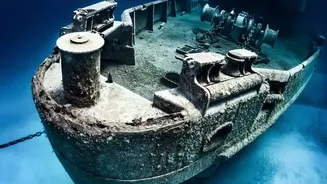
A Time Capsule on the Seabed
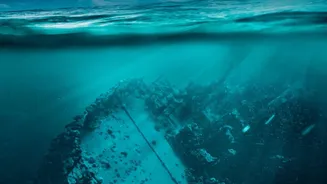
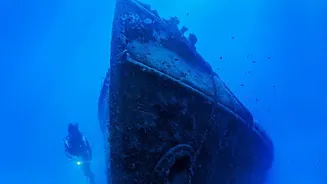
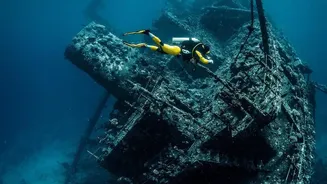
Underwater archaeologists, led by Associate Professor Hakan Öniz of Akdeniz University, have been meticulously excavating a site near Kekova Island that has turned out to be one of the most significant maritime finds in recent memory. Lying approximately
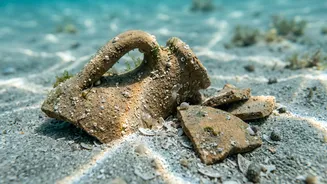
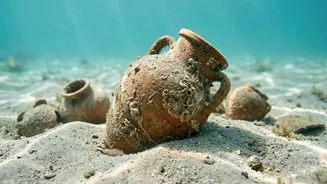
30 metres deep, the remnants of a merchant vessel have been dated to between 2700 and 2400 BCE, making it a contender for the oldest shipwreck ever discovered. While the ship's wooden hull has long been consumed by the sea, its precious cargo remains. More than 30 large ceramic storage jars, known as amphorae, and three heavy stone anchors lay scattered on the rocky underwater slope, painting a vivid picture of the moment the ship met its end. The discovery, first documented in 2024 and now undergoing full excavation, offers a rare, undisturbed glimpse into an era when the Great Pyramids of Giza were being constructed in nearby Egypt.
The Story Told by the Cargo
The heart of the discovery lies in what the ship was carrying. The distinctive flat-based, double-handled amphorae were the key to dating the vessel. Their style matches pottery found at major Bronze Age sites across the Eastern Mediterranean, including in Egypt, the Levant, and Crete. Analysis of the clay suggests some of the jars were crafted in workshops in the Jordan Valley. Inside several of the remarkably preserved vessels, researchers were stunned to find a viscous residue. Scientists are now working to identify the substance, with likely candidates being valuable commodities like olive oil, wine, or tree resin—staples of ancient trade. This 'sludge', as one archaeologist humorously called it, is an invaluable link to the perishable goods that powered ancient economies. The find reinforces how vessels like this, estimated to be about 10 metres long, were the workhorses of a burgeoning international supply chain.
An Ancient 'Globalised' World
This shipwreck is not an isolated story but a chapter in a much larger narrative of Bronze Age commerce. The Eastern Mediterranean during this period was a bustling hub of interaction. Great powers like the Hittite Empire in Anatolia, New Kingdom Egypt, and the Mycenaean palace-states of Greece were connected by complex maritime routes. Ships regularly transported essential raw materials, such as copper and tin needed to make bronze, alongside luxury goods, textiles, and agricultural products. The waters off Antalya, a historically perilous stretch of coast known for strong winds and currents, were a critical highway in this network. This vessel, believed to be sailing from east to west, was likely part of a system that moved goods from the Levant towards the Aegean. The discovery adds powerful evidence to the theory that thousands of years ago, the region operated as a deeply interconnected economic and cultural zone.
Rethinking Life at Sea
Beyond trade goods, the wreck offers tantalising hints about the daily lives of its Bronze Age crew. One of the most intriguing finds is a unique ceramic vessel with two holes and nine markings. Researchers have hypothesised that this may have been a churn, used for making butter or cheese at sea. This suggests the sailors may have transported live animals like goats on their long voyages, providing a source of fresh milk and food. While a provisional theory, it transforms our view of these ancient mariners from mere haulers of cargo into resourceful people adapting to life on the open water. Each artifact, from the anchors to the cooking pots, helps build a more human picture of these daring sailors who navigated the seas long before the invention of modern navigational tools.