





India's Leap into Human Spaceflight
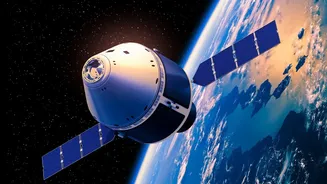
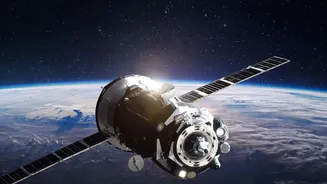
The Gaganyaan programme is India's ambitious endeavor to send its own astronauts, known as 'Gaganyatris', into space. The ultimate goal is to launch a crew of three into a 400-kilometre orbit for a three-day mission and bring them back safely to Earth
with a splashdown in the Indian Ocean. Successfully achieving this will make India only the fourth country in the world—after Russia, the United States, and China—to have an independent human spaceflight capability. The journey to this historic moment is paved with a series of meticulous tests, and the upcoming uncrewed flight is arguably one of the most significant.
The Critical Uncrewed Mission
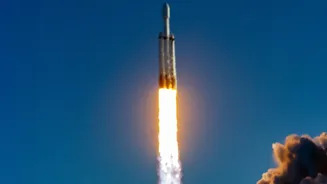
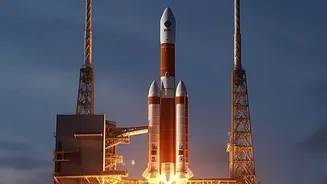
Before astronauts strap in, every system must be proven to be safe and reliable. That is the purpose of the uncrewed missions. ISRO Chairman V Narayanan confirmed that work is progressing at a brisk pace for the first of these flights to launch before the end of 2026. This mission, officially named Gaganyaan-1 (or G1), will be a full-scale trial run without a human crew. It will launch atop a human-rated LVM3 rocket, the same powerful vehicle intended for the crewed mission. The spacecraft will be sent into orbit to validate all the critical technologies needed to keep future astronauts safe.
Meet Vyommitra: The Humanoid Stand-In
A key passenger on this uncrewed flight will be 'Vyommitra', a sophisticated humanoid robot developed by ISRO. Vyommitra, whose name is derived from the Sanskrit words for 'space' and 'friend', will simulate human functions inside the crew module. The robot can monitor module parameters, perform switch panel operations, and communicate with the ground station. Its primary role is to help ISRO understand how the human body might react to the flight environment and to test the life-support systems thoroughly before a person is onboard. This ensures that the environmental controls and life support system (ECLSS) are functioning perfectly.
What Exactly Is Being Tested?
This year-end mission is a comprehensive test of the entire flight sequence. Key systems under scrutiny include the performance of the LVM3 launch vehicle, the orbital module's propulsion systems, and the crucial crew escape system, which is designed to pull the crew module away to safety in case of a launch anomaly. After orbiting the Earth, the mission will test the re-entry phase, where the crew module must withstand extreme temperatures as it passes through the atmosphere. Finally, it will validate the parachute system for deceleration and the splashdown procedures in the sea, ensuring the capsule can be recovered safely.
The Path Forward to the Crewed Launch
The successful execution of this uncrewed mission is a non-negotiable step before the first human flight. Following this initial test, ISRO plans at least one more uncrewed mission to further validate the systems. The timeline for the final crewed launch has been adjusted to ensure every single component is ready, with current estimates pointing towards 2027. The four astronaut-designates—Group Captains Prasanth Balakrishnan Nair, Ajit Krishnan, Angad Pratap, and Wing Commander Shubhanshu Shukla—are continuing their intensive training in preparation for the historic flight. The government has shown its long-term commitment by approving the Gaganyaan continuation program, which looks beyond the first crewed flight towards developing a sustained human presence in space.