



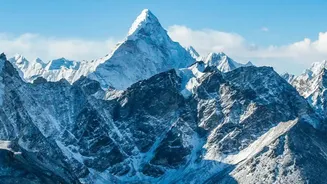
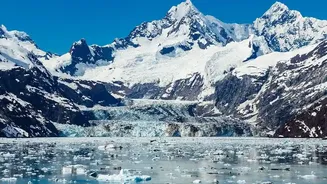
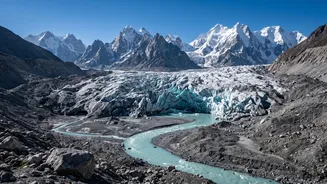
The Warming Roof of the World
The Himalayan region is warming at a rate nearly twice the global average. This accelerated warming is causing its vast stores of ice, which feed ten of Asia's largest river systems, to melt at an unprecedented pace. According to the International Centre
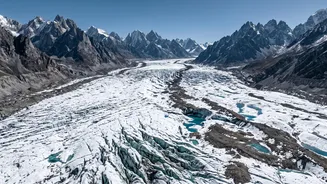
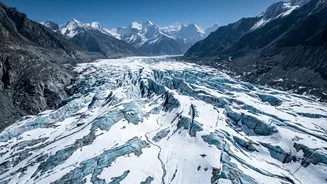
for Integrated Mountain Development (ICIMOD), glaciers in the Hindu Kush Himalaya (HKH) are retreating rapidly, losing significant area and volume. This isn't just about receding ice; it's a fundamental change to the region's stability. As temperatures rise, high-altitude permafrost—the frozen 'glue' holding rock and ice together for millennia—is thawing. This degradation makes entire mountain slopes unstable, dramatically increasing the risk of massive rock and ice avalanches.
A Cascade of Hazards: GLOFs and Landslides
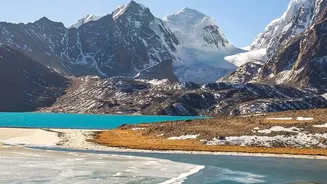
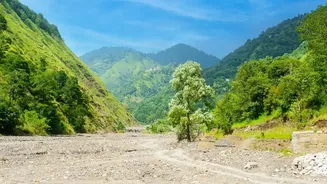
The most immediate threats stemming from melting glaciers are Glacial Lake Outburst Floods (GLOFs) and complex, cascading disasters. As glaciers retreat, they leave behind depressions that fill with meltwater, forming vast glacial lakes. These lakes are often dammed by unstable walls of ice and debris called moraines. When these natural dams fail, often due to an avalanche, earthquake, or simply the pressure of the rising water, they can release a phenomenal volume of water in an instant. These GLOFs are not just floods; they are powerful torrents of water, mud, and boulders that can travel at immense speeds, destroying everything in their path for hundreds of kilometres downstream. Recent catastrophic events in Nepal have shown that sometimes the entire glacier-covered bedrock can collapse, triggering a chain reaction of landslides and floods with little to no warning.
The Human Cost in Nepal
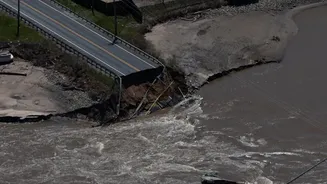
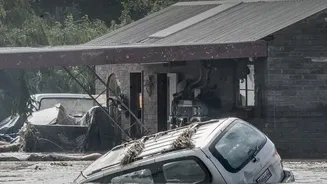
For the communities living in Nepal's mountain valleys, these hazards represent an existential threat. A single major event can wipe out entire villages, roads, bridges, and vital infrastructure like hydropower plants, which are crucial to the nation's economy. In the August 2026 disaster in Langtang National Park, a huge mass of rock and ice broke free, triggering floods that raised river levels by nine metres in just half an hour, leading to catastrophic loss of life and leaving thousands missing. The human toll is immense, not just in lives lost but also in the long-term disruption of livelihoods, agriculture, and the displacement of communities who have lived in these valleys for generations. Rescue efforts are often hampered by the remote, unstable terrain, making the aftermath of such disasters incredibly challenging.
A Cross-Border Concern for India
What happens in Nepal does not stay in Nepal. The major river systems originating in the Himalayas, including the Ganga and its tributaries, flow from Nepal into India, supporting the water, food, and energy security of millions of people downstream. A GLOF or major landslide event in the upper reaches of these rivers can have devastating consequences for downstream Indian states. Experts warn that there are hundreds of potentially unstable glaciers across the Indian Himalayas as well, posing a direct threat. The increased sediment and erratic water flow from melting glaciers also impact long-term water availability, agriculture, and the safety of infrastructure. This shared vulnerability underscores the need for regional cooperation on monitoring and disaster preparedness.
Racing Against Time for Solutions
Addressing this escalating crisis requires a two-pronged approach: global climate action and local adaptation. While slowing global warming is the only way to tackle the root cause, immediate measures are needed on the ground to protect vulnerable populations. In Nepal, international bodies like the UNDP and the Green Climate Fund are supporting projects to lower the water levels in the most dangerous glacial lakes, install early warning systems, and build community resilience. However, the scale of the challenge is enormous. Monitoring these remote, high-altitude hazards is difficult and expensive, and significant gaps in data remain. Experts stress the urgency of shifting from a reactive response after a disaster to a proactive strategy of risk reduction, combining high-tech monitoring with community-based preparedness plans.