






What Did NASA Actually Study?
Back in 1989, NASA, in partnership with a landscape contractors association, published its 'Clean Air Study'. The goal was to see if common houseplants could remove toxic chemicals from the air inside sealed environments, like a space station. Researchers
placed individual plants inside small, sealed plexiglass chambers and injected volatile organic compounds (VOCs) like benzene, formaldehyde, and trichloroethylene—chemicals often found in synthetic materials. They then measured how much of each chemical the plants absorbed over 24 hours. The results were promising; some plants were quite effective at removing these specific VOCs from the air within that tiny, sealed box.
The So-Called 'NASA-Recommended' Plants
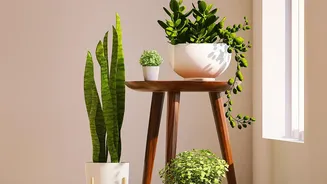
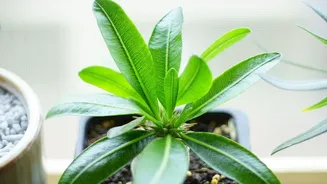
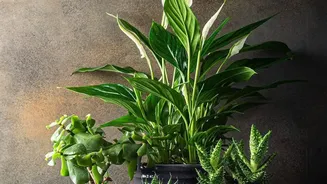
The study highlighted several plants as being particularly effective under these lab conditions. Species like the Peace Lily, Snake Plant, Spider Plant, and English Ivy became famous as a result. For instance, the Peace Lily was noted for its ability to remove all three VOCs tested, as well as ammonia. The Snake Plant was associated with filtering formaldehyde and benzene, among others. These findings are why you often see lists of 'NASA-approved' or 'air-purifying' plants. The science was sound for the specific question it asked: can a plant in a sealed box remove chemicals? The answer was yes. But the context got lost along the way.
The Catch: Your Home Isn't a Space Station
The problem is that a typical home or office is nothing like a small, sealed lab chamber. Your living room has a much larger volume of air, and it's constantly changing. Building scientists call this the 'air exchange rate'—air is always moving in and out through windows, doors, cracks, and ventilation systems. This natural ventilation dilutes pollutants far more effectively and quickly than a few houseplants can absorb them. Furthermore, sources of VOCs in a home (like furniture, paint, and cleaning products) can release these chemicals continuously, unlike the single dose used in the lab tests. The NASA study was never designed to replicate a real-world home environment.
How Many Plants Would It Actually Take?
Modern scientific reviews have tried to put the NASA findings into a real-world perspective, and the numbers are staggering. A 2019 review by Drexel University researchers analyzed decades of data and concluded that you would need an impractically large number of plants to make a meaningful difference. Their calculations suggest it would take anywhere from 10 to 1,000 plants per square meter of floor space to match the cleaning power of a building's standard ventilation system. To put it another way, a small room would need to be a dense jungle just to compete with what an open window can do in an hour. While one of the original NASA researchers suggested two large plants per 100 square feet could help, subsequent analysis shows this is likely a vast underestimation for significant air cleaning.
So, Should You Ditch Your Houseplants?
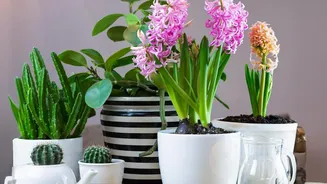
Absolutely not. While their power as air purifiers may be overstated, the health benefits of having plants are very real. Numerous studies have shown that being around indoor plants can have significant psychological benefits. They can help reduce stress and anxiety, lower cortisol levels, and improve mood and concentration. The act of caring for a plant—watering, pruning, and watching it grow—can be a mindful and rewarding practice that provides a sense of accomplishment. Plants add beauty and a connection to nature in our indoor spaces, which is valuable in its own right. So while they may not be a substitute for an air purifier, they are excellent for our mental well-being.