




Our Sun's Protective Bubble
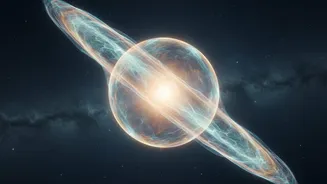
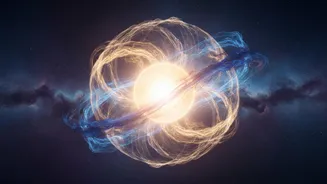
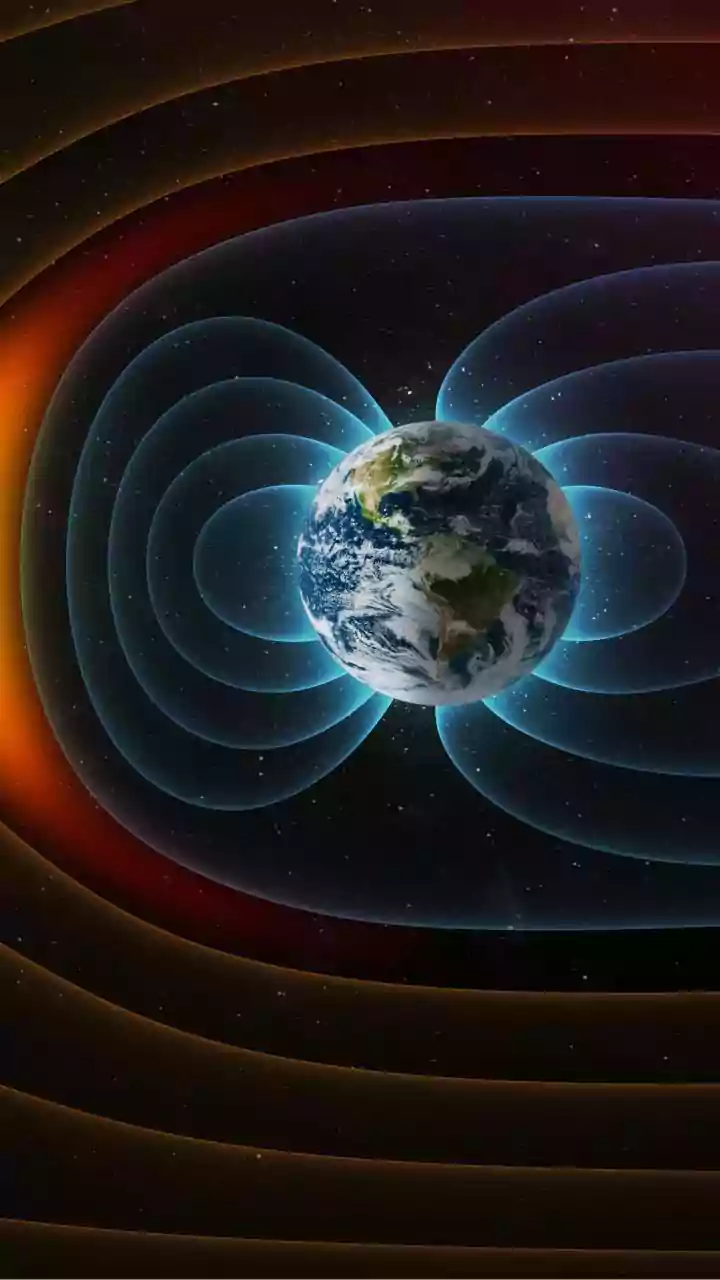
Imagine our solar system cruising through the Milky Way galaxy. It isn’t travelling through empty space; it's moving through a sea of gas and dust left behind by other stars, known as the interstellar medium. To protect itself, our Sun creates a massive
shield called the heliosphere. This is the 'solar bubble' at the heart of the IMAP mission. It’s formed by the solar wind, a constant stream of charged particles flowing from the Sun at incredible speeds, pushing back against the galactic material. This bubble extends far beyond Pluto, creating a safe harbour for all the planets. Without this shield, Earth would be constantly bombarded by high-energy galactic cosmic rays, which can damage DNA and make life as we know it difficult, if not impossible.
Meet the Celestial Cartographer
This is where NASA’s Interstellar Mapping and Acceleration Probe (IMAP) comes in. Launched in September 2025, IMAP is like a modern-day celestial mapmaker. Its primary goal is to answer two of the biggest questions in heliophysics: how does the solar wind interact with the interstellar medium to create our protective bubble, and how are particles accelerated to such high energies in space? From its vantage point about 1.5 million kilometres from Earth, IMAP uses ten sophisticated instruments to 'see' the invisible boundaries of our solar system. It does this by detecting particles, like energetic neutral atoms, that act as messengers from the distant edge of the heliosphere, allowing scientists to build a 3D map of a region we have never seen in its entirety before.
The First Data Unveiled
In a major milestone, NASA has now made the first batch of IMAP’s scientific data public. The release includes information gathered from seven of the probe’s ten instruments from the start of its primary science mission in February 2026 through the end of April. This initial dataset provides the building blocks for the first-ever comprehensive map of the heliosphere's boundary. Even the mission's 'first light' data from late 2025 exceeded expectations, successfully capturing the dynamics of a solar storm and giving scientists their first glimpse of the boundary's structure. This new trove of information allows researchers worldwide to begin piecing together the precise shape and behavior of our solar bubble, observing how it 'breathes' and changes in response to the Sun's activity and the galactic environment.
Why This Cosmic Map Matters
Mapping the heliosphere isn't just an academic exercise; it has profound implications for us on Earth. A better understanding of how this shield works, and how effectively it filters cosmic rays, is critical for space weather prediction. This knowledge is vital for protecting astronauts on future deep-space missions, like the Artemis program, as well as the satellites and power grids we depend on daily. Furthermore, by studying our own habitable bubble, we can learn more about the conditions necessary for life to arise on planets orbiting other stars. Each piece of data from IMAP helps us understand our place in the universe, revealing the intricate ways our Sun creates a habitable and protected environment in the vastness of the galaxy.