







A Crucial Ground Test Success
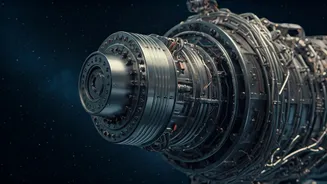
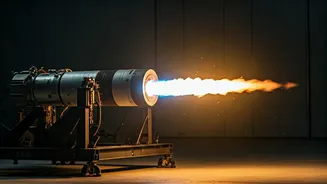
On July 3, 2026, engineers at the Satish Dhawan Space Centre in Sriharikota held their breath as they conducted the first-ever static ground test of a new solid rocket motor. The motor, fixed in place, was fired and performed exactly as expected, with
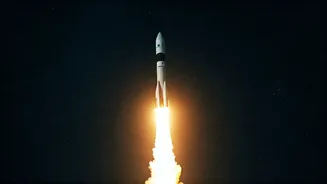
all its performance parameters meeting the mission's objectives. This wasn't just any engine test; it was for a brand-new vehicle that plays a vital role in making the Gaganyaan mission safe for astronauts. The successful firing is a green light for the propulsion system of a new test platform officially known as the Sub-Orbital Launch Vehicle for Experiments, or SOLVE.
Meet SOLVE: The Dedicated Test Platform
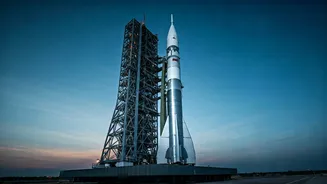
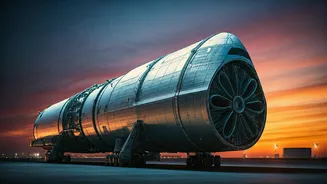
The headline's "Test Platform" refers to SOLVE, a rocket ISRO is developing specifically for Gaganyaan-related trials. It is not the giant LVM3 rocket that will eventually carry astronauts into orbit. Instead, SOLVE is a smaller, more flexible sub-orbital vehicle designed for a very specific and critical purpose: testing the Crew Module's deceleration system. To build it, ISRO cleverly modified the existing and reliable solid-fuel strap-on motors used in its workhorse Polar Satellite Launch Vehicle (PSLV). These modifications include a slower-burning propellant and a new steering system, custom-made for the unique needs of these safety tests.
Why This Test Matters for Astronaut Safety
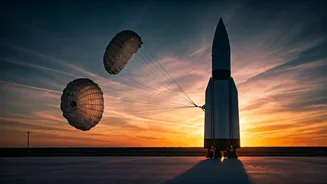
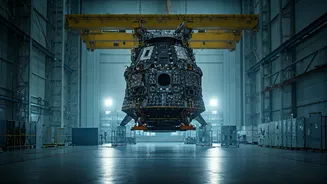
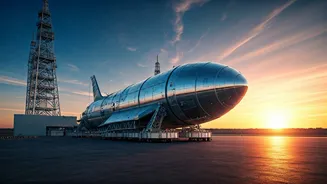
The SOLVE vehicle's main job is to carry a replica of the Gaganyaan Crew Module to an altitude of 10 to 17 kilometres. Once it reaches that height, it will release the module, simulating a key phase of the spacecraft's return to Earth. From there, a complex sequence of 10 parachutes must deploy perfectly to slow the module down from high speed to a gentle splashdown in the sea. The successful test of the SOLVE motor is the first step in ensuring this test rocket is reliable enough to carry out these crucial parachute validation trials. Developing a dedicated vehicle like SOLVE gives ISRO the flexibility to conduct repeated tests under various conditions, ensuring the parachute system is virtually flawless before ever putting a human on board.
Putting It All Together: The Road to Orbit
The Gaganyaan mission's ultimate goal is to launch a crew of three astronauts into a 400-kilometre orbit for a three-day mission and bring them back safely to Earth. Achieving this requires a series of carefully planned precursor missions to test every component. This includes integrated air-drop tests, pad abort tests, and flights of test vehicles like SOLVE. The final crewed flight will use the human-rated LVM3 rocket, a much larger, three-stage launch vehicle. While the LVM3 provides the power to get to orbit, the systems tested by SOLVE are what ensure the astronauts can get home safely. This recent motor success is a critical piece of that safety puzzle, building confidence in the elaborate systems designed to protect India's first Vyomanauts.
What's Next for Gaganyaan?
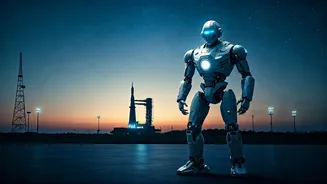
With this motor test successful, ISRO can now move forward with greater confidence in preparing for the integrated test flights using the full SOLVE vehicle. This milestone is part of a larger, comprehensive testing program that has already seen over 8,000 tests completed, covering about 85% of the total validation process. The broader mission roadmap includes a series of uncrewed flights before the first crewed launch. These will test the launch vehicle, the life support systems, and the crew module's performance in orbit. One of these early flights will even carry Vyommitra, a humanoid robot, to collect data on how the flight affects a future human crew. Each successful test, like this recent one for the SOLVE motor, brings India one step closer to joining the elite group of nations capable of independent human spaceflight.