



1. Raj Bhawan (Governor's House)
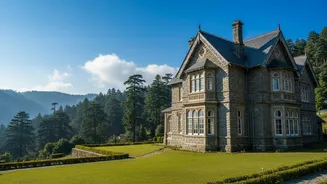
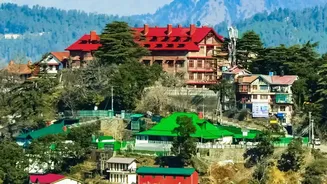
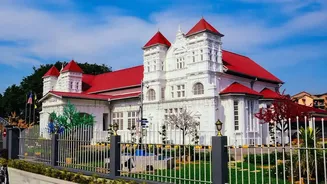
A stunning example of Victorian Gothic architecture, the Raj Bhawan was built to serve as the summer residence of British governors. Its design, reminiscent of a Scottish castle or Buckingham Palace, was the work of architect F.W. Stevens and was completed
around 1900. Spread over 220 acres, the two-storied building contains 113 rooms and was constructed using dark grey stone, giving it an imposing presence against the Himalayan backdrop. Today, it serves as the official residence of the Governor of Uttarakhand and remains one of Nainital's most significant landmarks, complete with a sprawling golf course.
2. St. John in the Wilderness Church
One of the earliest structures in Nainital, this neo-Gothic church was established in 1844. Its evocative name came from the Bishop of Calcutta, Daniel Wilson, who fell ill and had to stay in an unfinished hut in the forest while laying the church's foundation. Surrounded by deodar trees, the church is a tranquil haven known for its beautiful stained-glass windows from Belgium. Inside, a brass plaque memorializes the victims of the devastating 1880 landslide, a poignant reminder of the natural forces that have shaped the town's history. The church represents the very beginning of Nainital's transformation into a colonial hill station.
3. St. Joseph's College
Fondly known as 'Sem', this institution was founded in 1888 and its main building is a formidable example of Gothic-inspired design. The campus architecture, with its fortress-like buttress walls, was built to withstand the region's geological challenges while creating space for playing fields. Originally a seminary for Italian Capuchin Fathers, it was taken over by the Christian Brothers in 1892 and grew into a prestigious school. The sprawling grounds and imposing stone structures reflect the importance the British placed on education and establishing institutions that mirrored those back home.
4. The Nainital Club (Boat House Club)
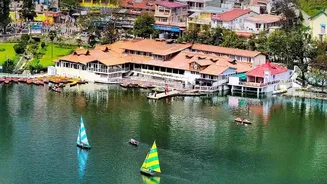
Once a premier social hub for the British elite, the Nainital Club has a history deeply intertwined with the town's social life. Established in the late 19th century, it was renowned for being one of the few clubs in India offering inland sailing and yachting on the Naini Lake. The current Boat House Club building, with its prime lakeside location, retains an old-world charm, offering a glimpse into the leisurely pursuits and exclusive social gatherings of the Raj era. The club's history even includes the formation of the Naini Tal Yacht Club in 1910, cementing its status as a centre for recreation.
5. Balrampur House
Originally the summer palace for the royal family of Balrampur, this building showcases a different European influence. In the 1930s, the original structure was redesigned by European architect Monsieur Mortimere in the style of a French chateau. This elegant heritage property, now a hotel, is set against the backdrop of Cheena Peak. Its history reflects the intersection of Indian royalty and European architectural trends during the colonial period, where Indian maharajas adopted European styles for their summer retreats in the hills.
6. Gurney House
This charming cottage on the Ayarpatta slopes offers a more personal connection to the colonial past as the residence of the legendary hunter-turned-conservationist, Jim Corbett. Built in 1881, the house retains much of its original character and contains many of Corbett's possessions. The house itself was constructed using materials from the Corbetts' previous home, which was destroyed in a landslide. Unlike the grand official buildings, Gurney House provides a look into the domestic life of a prominent British-Indian figure who was deeply connected to the Kumaon region. It is now a private residence, but tours are often welcomed by appointment.
7. The Grand Hotel
As one of the oldest continuously running hotels in Nainital, The Grand Hotel is a living piece of history. Built in 1872 by an Englishman named Tom Murray, it has witnessed the evolution of Nainital from a budding resort town. Originally named The Albion, and later The Mayo, it settled on its current name in 1898. Located on the Mall Road with views of the lake, its colonial-style architecture, wooden flooring, and age-old furniture transport guests back to an era of refined, stately hospitality, representing the commercial and tourism infrastructure built by the British.