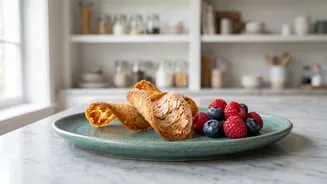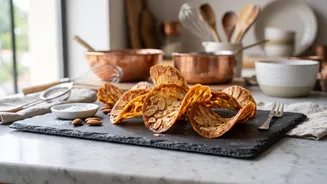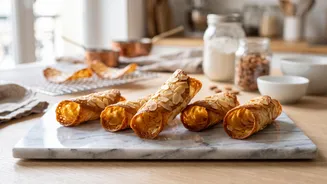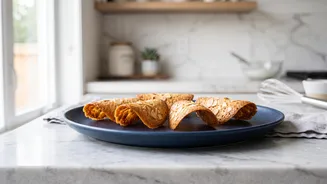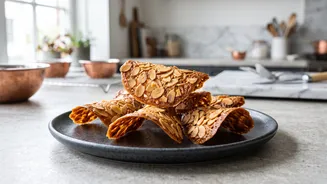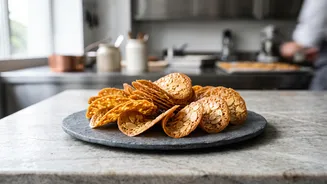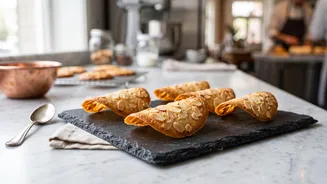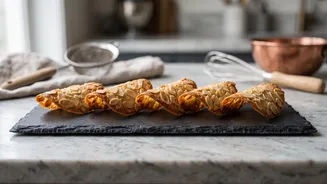


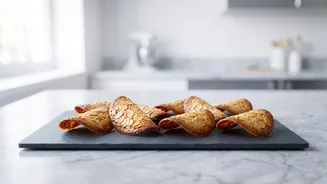
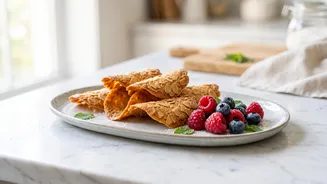
There is a special magic to a perfect French almond tuile—that shatteringly crisp, delicate curve of caramelized wafer. But their beauty is fleeting. Here’s how to create these elegant biscuits and, crucially, keep them perfectly crisp.
The Allure of the Tile
French almond tuiles
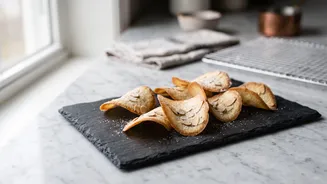
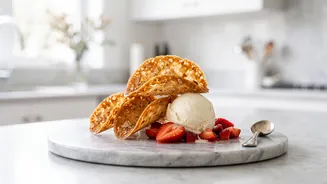
are named for the curved roof tiles ('tuiles') that line the rooftops in Provence. These thin, elegant cookies are prized for their delicate crunch and nutty, caramelized flavour. Made with just a handful of ingredients like egg whites, sugar, flour, butter, and sliced almonds, their simplicity is deceptive. The real art lies in achieving the paper-thin texture and signature curve. They are a staple in French patisseries and often served alongside ice cream, mousse, or a cup of coffee to add a sophisticated, crunchy element. While many bakers master the flavour, the true challenge is preserving that iconic crispness long after they have cooled.
Your Simple Ingredient List
The beauty of tuiles lies in their minimalist composition. For a classic batch, you will need just five core ingredients. First, egg whites—about two large ones will do. They provide the structure without the richness of yolks. Next, caster sugar for sweetness and that essential crispness. A small amount of all-purpose flour helps bind the batter together. Melted unsalted butter adds flavour and contributes to the cookie's delicate, thin spread during baking. Finally, the star of the show: sliced almonds. These provide the dominant flavour and a delightful textural contrast. Some recipes also include a pinch of salt or a drop of vanilla or almond extract to enhance the flavours.
The Method for Wafer-Thin Perfection
Begin by preheating your oven to around 170-180°C and lining a baking sheet with parchment paper. In a bowl, gently whisk the egg whites, sugar, and flour until smooth, but do not beat them to a peak. Stir in the melted butter, followed by the sliced almonds. Some recipes suggest chilling the batter for at least an hour to help control the spread, but others proceed directly to baking. Drop small teaspoonfuls of the batter onto the prepared sheet, leaving plenty of space between them as they will spread significantly. Use the back of a wet spoon to spread each dollop into a very thin, even circle. Bake for about 8 to 12 minutes, watching them closely. They are ready when the edges are a deep golden brown and the centers are pale gold.
Mastering the Signature Curve
This step is where timing is everything. Tuiles are pliable only when hot, so you must work quickly. As soon as you remove the baking sheet from the oven, use a thin spatula to carefully lift one cookie. Immediately drape the hot, flexible wafer over a rolling pin, a wine bottle, or the side of a small bowl to give it that classic curved shape. Press down gently and hold for just a few seconds; it will harden and become crisp as it cools, locking the curve in place. Work in small batches of four to six cookies at a time to ensure you can shape them all before they cool and become brittle. If they harden too quickly, you can return them to the oven for 30 seconds to a minute to soften them again.
The Science of Lost Crispness
The greatest enemy of a crisp tuile is humidity. The high concentration of sugar in the recipe is the primary culprit. Sugar is hygroscopic, meaning it attracts and absorbs moisture from the surrounding air. When a crisp, dry tuile is left exposed, the sugar molecules within it begin to pull water vapor from the atmosphere. This introduction of moisture softens the cookie's structure, turning its delightful snap into a disappointing chewiness. Even a short amount of time on the counter in a humid kitchen can be enough to ruin their delicate texture. This is why proper storage isn't just a recommendation; it's an essential final step in the recipe.
To protect your hard work, let the tuiles cool completely on a wire rack. Any residual warmth will create steam inside a container, which leads to softness. Once they are at room temperature, transfer them into a truly airtight container. Look for containers with a silicone gasket and locking tabs, as these provide the best seal against air and moisture. Do not mix tuiles with softer cookies, as the moisture from the soft cookies will transfer and soften the crisp ones. For extra protection in humid climates, you can place a food-safe silica gel packet inside the container to absorb any ambient moisture. Stored correctly, your tuiles will remain perfectly crisp for several days, if not longer.