




The Old Definition of Power
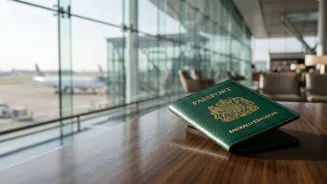
For decades, the strength of a passport has been measured by a single, straightforward metric: mobility. Indexes like the well-known Henley Passport Index rank the world's passports based on the number of countries a holder can visit without needing a prior
visa. This has long been the gold standard for global access. A higher visa-free score means less paperwork, fewer embassy visits, and greater spontaneity for tourists and business travellers alike. In this traditional view, countries like Singapore, Japan, and those in the European Union consistently top the charts, their passports acting as keys to unlock the world. The underlying assumption has been that more mobility is always better, equating a strong passport with greater opportunity and a desirable nationality.
Introducing the Happy Passports Index
But what if mobility is only half the story? The newly released Happy Passports Index 2026, published by advisory firm Global Citizen Solutions, offers a radical rethink. It asks a more profound question: does the ability to travel freely correlate with a happy life? To answer this, the index ranks 50 countries not just on mobility, but on four equally weighted pillars: Wellbeing, Freedom at Home, Mobility, and Prosperity, Health and Safety. 'Wellbeing' is measured using life satisfaction scores from the World Happiness Report, while 'Freedom at Home' considers civil liberties and an individual's sense of choice. By blending travel access with quality-of-life metrics, the index provides a more holistic view of what makes a passport truly valuable.
Where Mobility and Happiness Diverge
The results for 2026 are revealing. While the top of the list features countries that score well on both mobility and happiness—like Finland, which takes the number one spot, followed by Iceland and Denmark—the cracks in the old definition of power appear further down. For example, Singapore has one of the world's most powerful passports for travel and a high income, yet it only ranks tenth overall in the Happy Passports Index. This is because its scores for wellbeing and personal freedom are lower, at 23rd and 30th respectively. Conversely, countries like Costa Rica rank among the ten happiest in the survey but have much weaker passports in terms of visa-free access. This divergence shows that a strong passport doesn't automatically mean a satisfied population; the freedom people feel in their daily lives matters immensely.
What This Means for India
The Indian passport's journey reflects a different kind of complexity. In 2026, India's rank on traditional mobility indexes like Henley's has hovered around the 80th to 84th mark, offering visa-free access to between 55 and 62 countries. While this represents an improvement in global access over the past decade, the country's life satisfaction scores tell another story. In the 2026 World Happiness Report, India was ranked 116th out of 147 countries. This places India in a category of nations where the focus is not just on improving global mobility but also on enhancing the domestic quality of life, including social support, healthy life expectancy, and perceptions of freedom and corruption, which are key drivers of happiness. The Happy Passports Index framework suggests that for Indians, progress involves a dual push: one for greater access to the world and another for a more satisfying life at home.
The New Measure of a 'Good' Passport
Ultimately, the Happy Passports Index suggests that the best nationality isn't just about the number of stamps you can collect. It's about having a high quality of life within your own borders, coupled with the freedom to explore beyond them if you choose. The research found that among wealthier nations, life satisfaction correlates far more strongly with a sense of personal freedom than it does with passport strength or income. A powerful passport provides choice beyond the border, but happiness is often built on the foundations of a stable, free, and healthy society at home. The ability to leave is a powerful asset, but the desire to stay might be an even greater one.